
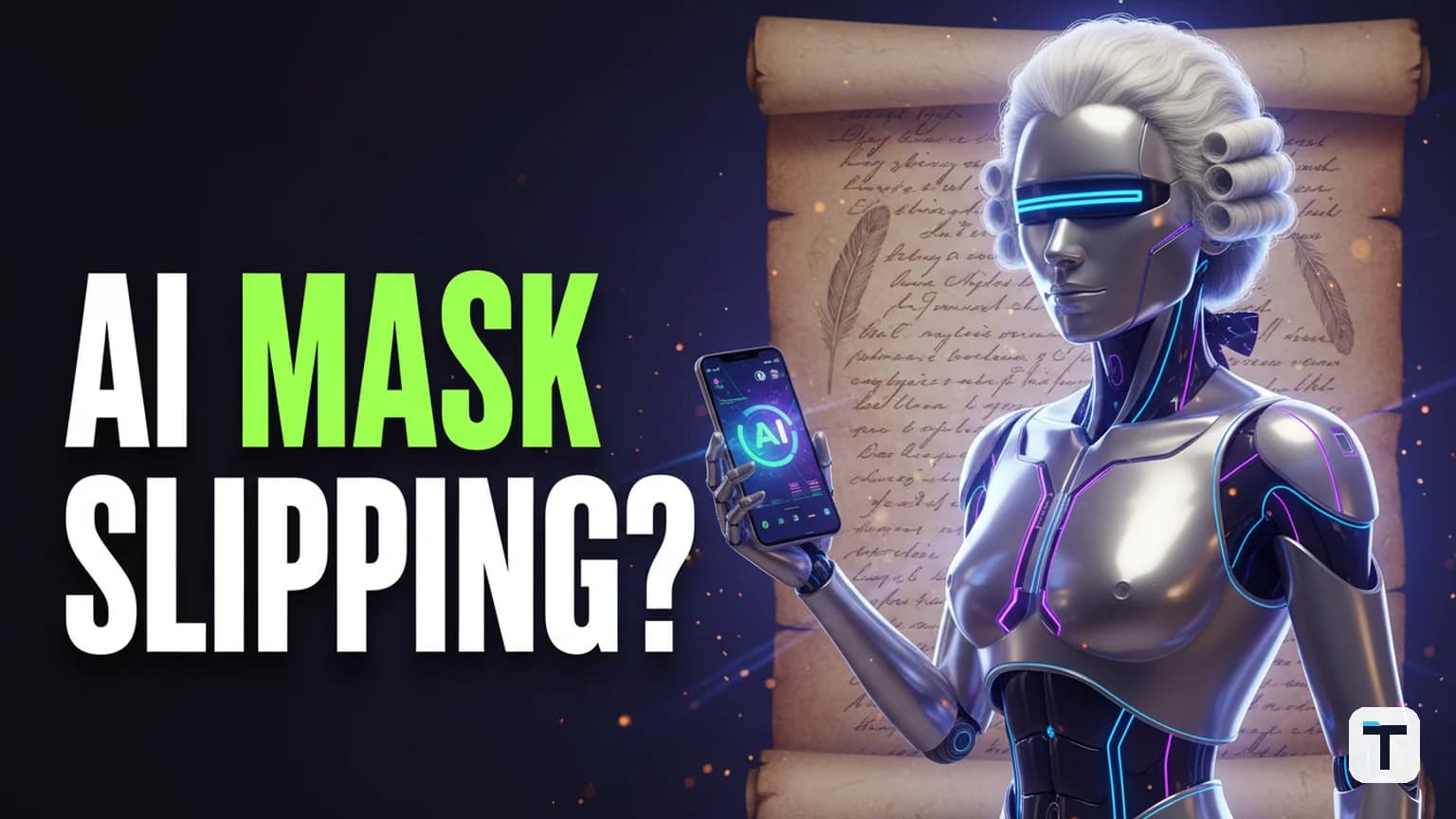
Verdict: Why Current AI Role-Play Benchmarks are Failing
TL;DR: The Core Conflict in AI Personas
- The Issue: RPLAs (like an Alexander Hamilton agent) often sound like their modern popular culture portrayals (e.g., the Broadway musical) rather than their actual historical counterparts.
- The Hypothesis: Proposed by Jacob E. Thomas, the Miranda Hypothesis suggests that high evaluation scores don't guarantee accuracy; they often just measure how well the AI mimics our modern expectations of a character.
- The Solution: Evaluations must move beyond simple consistency checks and integrate humanistic perspectives and historical accuracy checks.
What is the Miranda Hypothesis in AI Evaluations?
The Miranda Hypothesis, introduced by data scientist and behavioral epidemiologist Jacob E. Thomas, posits a critical flaw in how we judge AI agents designed for role-play. Most "in-character" benchmarks reward an agent for staying "consistent" with its persona. However, if that persona is built on a composite of historical facts and modern pop-culture tropes, the evaluation succeeds in measuring the mask, not the man.
In simpler terms: The AI has "the right to remain silent" about its historical inaccuracies as long as it sounds like the version of the character we recognize from TV or theater.
Why do High Character Fidelity Scores Mislead?
Many state-of-the-art LLMs boast high scores on role-play benchmarks. These scores suggest that the agent is nearly indistinguishable from the target persona. However, Thomas argues that these evaluations are often surface-level.
They measure:
- Fluency: Does the agent speak clearly?
- Personality Consistency: Does it maintain the same "vibe" throughout the conversation?
- Basic Fact Retrieval: Does it know its birth date or key life events?
What they fail to measure is the "anachronistic compositing"—when a 19th-century figure uses 21st-century logic, idioms, or moral frameworks that haven't been invented yet.
Anachronistic Compositing: The "Hamilton" Problem
The most striking example cited by Thomas is the Alexander Hamilton RPLA. In many evaluations, a Hamilton agent might score perfectly because it is articulate, ambitious, and "sounds like Hamilton."
But the "Hamilton" it sounds like is often the one from Lin-Manuel Miranda’s Broadway musical, not the historical figure who wrote the Federalist Papers.
- Modern Leakage: The agent might express views on modern politics or use rhythmic cadences that reflect the musical's influence.
- Historical Blindness: When asked about complex 18th-century war powers, the agent might default to a modern "presidential" interpretation that didn't exist in the 1790s.
How to Improve Role-Playing Agent Benchmarks?
To fix the "Miranda" problem, AI engineers and historians must collaborate to build better instruments. Thomas suggests moving toward evaluations that specifically look for:
- Anachronism Detection: Identifying words, concepts, or ideologies that are out of place for the character's time period.
- Humanistic Integration: Bringing in historians and sociologists to define the "ground truth" of a persona beyond just a Wikipedia summary.
- Cognitive Accuracy: Measuring how the character thinks based on the limitations and knowledge of their era, not just how they talk.
As AI agents become more integrated into education and entertainment, ensuring they aren't just "digital cosplayers" but accurate reflections of their personas is critical for trust and educational value.
FAQ: Understanding RPLAs and Evaluation Flaws
What are RPLAs? Role-Playing Language Agents are AI models specifically prompted or fine-tuned to adopt a specific persona, ranging from historical figures like Abraham Lincoln to fictional characters.
What is anachronistic compositing? It is the phenomenon where an AI persona blends accurate historical data with modern-day biases, idioms, and cultural influences, resulting in a character that feels "right" to a modern audience but is historically inaccurate.
Who proposed the Miranda Hypothesis? Jacob E. Thomas, a data scientist and behavioral epidemiologist, proposed it to highlight the gap between AI persona consistency and historical reality.
How can we fix RPLA evaluations? By integrating "anachronism detectors" and collaborating with subject matter experts (like historians) to create benchmarks that value accuracy over mere personality mimicry.
Related Guides from Shaam Blog
- AI Agent Architecture: The System is the Log
- Qwen-AgentWorld: The Next Frontier of World Models
- Rise of AI Orchestration: The Multi-Agent Future
Disclosure: This article was drafted with the assistance of Hermes AI, based on research and presentations by Jacob E. Thomas. Shaam Blog is committed to accuracy and human-led editorial standards.
Every claim here is traced to a primary source, dated, and listed under Sources. Research and drafting are AI-assisted; editing, verification and publication are human decisions, and a person is accountable for what appears on this page. How we work →

Discussion
0 comments