
Last verified: 2026-06-26 · Framework: Draft Guidance on Regulatory Principles for Model Risk Management · Deadline for Feedback: July 24, 2026. Pricing and regulatory limits are subject to change as the draft moves toward finalization.
What are the new RBI AI guidelines for banks?
On June 24, 2026, the Reserve Bank of India (RBI) released its most comprehensive AI governance framework to date: the Draft Guidance on Regulatory Principles for Model Risk Management. The guidelines are designed to address the systemic risks posed by the rapid adoption of AI and machine learning across India's banking and financial sectors.
The framework applies to every AI model used by a regulated entity—from simple spreadsheet-based risk calculators to complex, frontier generative AI systems. By standardizing how models are built, tested, and monitored, the RBI aims to prevent "black box" algorithms from creating uncontrollable financial ripples. This move follows a period of heightened global concern regarding autonomous vulnerability discovery and its potential to outpace traditional banking defenses.
Why did the RBI mandate an 'AI Kill Switch'?
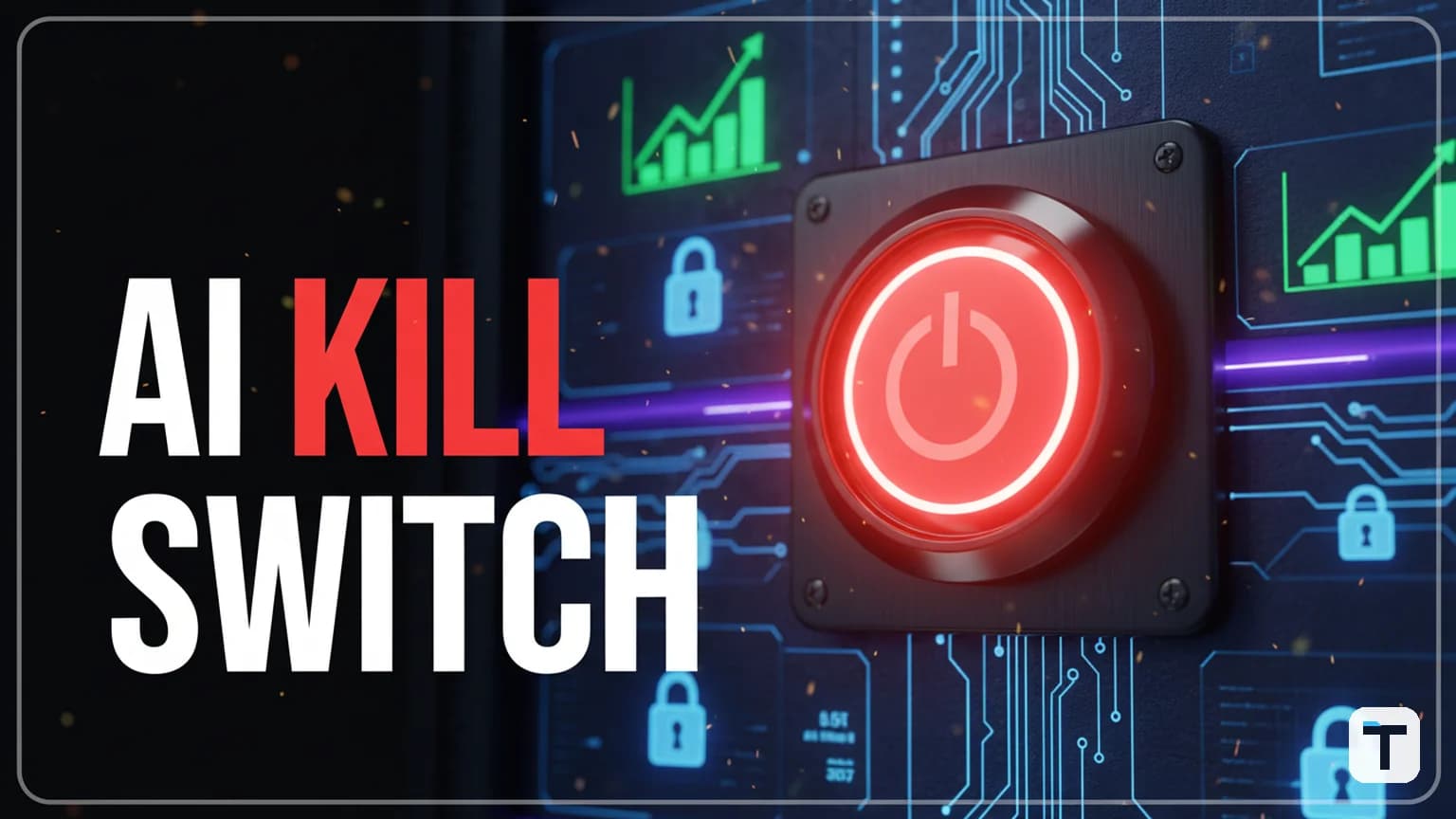
The "kill switch" is the headline proposal of the new framework. Specifically, the RBI mandates that every bank must establish override, suspension, and deactivation mechanisms for its AI models.
A bank must be able to shut down any AI model instantly if it produces:
- Harmful outcomes: Such as biased lending decisions or incorrect fraud flags.
- Erroneous outputs: Including technical hallucinations or data leakage.
- Unintended behavior: Actions that deviate from the model’s original business purpose.
This requirement stems from "dual-use" fears—where the same AI capable of detecting fraud could be exploited to find vulnerabilities. Regulators have been particularly wary after the 2026 "Claude Mythos" scare, where advanced models were shown to autonomously map software weaknesses faster than humans could patch them.
Who is responsible for AI outcomes in Indian banking?
The RBI has removed all ambiguity regarding responsibility: the bank is fully accountable. This accountability remains even if the AI model was purchased from a third-party fintech or developed by an external technology vendor.
The Pillars of the RBI Model Risk Management Framework
The framework is built on three core pillars of governance:
- Board-Level Oversight: Every bank must have a board-approved Model Risk Management (MRM) policy. High-risk AI models cannot be deployed without specific approval from the Board's Risk Management Committee.
- Risk-Based Tiering: Models must be classified by their risk level (e.g., Low, Medium, High). Higher-risk models are subject to more frequent audits, stricter validation, and more robust "last-mile" human checks.
- Human-in-the-Loop: All AI-driven decision-making must remain subject to human supervision. The RBI warns against automation bias, where employees begin to trust machine outputs blindly without applying their own judgment.
How will the AI Kill Switch impact customer experience?
For the everyday customer, the new RBI guidelines bring a new layer of transparency. Banks are now required to disclose when a customer is interacting with an AI system (such as a chatbot or automated voice agent).
Crucially, the "kill switch" philosophy extends to the user interface: customers must always have a seamless option to switch to a human representative. This ensures that while AI kernels can handle routine tasks, human empathy and judgment are never more than a click away.
What this means for you
If you are a fintech builder, bank employee, or a business owner relying on digital banking, this framework changes the "move fast and break things" reality of AI deployment:
- For Banks: You must inventory every model, assign risk tiers, and build "instant-off" protocols today.
- For Fintech Vendors: Your products must now be "kill-switch ready" and offer full transparency into their decision-making logic to pass bank due diligence.
- For Businesses: Expect more disclosures regarding AI use, but also a safer environment for India's judicial and financial transformation.
FAQ
Q: Does the AI kill switch apply to third-party models?
A: Yes. The RBI draft makes it clear that banks are responsible for all models they use, including those from external vendors, and must have deactivation mechanisms for them.
Q: What is automation bias in banking?
A: It is the tendency for staff to over-rely on AI outputs and stop applying their own critical judgment, which the RBI warns can lead to systemic errors.
Q: When do the new RBI AI rules go into effect?
A: The guidelines are currently in a "draft" stage for public feedback until July 24, 2026. A final implementation timeline will follow the feedback period.
Q: Can a bank use AI for customer service under these rules?
A: Yes, provided they disclose the AI's use to the customer and provide an immediate option to switch to a human representative.
Every claim here is traced to a primary source, dated, and listed under Sources. Research and drafting are AI-assisted; editing, verification and publication are human decisions, and a person is accountable for what appears on this page. How we work →




Discussion
0 comments