
Last verified: June 25, 2026
Core focus: Administrative efficiency, linguistic accessibility, and judicial research.
Key entities: SUPACE, SUVAS, Chief Justice Surya Kant, Igor Krasnov.
Status: Institutional integration under judicial oversight.
What was signed in the Moscow Marble Hall?
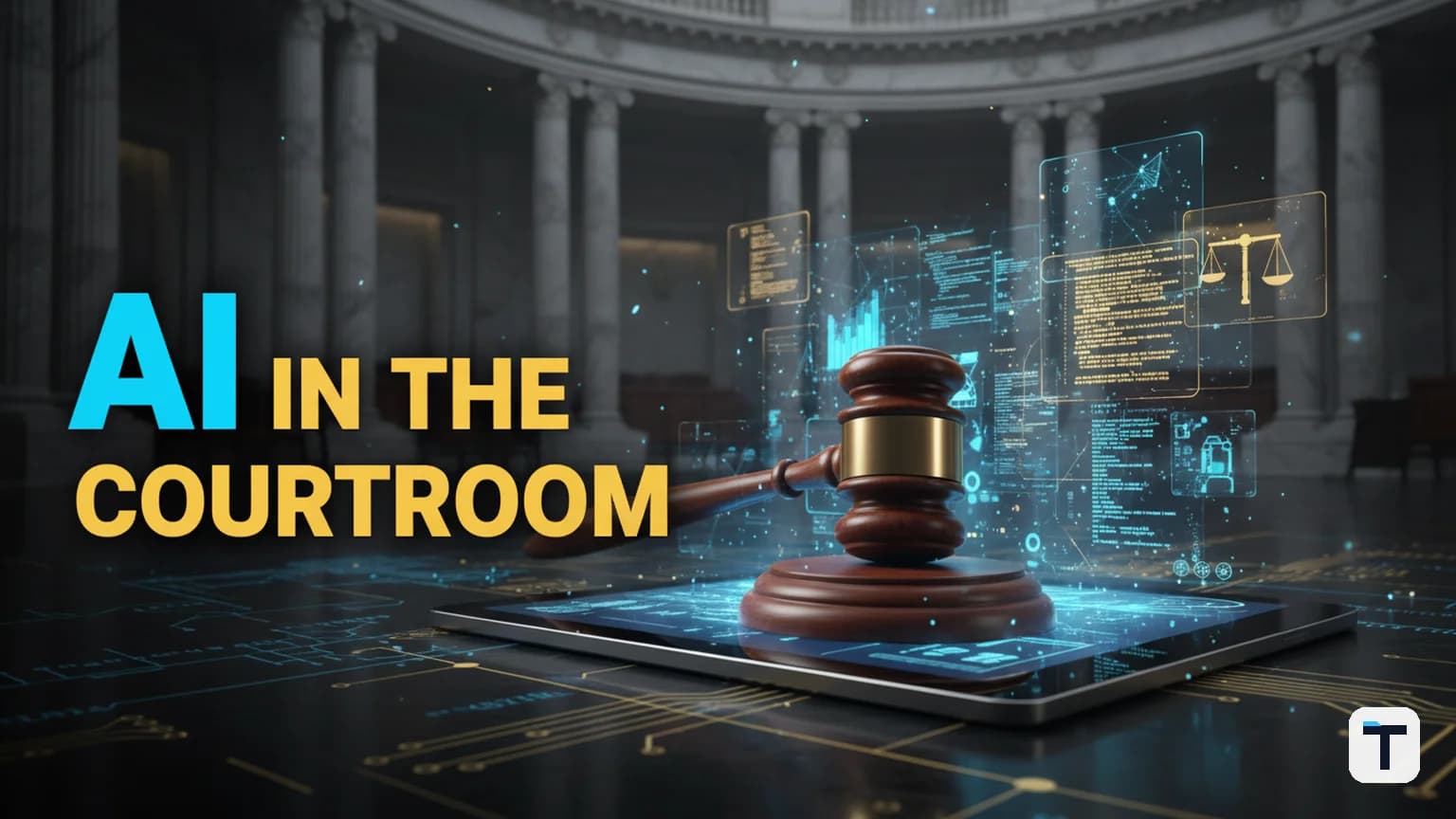
On June 23, 2026, the Supreme Court of India and the Supreme Court of the Russian Federation signed a historic Memorandum of Understanding (MoU) to formalize cooperation in the field of judicial technology. The agreement was signed in the Marble Hall of the Russian Supreme Court in Moscow by the Chief Justice of India (CJI), Surya Kant, and the Chairman of the Russian Supreme Court, Igor Krasnov.
This is not a mere diplomatic gesture; it is a strategic alignment between two of the world’s most complex legal systems to address the "digital transformation" of justice. The agreement establishes a Joint Working Group to develop long-term strategies for integrating Artificial Intelligence into court procedures, focusing on case management and document processing.
How is India using AI to solve the 5.4 crore case backlog?
The Indian judiciary is facing a structural challenge with over 5.4 crore pending cases across all court levels. To counter this, the Supreme Court has moved away from treating AI as a "standalone product" and instead positioned it as part of the core judicial infrastructure.
Two primary tools lead this charge:
- SUPACE (Supreme Court Portal for Assistance in Court’s Efficiency): This AI research portal is designed to identify and organize relevant facts and laws for a judge. It acts as a cognitive assistant, surfacing the most pertinent data from thousands of pages of filings to help judges make informed decisions faster.
- SUVAS (Supreme Court Vidhik Anuvaad Software): A machine learning tool dedicated to linguistic accessibility. SUVAS translates judicial documents and orders into multiple regional languages, ensuring that justice is not just delivered, but understood by litigants in their own tongue.
These initiatives are part of a broader trend toward sovereign software infrastructure in India, where institutional data security is prioritized alongside technological growth.
What are the "Three Pillars" of responsible judicial AI?
During the Moscow deliberations, the leadership of both judiciaries emphasized that AI adoption must follow a strict ethical scaffold. This framework can be summarized in three pillars:
- Administrative Efficiency: AI is used for transcription, translation, and information management to reduce the "friction" of court processes.
- Linguistic Accessibility: Using tools like SUVAS to break down language barriers for citizens, mirroring the geographic democratization of AI skills across India.
- Judicial Primacy: AI cannot determine legal outcomes, evaluate witness credibility, or exercise judicial discretion. Human judges remain the sole arbiters of justice.
Is a "Robot Judge" really coming?
The short answer is no. Both Chief Justice Surya Kant and Chairman Igor Krasnov have been explicitly cautious about the limits of automation. "While AI can assist through information management, it cannot replace human judgment," noted CJI Surya Kant.
The concern for transparency, accountability, and fairness remains central. In India, the Supreme Court’s Artificial Intelligence Committee—reconstituted in December 2025 and chaired by Justice P.S. Narasimha—oversees the training and validation of these tools. To ensure nuance and legal context, the "human-in-the-loop" model often involves retired judges who annotate and verify AI-generated summaries before they reach active courtrooms.
What this means for you
For legal professionals and small businesses, the integration of AI in courts means a move toward predictable, faster timelines. As administrative bottlenecks are removed, the cost and duration of litigation are expected to decrease. However, for businesses winning the AI-native decade, the lesson is clear: technology works best as a layer that absorbs cognitive load without removing human accountability.
FAQ
Q: Can AI decide my court case? A: No. In both India and Russia, current regulations strictly prohibit AI from exercising judicial discretion or determining the outcome of a case. AI is used solely for research, translation, and administrative support.
Q: What is SUPACE? A: SUPACE (Supreme Court Portal for Assistance in Court’s Efficiency) is an AI-powered research tool used by the Supreme Court of India to help judges find relevant laws and facts within massive case files.
Q: How does SUVAS help ordinary citizens? A: SUVAS translates complex legal documents and judgments into regional languages, making the justice system more accessible to people who do not speak English or the primary language of the court.
Q: Why are India and Russia collaborating on this? A: Both nations manage massive, high-volume judicial systems and are looking to share best practices in "Digital Courts" and responsible AI integration to improve judicial efficiency.
Q: Is there any human oversight for these AI tools? A: Yes. Both countries use a "human-in-the-loop" model where legal experts and committees oversee the training, validation, and use of AI to ensure fairness and accuracy.
Every claim here is traced to a primary source, dated, and listed under Sources. Research and drafting are AI-assisted; editing, verification and publication are human decisions, and a person is accountable for what appears on this page. How we work →


Discussion
0 comments