
Last verified: 2026-06-26
- The Deal: Airbound (Bengaluru) has signed an MoU with the Andhra Pradesh Drone Corporation (APDC).
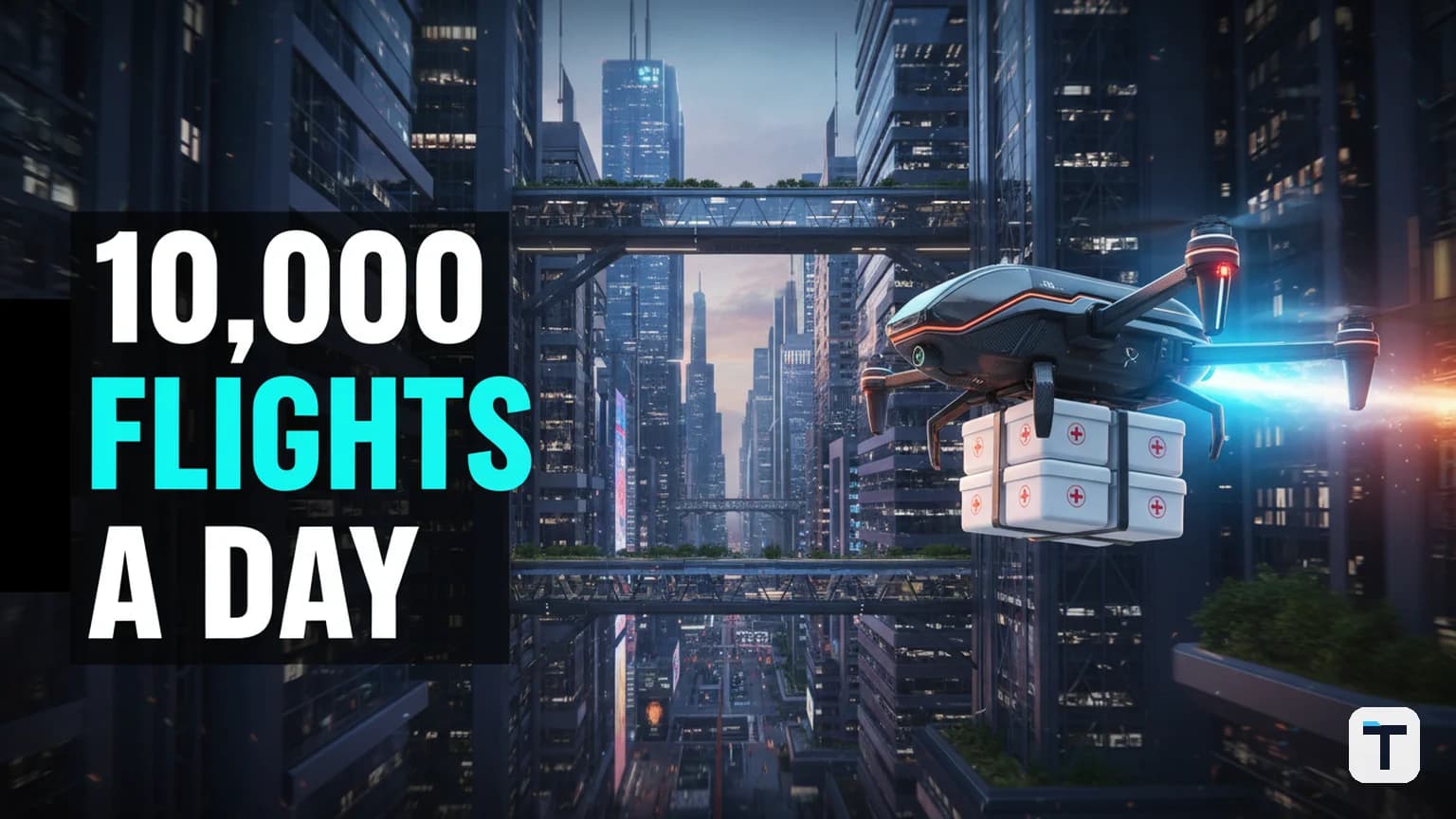
- The Scale: 10,000 daily flights across the Amaravati Capital Region (ACR).
- The Tech: Blended-wing-body (BWB) "tailsitter" drones weighing just 1.5kg.
- The Goal: Connect Guntur, Vijayawada, and Amaravati for healthcare and e-commerce.
- The Cost: Targeted at ₹0.10 per km (10 paise), a 95% reduction vs traditional road delivery.
Why Drone Delivery is Finally Scaling in 2026
For years, drone delivery was stuck in a "black box" cycle: expensive hardware, limited battery life, and high operating costs. Most delivery drones moved too much mass to deliver too little cargo.
The 2026 shift is driven by radical weight reduction. By moving from heavy multi-rotors to carbon-fiber "tailsitters," startups like Airbound are solving the physics problem of logistics. When you reduce the total mass moved from 150kg (a scooter + driver) to 5kg (the drone + payload), the energy cost drops by an order of magnitude.
Comparison: Road vs. Aerial Logistics (2026)
| Metric | Electric Scooter (Road) | Airbound TRT (Drone) | Improvement |
|---|---|---|---|
| Total Mass Moved | ~150 kg | ~5 kg | 30x lighter |
| Payload Capacity | ~3 kg | ~1.5 kg | Optimized |
| Energy Cost / km | ~₹2.00 | ~₹0.10 | 20x cheaper |
| Battery Life | Long-term | 500-800 cycles (Li-ion) | High-efficiency |
| Infrastructure | Congested Roads | Autonomous Corridors | Traffic-proof |
The Amaravati Capital Region Drone Delivery Network (ACR DDN)
The partnership between Bengaluru-based Airbound and the Andhra Pradesh government marks the launch of the Amaravati Capital Region Drone Delivery Network (ACR DDN). This is not just a pilot; it is a foundation for a new logistics architecture.
Key Deployment Facts:
- Launch Site: Guntur will be the first city to see full-scale operations.
- Network Hubs: The network will seamlessly connect Guntur, Vijayawada, and Amaravati.
- Cargo Focus: Initial priority is healthcare (blood samples, medical tests) and high-velocity e-commerce packages.
- Operational Scale: The target is 10,000 flights per day within the next 12 months.
The Technology: Blended-Wing-Body Tailsitters
The aircraft at the heart of this network is a proprietary blended-wing-body (BWB) tailsitter. Unlike standard quadcopters that waste energy fighting gravity to stay aloft, a tailsitter takes off vertically (like a rocket) and then tilts forward to fly horizontally (like a plane).
- Aerodynamic Efficiency: The BWB design uses its entire body as a wing, providing massive lift with minimal drag.
- Carbon Fiber Frame: At just 1.5kg, the frame is engineered to be as light as possible while remaining durable for thousands of cycles.
- Li-ion Superiority: By switching from traditional Lithium Polymer (Li-Po) to high-cycle Lithium-ion batteries, operators can achieve 500-800 flight cycles before needing replacements, drastically lowering the "hidden" cost of drone maintenance.
What this means for you
For small businesses and e-commerce builders, the emergence of aerial corridors means the "last mile" is becoming the "fast mile."
- Logistics ROI: If your business depends on frequent, small-parcel movements (under 2kg), you should evaluate drone-integrated hubs as they appear. Use the AI Prioritization Matrix to decide if investing in autonomous logistics is a "bullseye" move for your 2026 strategy.
- Health and Safety: For clinics and labs, the 20x cost reduction enables decentralized diagnostics. You can now send samples to centralized labs twice a day without the overhead of refrigerated transport or gridlocked traffic.
- Infrastructure Synergy: As India builds its sovereign computing future, the orchestration of these drone fleets will likely rely on multi-agent queue frameworks to manage 10,000 simultaneous paths safely.
FAQ
Q: Can these drones operate in heavy rain or wind? A: While the carbon-fiber TRT is built for durability, tailsitters are typically sensitive to high crosswinds. Operations are managed through real-time autonomous weather gating to ensure safety.
Q: What is the maximum payload for these 1.5kg drones? A: The Airbound TRT targets a 1:1.5 payload-to-weight ratio, meaning it is optimized for packages weighing between 1kg and 1.5kg—perfect for medical samples and small electronics.
Q: Will this replace traditional delivery drivers? A: No. Aerial logistics is a "mid-mile" and "specialized last-mile" solution. It complements road logistics by taking small, urgent parcels off the road, freeing up drivers for larger, heavy-goods deliveries.
Q: How are these drones controlled? A: The flights are fully autonomous, operating within designated "drone corridors" cleared by the AP Drone Corporation and the DGCA.
Q: Is the ₹0.10/km cost inclusive of maintenance? A: Yes. The target cost accounts for the high-cycle Li-ion batteries and proprietary manufacturing processes designed to keep maintenance negligible.
Every claim here is traced to a primary source, dated, and listed under Sources. Research and drafting are AI-assisted; editing, verification and publication are human decisions, and a person is accountable for what appears on this page. How we work →






Discussion
0 comments