
Last verified: 2026-06-25
Core Concept: Sovereign AI = Provenance + Observability + Freedom of Choice
Key Player: BharatGen (India) anchoring Project Tapestry (Global)
The Win: Frontier performance at ₹5 per million tokens with full data residency.
What is Sovereign AI and why does it matter in 2026?
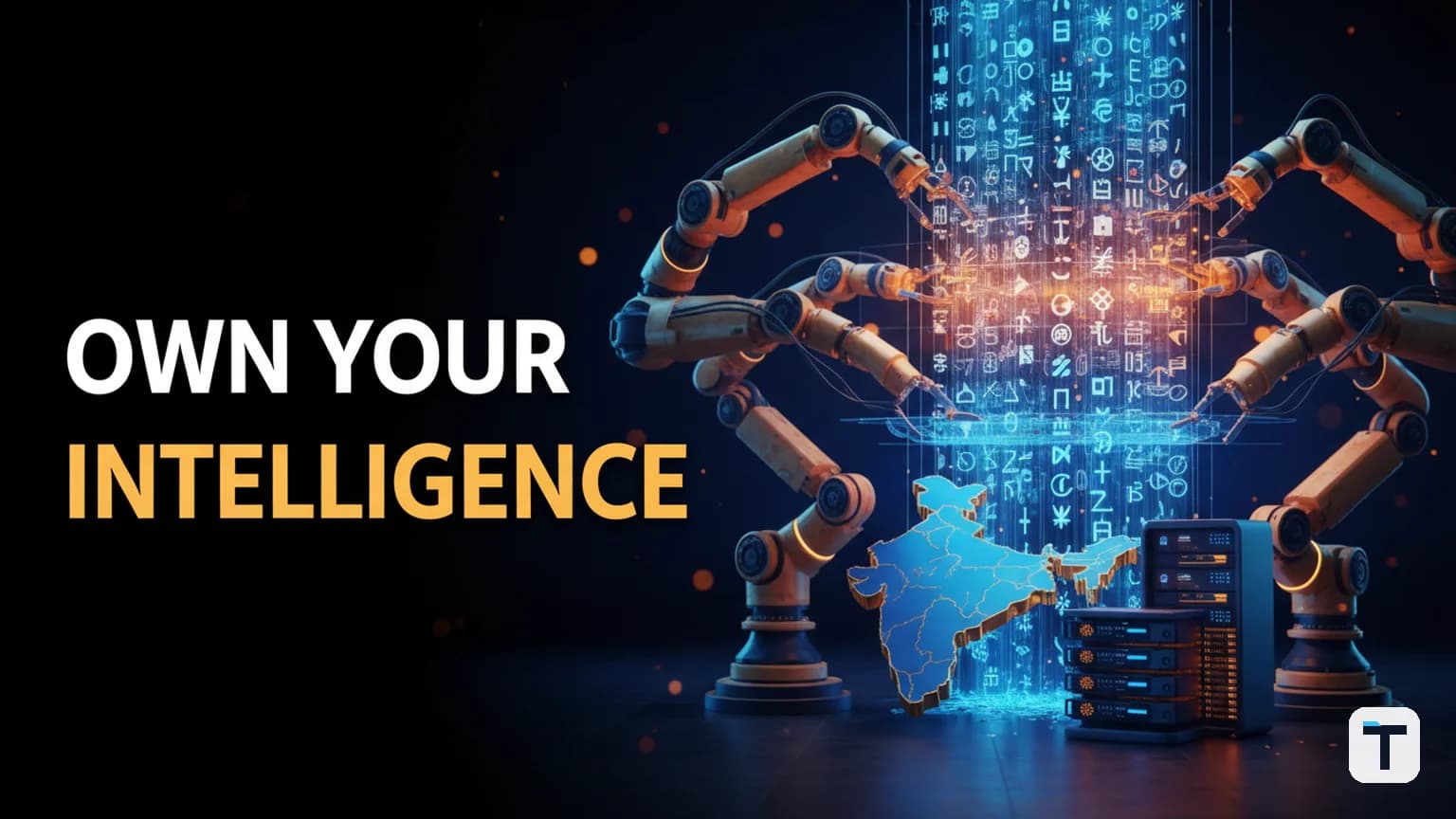
Sovereign AI is the ability of a nation, organization, or person to create, deploy, and govern AI systems that reflect their own data, culture, and legal frameworks. In practice, as defined by Professor Ganesh Ramakrishnan (IIT Bombay/BharatGen), it means having "provenance and observability in the entire AI pipeline."
For most businesses, the 2024-2025 era was defined by "consuming" AI from a handful of labs. In 2026, the risk of "intelligence capture"—where a vendor's business shift can yank your core infrastructure—has made sovereignty a business-critical requirement. It is about having alternatives; the freedom to choose a model that isn't bloated with Western-centric data and actually understands your local market's nuances.
Project Tapestry: The "N+1" Federated Frontier
Launched in April 2026 by the AI Alliance, Project Tapestry is a global open consortium designed to build frontier AI models through distributed training. Backed by Yann LeCun (Chief Science Advisor to the AI Alliance), it operates on a "Core Plus a Sovereign" (N+1) architecture.
In this model, a shared "Global Base" is trained collaboratively. Participating nations or companies (nodes) contribute weight updates—not raw data—to improve the base. They then take that base and fine-tune it on their own sovereign data to create highly specialized, culturally grounded derivative models that they own entirely. This ensures "anti-capture": no single entity can pull the plug on the intelligence you've helped build.
BharatGen: Leading the Trillion-Parameter Quest
India’s BharatGen initiative, led by a consortium of nine academic institutions including IIT Bombay and IIT Madras, has emerged as the anchor for India’s role in Project Tapestry. Supported by the IndiaAI Mission with an allocation of over ₹1,235 crore and access to a massive compute pool (targeted at 13,640 H100 GPUs), BharatGen is proof that "frugal AI" can be frontier AI.
The BharatGen Roadmap:
- PARAM 2 (Launched June 2026): A 17 billion-parameter Mixture-of-Experts (MoE) model that supports all 22 scheduled Indian languages.
- Trillion-Parameter Goal: BharatGen aims to release 100B, 500B, and 1T parameter models by March 2027.
- Multilingual Focus: Unlike models like Llama 3 (which dedicated roughly 0.01% to Indic languages), BharatGen's Param-1 (2.9B) allocated 25% of its training data to Hindi and regional scripts.
Why "Frugal AI" is the competitive edge for builders
One of the most striking claims from BharatGen is the target cost: ₹5 per million tokens. This represents a massive shift from the pricing of generic global models, which are often "bloated" with data irrelevant to specific regional or domain-specific tasks.
By focusing on "last mile as the first mile" design, BharatGen and Tapestry allow developers to build applications—from AI-powered judicial transformation to agricultural bots—that are accurate, cost-effective, and safe. This efficiency is critical as the Indian tech sector moves beyond labor arbitrage toward high-value AI production.
What this means for you
If you are a business owner or developer in 2026, the "Sovereign AI" movement offers three immediate actions:
- Evaluate for "Intelligence Capture": Audit your dependency on closed-source models. Could your business survive if your primary AI provider changed their API terms or pricing overnight?
- Explore BharatGen Models: For any India-centric or multilingual application, the PARAM suite offers better cultural grounding and lower costs than generic alternatives.
- Watch the "N+1" Space: If you have proprietary data, look at joining a Tapestry node or using a sovereign base. It allows you to benefit from "Global Model" performance while keeping your data strictly on-premises.
FAQ
Q: Does Sovereign AI mean isolation from global tech? A: No. Project Tapestry proves that sovereignty and collaboration go hand-in-hand. You contribute to a shared global foundation while retaining the right to your specific local adaptations.
Q: How much does it cost to use BharatGen models? A: BharatGen aims for "frugal AI," with target costs as low as ₹5 per million tokens for their foundational models, significantly lower than premium closed-source alternatives.
Q: When will the 1-trillion parameter Indian model be available? A: The BharatGen roadmap, supported by the IndiaAI Mission, targets the release of a 1-trillion parameter model by March 2027.
Q: Can I use these models for small business applications today? A: Yes. Models like PARAM 2 (17B MoE) are already being deployed in sectors like healthcare (Amrita Hospitals) and governance, and are available for developers via the BharatGen ecosystem.
Every claim here is traced to a primary source, dated, and listed under Sources. Research and drafting are AI-assisted; editing, verification and publication are human decisions, and a person is accountable for what appears on this page. How we work →



Discussion
0 comments