
Last verified: June 26, 2026
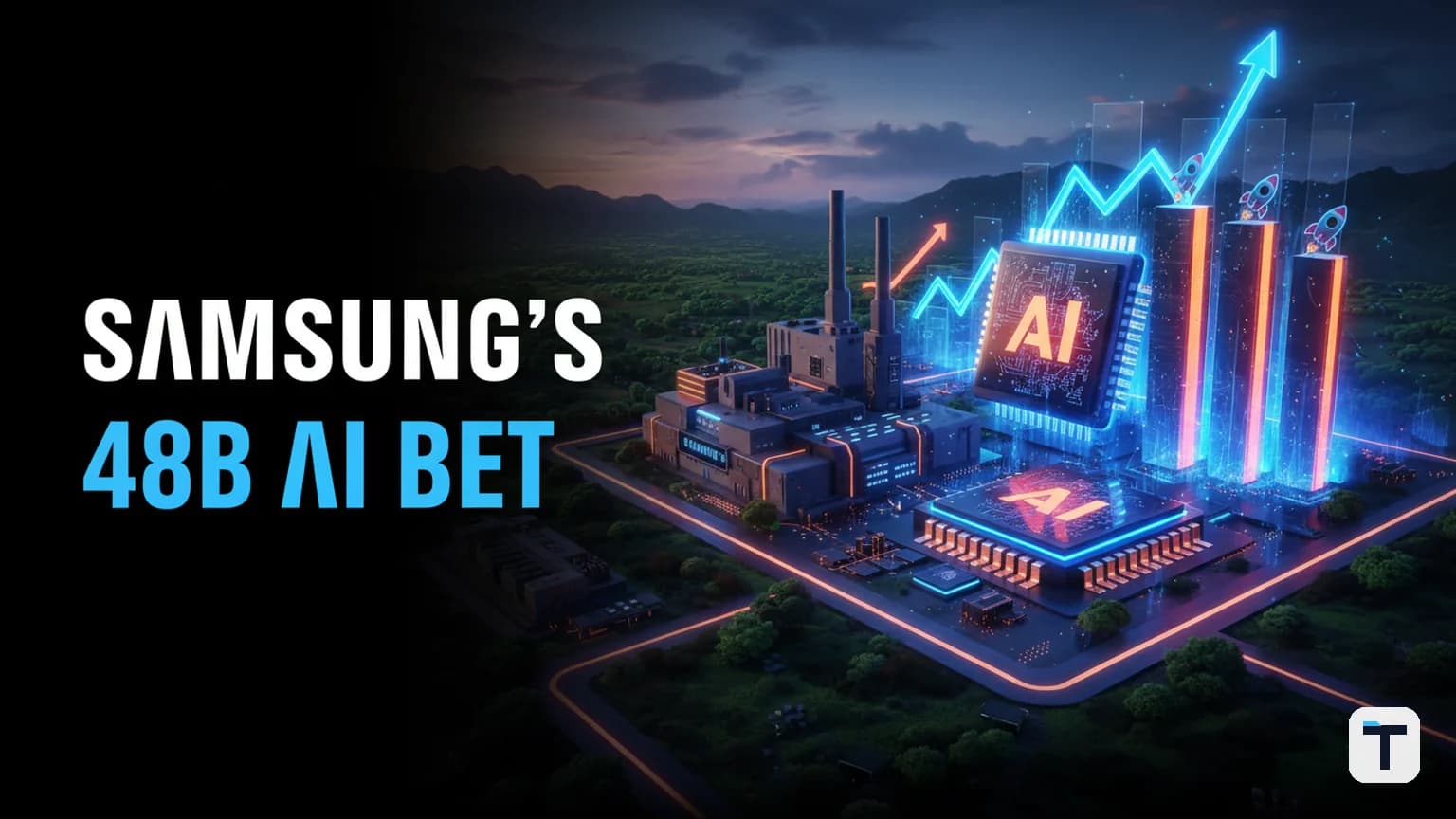
Investment: 1,000 trillion won (~$648B) over 10 years
Key Projects: AI semiconductors, Data Centers, Batteries, Robotics
New Hub: Gwangju & South Jeolla (Honam Region)
Note: Pricing and timelines for advanced fabrication are volatile — last checked June 26, 2026.
Why is Samsung moving its chip factories away from Seoul?
For decades, South Korea’s "Silicon Shield" was concentrated almost entirely within the Seoul metropolitan area and Gyeonggi Province. However, the AI revolution has hit a physical wall. The existing infrastructure in Yongin and Icheon is reaching a breaking point in three critical areas:
- Power Scarcity: Advanced 2nm and HBM4 fabrication requires massive, stable electricity loads that the capital's grid can no longer reliably support.
- Water Shortages: Semiconductor manufacturing is incredibly water-intensive. Seoul’s water resources are at capacity, while the southwestern Honam region offers untapped industrial water supply.
- Land Concentration: Over 52% of South Korea's regional GDP is generated in the Seoul area. There is simply no space left for the "mega-fabs" required for 2030-era production.
Moving to the southwest allows Samsung to leverage the region’s renewable energy resources (solar and wind), which is increasingly critical for RE100 compliance in AI data centers.
What is the "Second Cluster" and where will it be built?
The proposed "Southwest Semiconductor Belt" centers on Gwangju and the Jeolla provinces. This new hub is designed to complement, not replace, the massive Yongin Mega Cluster currently under construction.
| Project Type | Target Region | Strategic Goal |
|---|---|---|
| Front-end Fabs | Gwangju / Jeolla | Mass production of HBM4 and next-gen DRAM. |
| Advanced Packaging | Chungcheong | High-density stacking for AI accelerators. |
| AI Data Centers | Southwest Region | Leveraging regional RE100 power grids. |
| Next-Gen Batteries | Honam Region | Integrating with the domestic EV supply chain. |
According to Presidential Policy Advisor Kim Yong-beom, the government is framing this as a "pragmatic strategy" to divide regional roles based on local strengths rather than forcing a full-scale relocation of the industrial ecosystem.
The AI Memory Crisis: Why 2040 plans are becoming 2035 realities
The acceleration of this investment is driven by a simple fact: the world is running out of AI memory. SK Hynix has already reported being sold out of HBM through 2027, and Samsung is racing to reclaim its dominant market position.
South Korean officials describe the demand as "exponential." Consequently, projects that were originally slated for the 2044 timeline are being aggressively pulled forward into the mid-2030s. Some industry experts estimate that front-end fabrication in Gwangju could be operational within just 3 to 4 years from the start of investment.
The Geopolitical Risk: Politics vs. Industrial Ecosystem
The $648 billion plan has become a political lightning rod. President Lee Jae-myung’s administration argues that "balanced regional development" is the only way to sustain national growth. However, opposition lawmakers and some experts warn of two major risks:
- Talent Flight: Attracting the highly specialized engineering talent required for 2nm fabs to regions outside Seoul remains the biggest hurdle.
- Industrial Fragmentation: Breaking up the "clustering benefits" of Gyeonggi Province could potentially erode South Korea's competitive edge against TSMC or Intel.
Existing "chip cities" like Icheon, which depend on SK Hynix for tax revenue, also fear a population and economic decline if production shifts gradually toward the new hubs.
What this means for you
For business leaders and technology builders, this pivot suggests three key takeaways:
- Supply Chain Resilience: The decentralization of South Korean manufacturing provides a "backup" against local infrastructure failures in the Seoul area.
- Continued Hardware Inflation: Despite the massive investment, the capital-intensive nature of these fabs means the AI "memory tax" is likely to persist as companies seek to recover costs.
- AI-Specific Hardware Shift: Expect a deluge of AI-native hardware (robotics, on-device AI) to emerge as Samsung integrates its semiconductor, battery, and display investments.
FAQ
Q: Why is South Korea decentralizing its semiconductor industry?
A: Extreme concentration in Seoul has led to land, power, and water shortages. Moving to the southwest taps into new industrial land and renewable energy (RE100) resources.
Q: What specific technology will the Gwangju cluster produce?
A: It is expected to focus on front-end memory production (HBM4, advanced DRAM) and AI-specific data center infrastructure.
Q: How does this investment affect Samsung’s global competitiveness?
A: It aims to secure market leadership in the AI memory supercycle and build a more resilient, scalable manufacturing base than competitors.
Q: Will the new cluster replace the Yongin Mega Cluster?
A: No. It is designed to be a "Second Cluster" that adds capacity and specializes in specific segments like advanced packaging and RE100 data centers.
Q: What are the main risks to this $648 billion plan?
A: The primary risks are the difficulty of attracting specialized talent to regional hubs and the potential political instability surrounding industrial relocation.
Every claim here is traced to a primary source, dated, and listed under Sources. Research and drafting are AI-assisted; editing, verification and publication are human decisions, and a person is accountable for what appears on this page. How we work →




Discussion
0 comments