
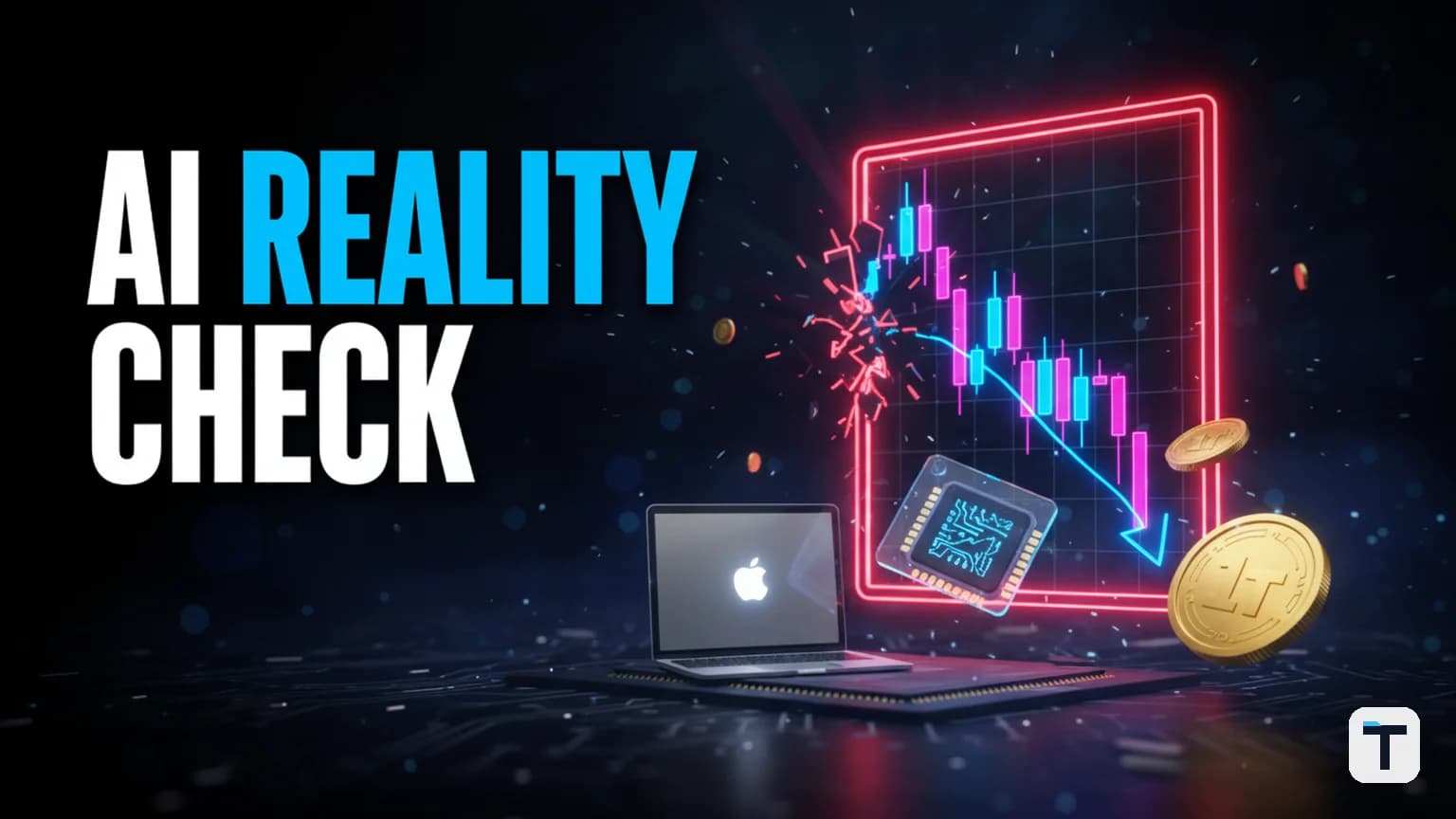
At-a-glance box:
- Last verified: 2026-06-26
- Core Event: South Korea’s KOSPI plunged 8.2% on June 26, 2026, triggering a market-wide circuit breaker.
- The Triggers: Unprecedented memory chip price hikes and rumors of OpenAI delaying its $1 trillion IPO until 2027.
- Key Entities: Samsung Electronics, SK Hynix, Apple, Micron Technology, and OpenAI.
- Status: Market "gut check" rather than a fundamental collapse; long-term HBM supply remains sold out through 2027.
The June 2026 AI Market Plunge: What Happened?
The previously unstoppable AI rally faced a sharp reversal in late June 2026. Global tech markets, which had reached record highs on the back of generative AI enthusiasm, suddenly stumbled as a "perfect storm" of rising costs and cooling IPO expectations hit all at once.
The most visible impact occurred on June 26, 2026, when South Korea’s benchmark KOSPI index cratered 8.2%, plunging to 8,198.33 and triggering a Level 1 circuit breaker. This automatic 20-minute trading halt was necessary as heavyweights Samsung Electronics and SK Hynix—which together represent approximately 40% of the index—each saw their shares slide nearly 10% in a single session. This volatility wasn't limited to Korea; Japan's Nikkei 225 fell nearly 5%, and SoftBank, a massive AI investor, saw a 12% drop.
Why are AI Hardware Costs Rising?
The catalyst for the sell-off wasn't a lack of interest in AI, but rather the ballooning cost of the hardware required to run it. On June 25, 2026, Apple implemented significant price increases across its MacBook and iPad lines, a move analysts are calling RAMageddon.
According to Apple, skyrocketing memory and storage chip costs made it impossible to maintain previous pricing. Industry data from Q1 2026 showed DRAM prices surging 98%, with further 60% increases expected in the current quarter. This "memory crunch" is driven by AI data centers sucking up the global supply of High-Bandwidth Memory (HBM).
Is the OpenAI IPO Delayed?
Investor sentiment was further dampened by reports that OpenAI may delay its Initial Public Offering (IPO) until 2027. While the company had reportedly filed confidentially for a public debut earlier in the month, insiders now suggest that CEO Sam Altman is unwilling to proceed at a valuation lower than $1 trillion.
The cooling appetite for mega-IPOs on Wall Street, combined with the post-IPO slump of other tech giants, has raised questions about whether AI valuations have become "too hot." For major investors like SoftBank, a delayed OpenAI exit removes a key reason for holding high-priced AI positions in the short term.
The Bull Case: Why the AI Build-out Continues
Despite the "gut check" moment in the public markets, the physical build-out of AI infrastructure remains at full throttle. The fundamentals for the leading chipmakers remain structurally strong, even if their stock prices have hit a temporary ceiling.
- Micron is Sold Out: Micron Technology confirmed that its entire 2026 HBM production is sold out under binding contracts, with orders already extending into late 2027.
- Massive Infrastructure Investment: Amazon announced an additional $13 billion investment in India on June 25, 2026, specifically to expand AWS data center capacity in Mumbai and Hyderabad to meet AI demand.
- HBM Dominance: Both SK Hynix and Samsung have secured HBM orders through 2027 and are aggressively ramping up capacity to meet the needs of next-generation GPUs.
What this means for you
For professionals and small business owners, this market volatility translates to a "hardware tax." If you were planning to upgrade your team's MacBooks or iPads, you should expect to pay 10-15% more than you did earlier this year. However, the continued investment from giants like Amazon and Micron suggests that while the stocks are volatile, the tools you rely on will only become more powerful and ubiquitous as the infrastructure matures.
FAQ
Q: What is a circuit breaker in the stock market? A: A circuit breaker is an automatic trading halt triggered when an index drops by a specific percentage (e.g., 8% for KOSPI). It is designed to prevent panic selling and allow investors to digest information during periods of extreme volatility.
Q: Why is AI making my laptop more expensive? A: AI models require massive amounts of High-Bandwidth Memory (HBM). Because chipmakers like Micron and Samsung are prioritizing these high-margin AI orders, there is a global shortage of standard RAM and storage for consumer devices, forcing manufacturers like Apple to raise prices.
Q: Is the AI bubble bursting in 2026? A: Most analysts view the June 2026 sell-off as a "valuation correction" rather than a bubble burst. While stock prices have pulled back from record highs, the underlying demand for AI chips and infrastructure remains at record levels, as evidenced by Amazon's multi-billion dollar investments.
Q: When will OpenAI go public? A: While OpenAI confidentially filed for an IPO in June 2026, current rumors suggest a public listing may be pushed to 2027 to ensure the company achieves its targeted $1 trillion valuation.
Every claim here is traced to a primary source, dated, and listed under Sources. Research and drafting are AI-assisted; editing, verification and publication are human decisions, and a person is accountable for what appears on this page. How we work →




Discussion
0 comments