
Last verified: June 26, 2026
Key Models: Claude Opus 4.8, Claude Sonnet 4.6, Amazon Nova Premier.
Security Status: SOC 2 Type II and HIPAA compliant.
Data Policy: Customer data is not used for training foundation models.
Why move from Public APIs to Private Bedrock?
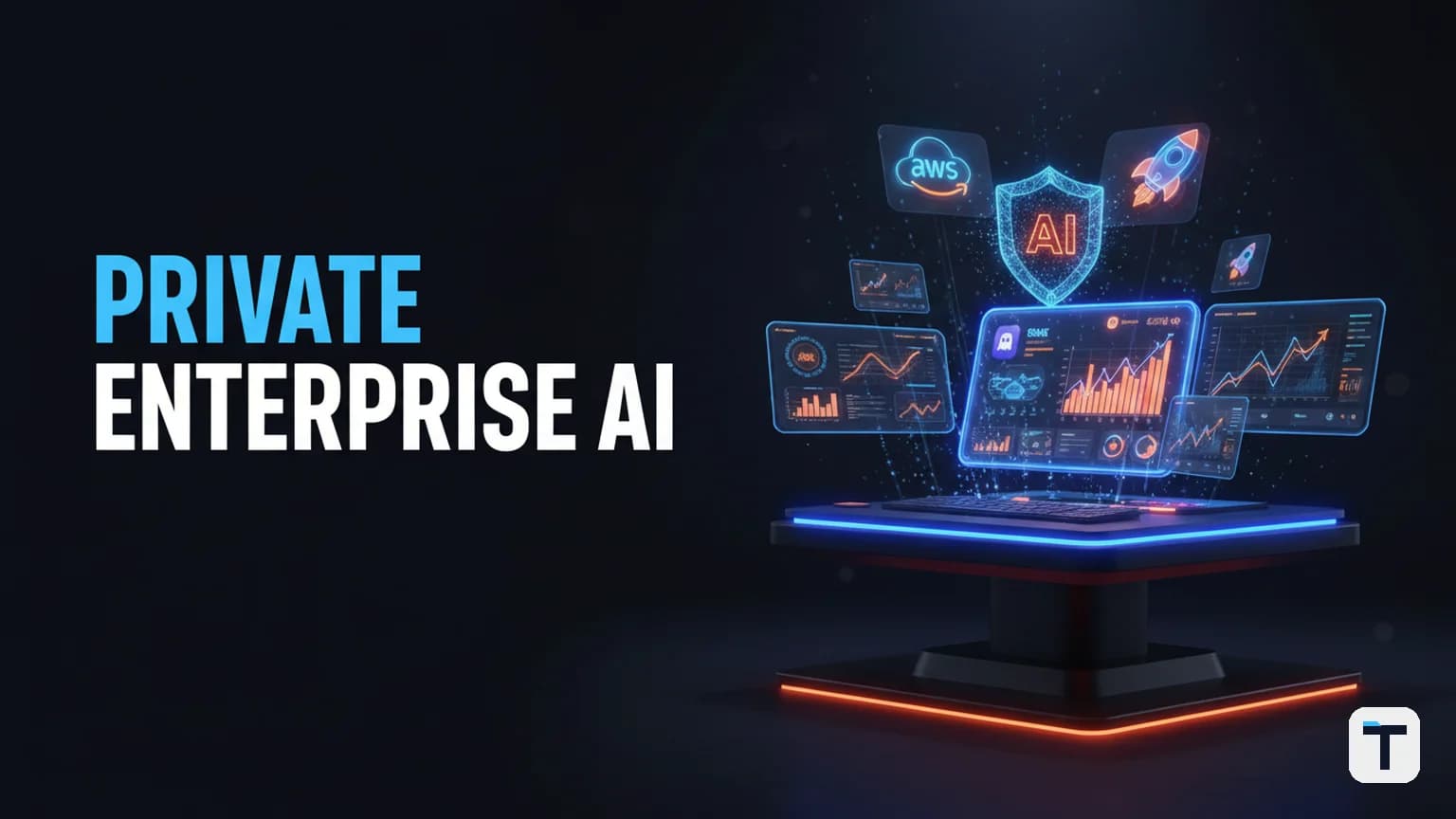
The "AI Party" of 2024—characterized by consumer-grade chatbot wrappers and shared API keys—is over for mature enterprises. In 2026, the risk of data leakage and non-compliance is too high for regulated industries like finance, healthcare, and legal.
Amazon Bedrock provides a managed environment where foundation models (FMs) run inside your own Virtual Private Cloud (VPC). This architecture ensures that:
- Authentication is Unified: You use AWS IAM roles and OIDC federation (Okta, Microsoft Entra ID) instead of scattered API keys.
- Traffic is Private: Requests travel over AWS PrivateLink, never touching the public internet.
- Data is Encrypted: All data at rest is encrypted via your own AWS KMS keys.
The 2026 Enterprise AI OS Architecture
An "Agent OS" is more than a chat interface; it is a coordinated stack of microservices that allows AI agents to observe, reason, and act securely.
| Layer | Service | Role |
|---|---|---|
| Orchestration | AWS Fargate | Runs the core agent logic (e.g., Hermes Agent OS) in a serverless container. |
| Inference | Amazon Bedrock | Managed access to Claude Opus 4.8 and Amazon Nova via serverless endpoints. |
| Memory/RAG | S3 + DynamoDB | Persistent storage for vector embeddings, session logs, and long-term agent memory. |
| Tool Use | MCP Servers | Securely connects agents to Salesforce, Slack, and Jira using the Model Context Protocol (MCP). |
| Security | Bedrock Guardrails | Real-time DLP scanning to block PII, company secrets, and prompt injection attacks. |
Selecting the Right "Brain": Model Strategy for 2026
Successful enterprise deployments no longer route all traffic to the most expensive model. In 2026, an efficient Agent OS uses a hierarchical model strategy:
1. The Planner (Claude Opus 4.8)
Used for complex, multi-step tasks that require high reasoning depth and 1M-token context. Opus 4.8 excels at autonomous coding and deep knowledge synthesis.
- Price (estimated): $15.00/1M input | $75.00/1M output.
2. The Worker (Claude Sonnet 4.6)
The production workhorse. Balanced for speed and cost, it handles 80% of standard agent turns and structured data extraction.
- Price: $3.00/1M input | $15.00/1M output [Source: Amazon Bedrock Pricing].
3. The Specialist (Amazon Nova)
Amazon's native Nova models (Premier, Lite, Micro) handle multimedia tasks like image generation and audio transcription natively within Bedrock, reducing latency and external dependencies.
Security Posture: Beyond the Firewall
Compliance in 2026 requires more than just a VPC. Your AI OS must include:
- Immutable Audit Logs: Every agent action and model response must be logged to a non-deletable S3 bucket for legal review.
- Automated DLP Scans: Use Bedrock Guardrails to filter responses before they reach the user, catching PII or sensitive credentials (e.g., GitHub tokens, AWS keys).
- Kill Switches: A central dashboard to immediately terminate all agent sessions or specific model access in case of a detected breach.
What this means for you
Building an Agent OS on Bedrock isn't just about security; it's about agency. By hosting the infrastructure yourself, you own the "shared brain" of your organization's AI. This is the final step in moving towards agent-ready infrastructure.
- Pilot: Start with a dedicated AWS account and enable model access in
us-east-1for the widest selection. - Integrate: Connect your existing identity provider via SSO to manage developer access.
- Harden: Deploy Bedrock Guardrails with a focus on PII detection and denied-topic filtering.
Q: Does AWS train models on my Bedrock data? A: No. Amazon Bedrock does not use customer data (prompts or responses) to train the base foundation models. Data stays within your designated AWS region and VPC.
Q: Can I use Claude Code with Bedrock?
A: Yes. As of 2026, Claude Code supports Bedrock as a provider using the anthropic.claude- model strings and standard AWS credentials.
Q: What is the benefit of "Provisioned Throughput"? A: Provisioned Throughput is best for high-volume, consistent workloads where you need guaranteed latency. For most pilot projects, the On-Demand (Serverless) tier is 60-80% more cost-effective.
Q: How does MCP work in this architecture? A: The Model Context Protocol (MCP) servers run as containers (e.g., in Fargate) alongside your agents, allowing them to make secure, authenticated tool calls to enterprise systems like Salesforce or Slack without exposing credentials to the model itself.
Related reading
Every claim here is traced to a primary source, dated, and listed under Sources. Research and drafting are AI-assisted; editing, verification and publication are human decisions, and a person is accountable for what appears on this page. How we work →
Discussion
0 comments