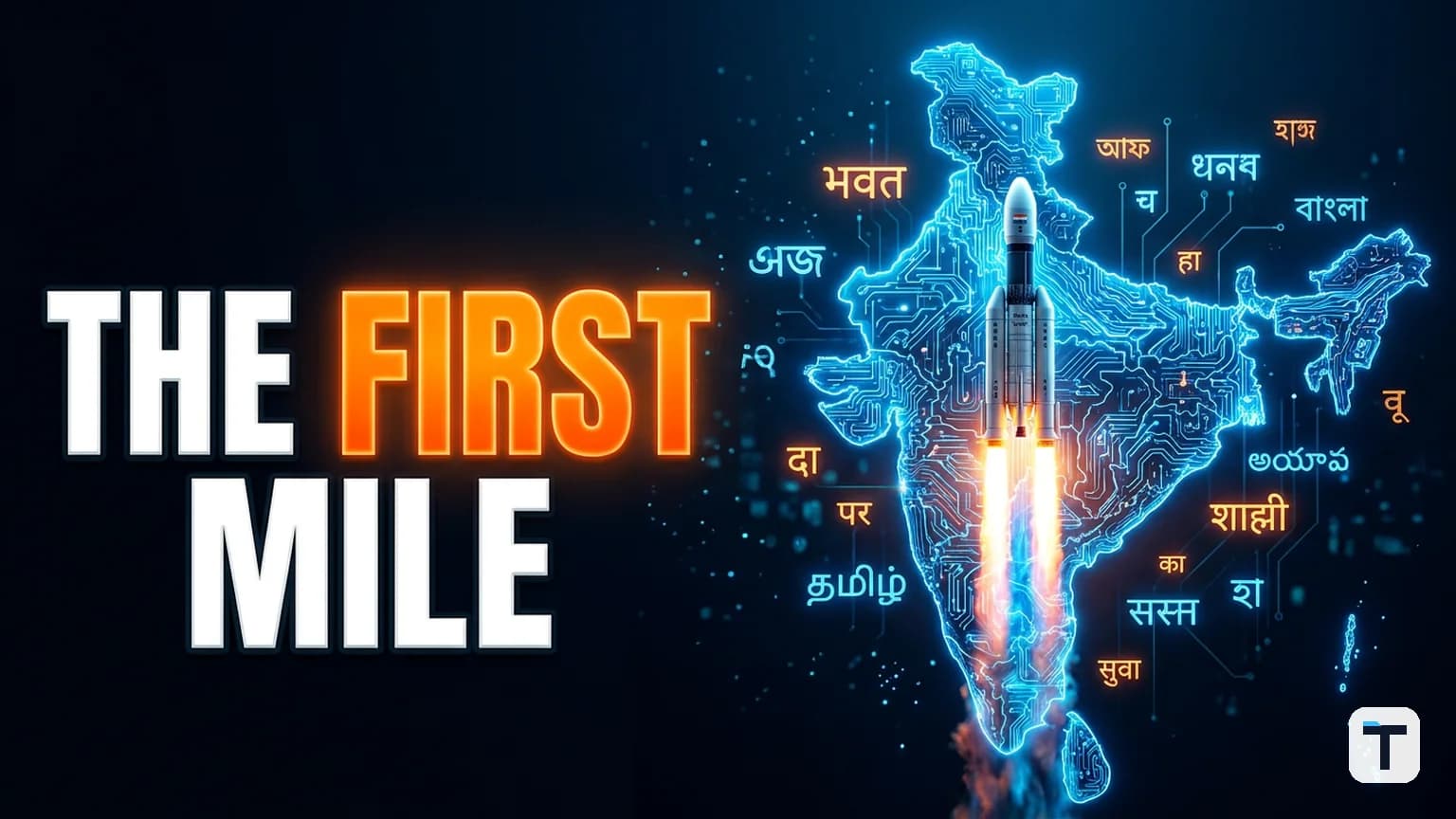

Verdict: India’s shift toward sovereign AI is no longer a policy preference; it is a critical economic security mandate. Following the June 2026 “Fable 5 Blackout” that took global AI infrastructure offline for 20 days, the priority has shifted from consuming foreign frontier models to building a "first-mile" indigenous stack led by the IndiaAI Mission and the BharatGen consortium.
| Feature | Foreign Models (e.g., GPT-5.6, Fable 5) | Indian Sovereign Models (e.g., BharatGen, Sarvam) |
|---|---|---|
| Data Locality | Cloud-based (Global) | Sovereign (On-Prem/Local Cloud) |
| Dependency Risk | High (Subject to Export Controls) | Low (National Infrastructure) |
| Linguistic Nuance | Limited (Western-Centric) | High (22+ Indic Languages) |
| Cost | Premium ($10-$50/M tokens) | Frugal (Targeting ₹5/M tokens) |
| Provenance | Opaque | Transparent/Observable |
The Wake-Up Call: The 20-Day Fable 5 Blackout
In June 2026, the AI world learned the true meaning of "intelligence capture." When the US government ordered Anthropic to take its Fable 5 and Mythos 5 models offline globally for 20 days due to export control concerns, thousands of Indian startups were left stranded. Startups that had integrated Claude Fable 5 into their Agent OS discovered that a single foreign policy decision could yank their core infrastructure in real time.
This event validated what Professor Ganesh Ramakrishnan (IIT Bombay) had long argued: sovereignty means "provenance and observability in the entire AI pipeline." For India, building homegrown models is the only way to ensure that its digital future isn't held hostage by vendor business shifts or geopolitical friction.
What is Sovereign AI? (Provenance and Observability)
Sovereignty in AI is often misunderstood as mere data locality. In 2026, the definition has expanded to include three core pillars:
- Provenance: Knowing exactly where the training data came from (e.g., the Bharat Data Sagar repository).
- Observability: Having full visibility into the model’s weights, biases, and decision-making logic.
- Compute Autonomy: Running models on domestic hardware, supported by the ₹10,000 crore IndiaAI Mission and the recent ₹3,500 crore HCLTech data center pivot.
The "Last Mile to First Mile" Framework
The most transformative idea in the 2026 AI landscape is the "Last Mile to First Mile" framework. Traditionally, technology is built for elite "front-mile" users and eventually trickles down to the "last mile" (rural populations, non-English speakers).
Sovereign AI flips this brief. Under the leadership of the BharatGen consortium, the "last mile" user—the farmer in Vidarbha or the small shopkeeper in Bihar—is the primary design brief. By building for the hardest use cases first, India is creating AI that is inherently more robust and inclusive than general-purpose Western models.
India’s Heavyweights: Who is Building the Sovereign Stack?
Several key entities are now driving India toward a $350 billion semiconductor and AI roadmap:
- BharatGen: Led by IIT Bombay, this government-backed consortium is building a 1-trillion parameter "mother model." Rather than a single chatbot, this system serves as a foundational base for distilling smaller, domain-specific models for agriculture, law, and healthcare.
- Sarvam AI: Having pivoted from general models to Indic-focused applications, Sarvam recently launched its 105B parameter model, optimized for high-performance reasoning in Indian contexts.
- Socket AI: Led by Abhishek Upadhyay, Socket is focused on critical infrastructure—healthcare, defense, and banking—where security risks make foreign models a non-starter.
- Wadhwani AI: A non-profit entity applying AI to real-world rural problems, from pest management to maternal health diagnostics.
The Frugal Innovation Dilemma: Cost vs. Quality
India’s AI strategy relies on frugal innovation, with projects like BharatGen targeting costs as low as ₹5 per million tokens. However, this has sparked a debate: are we building "frontier" models or "frontier minus one" systems?
While models like Project Indus (Tech Mahindra) and BharatGen Param2 17B are significantly cheaper than GPT-5.6, they are often specialized for specific tasks rather than general-purpose reasoning. The challenge for 2026 is ensuring that frugality doesn't become a euphemism for lower capability. To compete globally, Indian AI must match the "quality of reasoning" of the West while maintaining the "cost of access" for Bharat.
What This Means for You
For small business owners and developers, the shift to sovereign AI offers two major advantages:
- Vertical Ownership: You can build on models that are legally and technically grounded in Indian context, reducing the risk of "black-box" hallucinations.
- Infrastructure Resilience: By using local providers like HCLTech's AI data centers, you protect your business from global supply chain shocks and AI memory shortages.
FAQ Section
Q: Why can’t we just use open-source models like Llama or DeepSeek? A: While open-source is better than closed-door models, it still lacks "sovereign provenance." Relying on a Chinese model (like DeepSeek) or a US-controlled model (like Llama) carries long-term security and export-control risks. Sovereign AI means owning the data, the weights, and the compute.
Q: Is India building frontier models or just "wrappers"? A: Projects like BharatGen and Sarvam are training from scratch on domestic datasets. These are not wrappers; they are foundational models built to understand the unique linguistic and cultural nuances of the Indian population.
Q: When will these sovereign models be available for general use? A: Several are already live. BharatGen's Param2 17B MoE launched in February 2026, and Sarvam's 105B model is currently in early access for enterprise partners.
Q: How does the IndiaAI Mission support startups? A: The mission provides GPU subsidies, access to the Bharat Data Sagar (sovereign dataset), and funding for startups building "AI for Bharat" use cases.
Sources:
- IndiaAI Mission (Official Government Portal, 2026)
- BharatGen Consortium: Sovereign AI Initiative Report (IIT Bombay, 2025-2026)
- "The Last Mile to First Mile Framework" - Lecture by Prof. Ganesh Ramakrishnan (2026)
- HCLTech Q1 Earnings Report: AI Infrastructure Investment (2026)
- Vikram-1 Launch Announcement (Skyroot Aerospace, July 18, 2026)
Updates log:
- July 20, 2026: Article published; updated with Fable 5 blackout context and Skyroot's orbital success.
- July 18, 2026: Vikram-1 reaches orbit; sovereign space-tech model verified.
Last verified: July 20, 2026
Discussion
0 comments