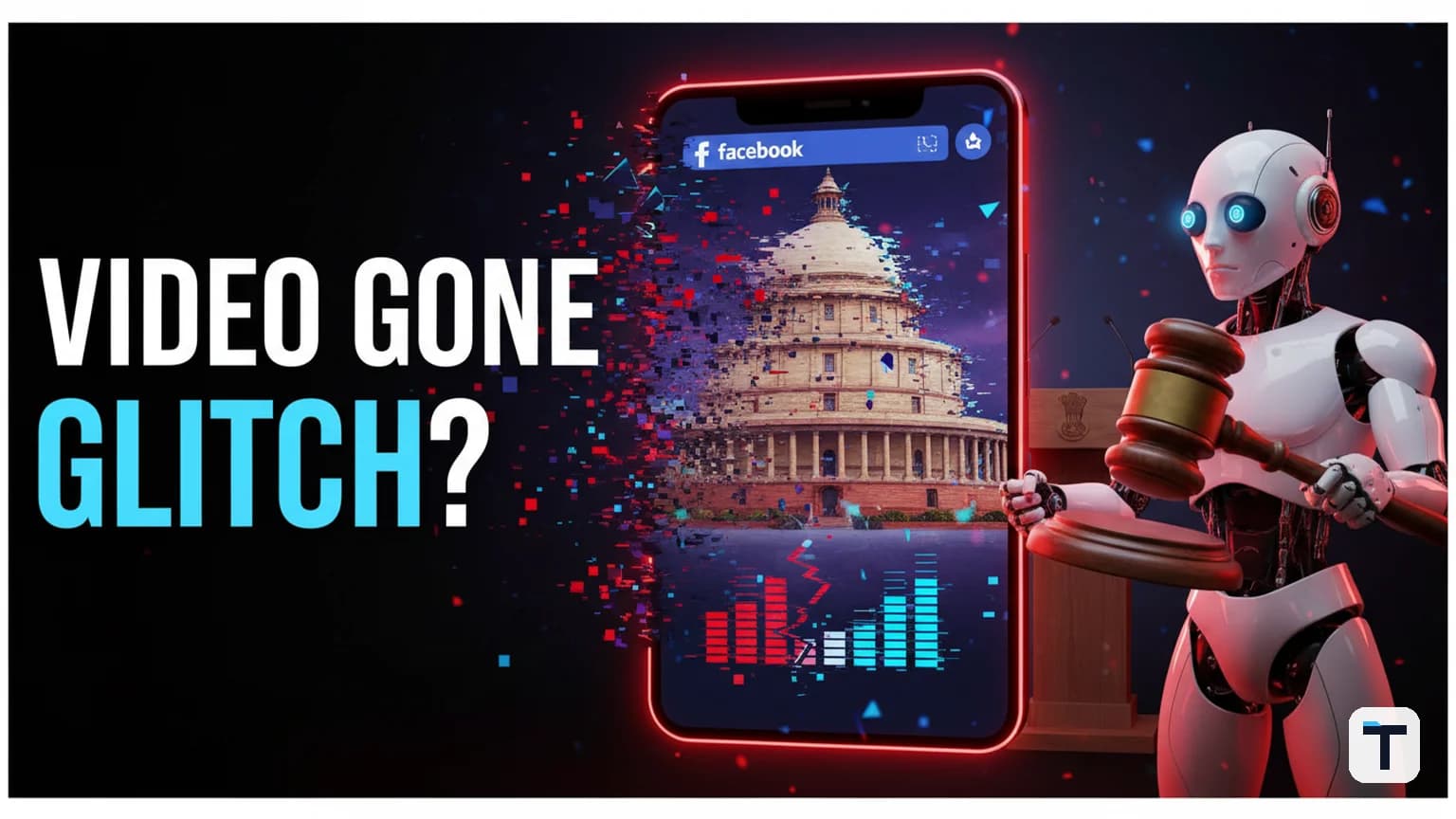

Verdict: Meta's brief, erroneous takedown of Prime Minister Narendra Modi's Facebook video on 28 July 2026 was a five-hour technical glitch that turned into a constitutional moment. Within a week, India's IT ministry had summoned Meta's top policy executive, a parliamentary committee demanded a personal apology from CEO Mark Zuckerberg, Hyderabad police filed an FIR against Meta's India head, and the committee chair threatened to strip the company of its "safe harbour" legal immunity under Section 79 of the IT Act. For founders, marketers, and small businesses that depend on Facebook, Instagram, YouTube, and X to reach customers, the clearest signal is this: the platforms you build on are not neutral pipes anymore — the state, the courts, and the platforms themselves are all rewriting the rules of who is responsible for what appears online. The 2026 takeaway is operational, not political: diversify off rented land, understand your intermediary obligations, and prepare for a world where a three-hour takedown clock is now law — the same "control your own infrastructure" logic we explored in our piece on sovereign AI and why enterprises are pulling data back from foundation-model labs.
Last verified: 2026-08-05 · India's three-hour takedown amendment took effect 20 Feb 2026 · Meta restricted 28,000+ items in India in H1 2025 on government request · The IT Rules 2021 require a Grievance Officer, 36-hour (now 3-hour for some categories) takedown, and AI-content labelling · Pricing/limits change often — re-check before relying on any figure below.
What actually happened to the Modi Facebook video?
On 23 July 2026, Prime Minister Narendra Modi posted a roughly three-minute selfie video to his official Facebook page — his first direct address to Gen Z during the 36-day student agitation led by the "Cockroach Janta Party" (CJP) over NEET UG 2026 exam irregularities and paper leaks. In the video he promised stricter laws, fast-track courts, and a draft bill against paper leaks to be placed before the Union Cabinet.
Five days later, in the early hours of 28 July, the video became inaccessible on Facebook. Some users saw a notice that the content had been "restricted in India in response to a legal request," with no authority or legal provision named. By the morning, Meta had restored the post and issued a statement: "The content was removed in error and has since been restored." A spokesperson told ANI it was a "technical glitch" in automated content filters — not a government directive and not a moderation decision. Sources later reported Meta offered to "ringfence" high-profile accounts to prevent a repeat.
That could have been the end of a small, embarrassing story. It was not.
Why did a five-hour glitch become a sovereign issue?
Because the timing and the target turned a routine error into a test of who governs India's digital public square. The video was posted by a sitting head of government during a politically live protest; the restriction notice implied a state legal request that, per Meta, had never existed. Two arms of the Indian state moved immediately.
The Ministry of Electronics and Information Technology (MeitY) summoned Meta's global head of public policy. According to ETV Bharat, sources said Meta blamed a fault in its automated content filters — and that the ministry found the "'glitch' explanation not adequate" and would keep pressing. The matter was "not settled and done."
Separately, the Parliamentary Standing Committee on Communications and Information Technology convened a hearing on 3 August 2026 with representatives of Meta, Google, YouTube, X, and Snapchat, plus officials from MeitY and the Ministry of Home Affairs. Committee chair and BJP MP Nishikant Dubey then publicly demanded that CEO Mark Zuckerberg "apologise within three days," failing which he said the committee would consider recommending withdrawal of Meta's safe harbour under Section 79(3) of the IT Act and action "as a Publisher." Dubey's framing — that Meta was no longer acting as a passive intermediary but as an editor — is the part that outlives this incident, because it is the same argument regulators worldwide are using to unwind platform immunity.
What does "safe harbour" actually protect, and can it actually be revoked?
Safe harbour is the legal immunity that lets a platform host billions of user posts without being sued for each one. In India it lives in Section 79 of the Information Technology Act, 2000 (rewritten by the 2008 amendment, and partly read down by the Supreme Court in Shreya Singhal v. Union of India, 2015). The protection is conditional: the intermediary must not initiate the transmission, must not select the receiver, must not modify the content, and must observe "due diligence" prescribed by the Central Government — today, the IT (Intermediary Guidelines and Digital Media Ethics Code) Rules, 2021, notified on 25 February 2021.
The Rules require, among other things, a published privacy policy and user agreement, a resident Grievance Officer, a 36-hour takedown response window (now three hours for certain unlawful content under the February 2026 amendment, effective 20 February 2026), and, for significant social media intermediaries (5M+ Indian users), traceability of the originator of messages and voluntary removal of unlawful material the platform itself becomes aware of. Section 79(3) strips immunity if the intermediary fails to expeditiously remove access to unlawful content after receiving actual knowledge — either from a court order or, post-Shreya Singhal, a government notification. That is the lever Dubey is reaching for.
Whether a parliamentary committee can unilaterally "revoke" Section 79 protection is legally doubtful — that requires either a court finding or an executive notification, and a Shreya Singhal-conformant process. But the threat does real work regardless: it raises the political and reputational cost of non-compliance, and it signals that the "glitch" defence carries less weight each time it is used.
What is the new three-hour takedown rule and why does it matter to you?
In February 2026, MeitY notified an amendment to the IT Rules cutting the takedown window for certain categories of unlawful content — including deepfakes and AI-generated material — from 36 hours to three hours of receiving a valid government notice, effective 20 February 2026. AI-generated content must also be "prominently labelled."
Lawyers have called the three-hour limit "practically impossible" to honour with a meaningful "application of mind." But for your business, two things are now operational reality: (a) platforms will aggressively over-remove anything that resembles flagged content to avoid missing the clock, which is exactly the dynamic that produced the Modi glitch; and (b) your own content, if misidentified as unlawful, can disappear in hours with no warning — and you will have very little time to appeal.
| Takedown clock (India, 2026) | What it covers | Source |
|---|---|---|
| 3 hours | Certain unlawful content incl. deepfakes / AI-generated material on govt notice | Amended IT Rules 2021, eff. 20 Feb 2026 |
| 36 hours (general) | Other unlawful content under IT Rules 2021 | IT Rules 2021, r. 3 |
| 24 hours (intermediary self-takedown) | Content the platform itself becomes aware of | IT Rules 2021, Significant SMI tier |
How does the Hyderabad FIR fit in?
Separately from the Facebook glitch, on 30 July 2026 the Hyderabad Cyber Crime Police registered an FIR naming Meta India head Arun Srinivas and several social media users over AI-generated, morphed videos of PM Modi circulating on Facebook and Instagram. Investigators are examining possible violations of the Bharatiya Nyaya Sanhita and the IT Act, and whether Meta's safeguards were adequate to stop the material spreading.
The significance for anyone operating a platform, marketplace, or any product with user-generated content in India: naming a country head in a criminal FIR is a hawkish version of intermediary-liability enforcement. A CEO-grade threat concentrates compliance minds faster than any fine. Allied to the parliamentary committee's posture, it says: when an Indian public official's content is affected — wrongly removed or maliciously faked — the entity that owns the platform, not just the user, is now the addressable target.
What this means for you (the builder, the marketer, the operator)
If you read only one section, read this.
- Treat every social platform as a leased storefront, not your shop. The Modi takedown was the most-watched glitch of 2026, but it was not unique. India issued tens of thousands of takedown orders in recent years, and Meta alone restricted over 28,000 pieces of content in India in the first half of 2025 on government request. Whatever you have built on a third-party feed — a following, a lead pipeline, a creator business — can be paused in hours with no recourse.
- Keep a parallel owned channel (email list, newsletter, your own domain you control, an RSS feed). The cost of acquiring one is a rounding error compared to the cost of losing distribution overnight. For how we think about this on owned infrastructure, see our breakdown of how AI is reshaping India's IT industry and what builders should do — the same "build on rented land" risk applies to your own go-to-market.
- If you operate any intermediary surface — comments, a marketplace, a UGC tool — appoint your Grievance Officer and publish a takedown contact. The IT Rules 2021 apply to far more than Meta. The naming of Meta's India head in a criminal FIR shows the state will reach for the top human on the org chart.
- Audit your AI-content labelling. The amended Rules require prominent labelling of AI-generated content, and the three-hour clock means platforms will pre-emptively remove anything that looks unlabelled and fake. Mark, watermark, and document provenance for everything synthetic you publish, or it will be a sitting duck.
- Assume content moderation is adversarial, not just imperfect. The same system that wrongly removed a Prime Minister can wrongly remove a product launch, an investigative thread, or a small-business ad. Appeals infrastructure is no longer optional — treat the cost of a takedown as a line item in your operating plan, not a freak occurrence.
What the global picture looks like
India is not an outlier; it is one node in a worldwide tightening of platform liability. The European Union's Digital Services Act imposes layered duties on Very Large Online Platforms with hard deadlines and risk assessments. The UK's Online Safety Act holds platforms accountable for illegal user harm. Brazil's Bill 2630 walks a similar line. And the kind of creator-side lawsuits India is generating are already showing up wherever a platform is seen to profit from what users make — see our reporting on the Google Flow / Autodesk case and what happens when a studio trains its crew on a sued platform. The idiosyncrasy in India is speed — the three-hour clock is among the most aggressive in any democracy — and a willingness to criminalise the platform's local leadership when the moderation system fails in a politically sensitive direction. For how in-country compute and data-residency rules are reshaping that same risk surface, see our analysis of Anthropic's India Claude rollout and what actually changes for enterprises. If you ship globally, the operating model is the same everywhere: the era of "we are just the pipe" is closing.
FAQ
Q: Why was PM Modi's Facebook video removed? A: Meta said the 28 July 2026 removal was a "technical error" in its automated content filters, not a moderation decision or a government request. The video was restored the same day and Meta apologised.
Q: What is "safe harbour" under Section 79 of the IT Act? A: It is the conditional legal immunity that protects online intermediaries from liability for user-generated content, provided they observe due diligence under the IT Rules 2021 (including a Grievance Officer and takedown compliance) and do not initiate or modify the content.
Q: Can a parliamentary committee actually revoke a platform's safe harbour? A: Not unilaterally. Withdrawal typically requires an executive notification or a court finding under Section 79(3), per Shreya Singhal v. Union of India (2015). But a committee's political threat materially raises the compliance pressure on the company.
Q: What is India's three-hour takedown rule? A: An amendment to the IT Rules, notified in February 2026 and effective 20 February 2026, requires intermediaries to remove certain unlawful content — including deepfakes and AI-generated material — within three hours of a valid government notice, down from the prior 36-hour window.
Q: How does this affect a small business that uses Facebook or Instagram? A: Your content can be restricted or removed in hours, often without warning, because platforms over-remove to meet the new clock and to avoid legal exposure. Build a parallel owned channel (email, your domain), label any AI-generated content, and budget for appeals as an operational cost.
Q: Who was named in the Hyderabad police FIR? A: The FIR, registered 30 July 2026, named Meta India head Arun Srinivas and several social media users over AI-generated morphed videos of PM Modi circulating on Facebook and Instagram; possible charges were being examined under the Bharatiya Nyaya Sanhita and the IT Act.
Discussion
0 comments