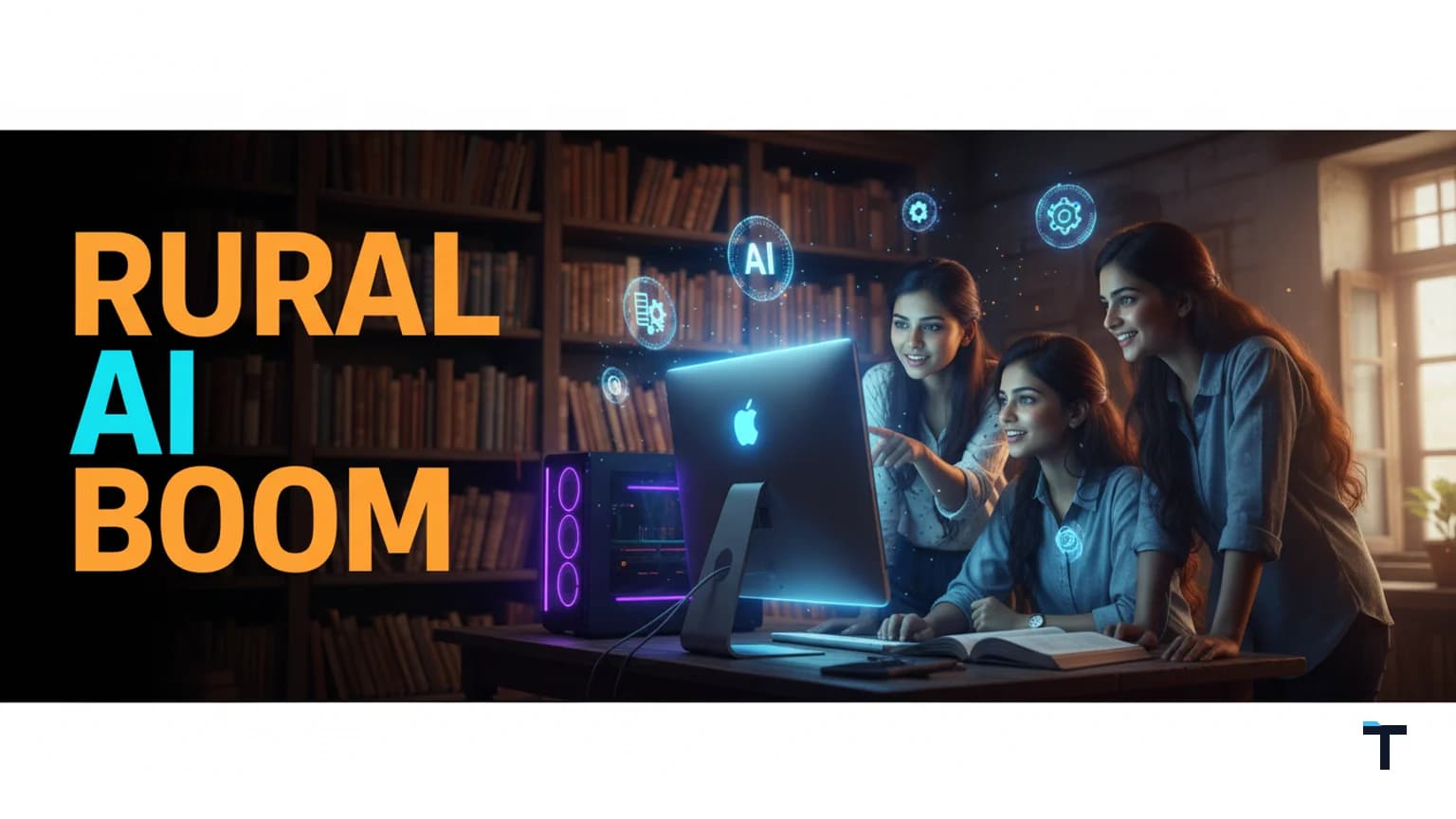

Verdict: While Bengaluru remains India’s undisputed AI capital with a 19% share of the nation's talent, the real story for 2026 is the rapid democratization of AI infrastructure. Karnataka is leading this shift by deploying 2,000 indigenously developed, AI-ready "KEO" PCs across rural libraries and schools. By decoupling AI learning from high-speed urban fiber and expensive hardware, the state is building a resilient, inclusive talent pipeline that reaches deep into Tier-2 and Tier-3 cities.
Last verified: 2026-06-25 · Primary Initiatives: KEO PC Rollout, ArivuKendra.ai, Schools.ai · Hardware: RISC-V based KEO PCs (₹18,999) · Key Metric: Nearly 20% of India's AI learners now come from Tier-2 cities. Volatility Note: Government rollout schedules and hardware specifications are subject to policy updates. Last verified June 2026.
As the India AI workforce landscape shifts, the bottleneck is no longer just "interest" but "access." While urban centers thrive on established ecosystems, the next wave of growth depends on bridging the last mile of AI workforce development. Karnataka’s new infrastructure bet aims to solve exactly this.
What is the KEO PC initiative and why does it matter?
The KEO PC is an indigenously developed, AI-ready personal computer designed specifically to bring high-end computing to underserved regions. Priced at ₹18,999, these systems are being assembled at the KEONICS manufacturing facility in Peenya and are designed to function locally without a constant high-speed internet connection.
The first phase involves the deployment of 2,000 units to rural libraries and educational institutions across Karnataka’s 239 taluks. This initiative, part of the ArivuKendra.ai and Schools.ai programs, ensures that students in classes 6-10 have access to:
- AI Literacy & Prompt Engineering: Learning the fundamentals of LLM interaction.
- Local AI Execution: Powered by a RISC-V processor and open-source architecture, allowing AI apps to run on-device.
- Competitive Exam Prep: Specialized modules for state-board and national exams.
This move directly addresses the "digital divide" by providing the same tools to a student in a rural taluk as their counterpart in a Bangalore startup hub.
How is India's AI talent distribution changing?
While the infrastructure is spreading, the talent distribution is already showing a clear "metro-to-rural" migration. According to the India AI Workforce Report 2026 by Scaler, while Bengaluru anchors 19% of the learner base, nearly one in five (20%) AI learners now come from Tier-2 cities like Lucknow, Patna, Jaipur, and Coimbatore.
India’s Top AI Talent Hubs (2026)
| City / Region | Share of AI Learners |
|---|---|
| Bengaluru | 19% |
| Pune | 7% |
| Hyderabad | 4% |
| Mumbai | 4% |
| Chennai | 3% |
| Tier-2 Cities (Combined) | ~20% |
Source: Scaler India AI Workforce Report 2026.
This shift is being fueled by professionals from non-technical backgrounds—marketers, analysts, and finance teams—who now make up nearly 25% of the AI learning pool. By providing hardware like the KEO PC in rural centers, Karnataka is positioning itself to capture this "non-tech" upskilling boom at scale.
Is Bangalore's tech dominance under threat?
The short answer is: no, but it is evolving. Rather than Bangalore losing its status, we are seeing the emergence of a "hub-and-spoke" model. Bangalore remains the headquarters for R&D and venture capital, but the operational and talent-feeding spokes are moving to Tier-2 cities.
Other states are also making aggressive plays. For instance, the Uttar Pradesh GCC Policy offers massive subsidies to lure Global Capability Centres away from the south. Karnataka’s response is to double down on the talent supply chain itself, ensuring that even as companies look for cost-arbitrage in Tier-2 cities, the talent they find there is "Bangalore-grade."
What this means for you
- For Small Business Owners: The geographic barrier to hiring AI-literate talent is vanishing. You can now source capable team members from Tier-2 cities where operational costs are lower, but AI fluency is high.
- For Rural Students & Professionals: The KEO PC rollout and ArivuKendra.ai initiative mean you no longer need to migrate to a metro to learn "frontier" skills. Prompt engineering and AI application building are becoming local skills.
- For Investors: Keep a close eye on the "KEO Ecosystem." The rise of indigenous, RISC-V based local AI hardware could create a new market for localized, offline AI applications.
FAQ
Q: How much does a KEO PC cost? A: The KEO PC is priced at ₹18,999, making it one of the most affordable AI-ready computing solutions in the Indian market.
Q: Can the KEO PC run AI models without the internet? A: Yes. It is built on an open-source architecture with a RISC-V processor that allows AI applications to run locally on the device, specifically designed for areas with weak connectivity.
Q: Which cities are considered the biggest AI talent hubs in India? A: Bengaluru leads with 19%, followed by Pune (7%), Hyderabad (4%), Mumbai (4%), and Chennai (3%). However, Tier-2 cities now account for nearly 20% of all AI learners.
Q: Who is leading the Karnataka rural AI initiative? A: The initiative is led by the Karnataka IT/BT Department under Minister Priyank Kharge, with manufacturing handled by KEONICS.
Q: What are ArivuKendra.ai and Schools.ai? A: These are state-led programs focused on deploying AI-enabled systems and learning content across 239 taluks in Karnataka to promote AI literacy from the school level up.
Every claim here is traced to a primary source, dated, and listed under Sources. Research and drafting are AI-assisted; editing, verification and publication are human decisions, and a person is accountable for what appears on this page. How we work →
Discussion
0 comments