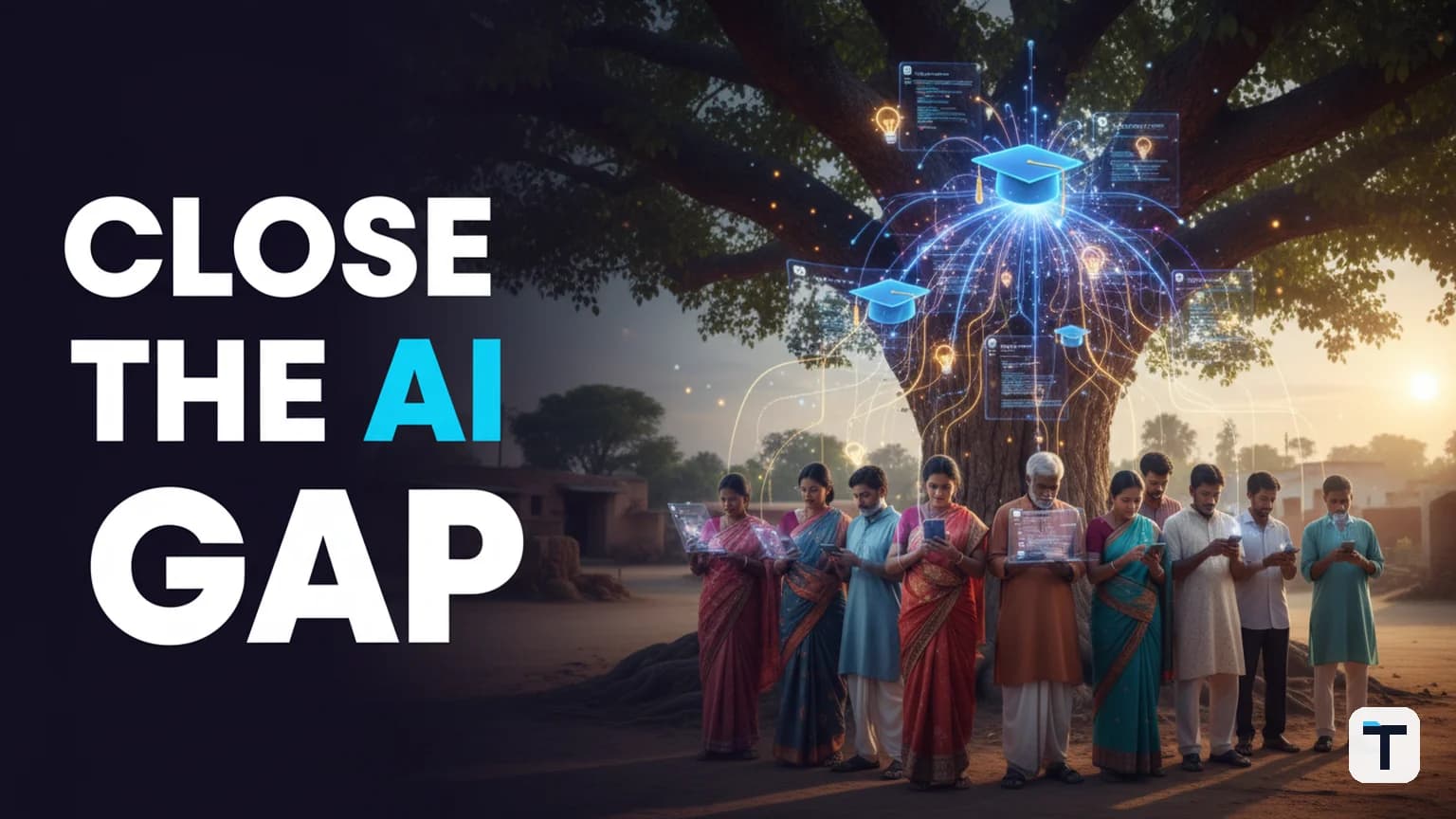

Verdict: Closing the AI skills gap requires moving beyond physical infrastructure (GPUs and smartphones) to a "human-first" execution model. While 58% of the Asia-Pacific workforce is excited about AI, only 15% have received training; bridging this 43% gap necessitates localized engagement and catalytic capital to de-risk the transition for the most vulnerable workers.
At a Glance
- The Deficit: 85% of the Asia-Pacific workforce has received zero AI training, despite high interest levels.
- The Solution: Shift from "Access" to "Meaningful Engagement" via local, context-aware training partners.
- Key Driver: The $25 million AI Opportunity Fund: Asia-Pacific (backed by Google.org and the Asian Development Bank) is scaling this model.
- Last Verified: 2026-06-24.
The Hidden Deficit: 58% Interest, 15% Access
In 2026, the global conversation around AI is dominated by foundation models and GPU clusters. However, in the hinterlands of Asia-Pacific, the reality is a "yawning gap" between technological potential and human capability. According to research from the Asian Venture Philanthropy Network (AVPN), while 58% of people across the region are excited about AI's potential, only 15% have received any training.
This isn't an infrastructure problem. In India, for example, smartphone penetration in rural households has jumped to 67% in 2024 (up from 36% in 2018). The technology is in the hands of the people, but the knowledge of how to use it for economic mobility is missing. More than half of those surveyed were unaware that free or subsidized AI training even existed.
Why Smartphone Access Doesn't Equal AI Literacy
Access to a device is the first step, but "Meaningful Engagement" is the goal. A teacher in rural India might use a smartphone for messaging, but without specific training, they may not realize that generative AI can reduce lesson preparation time by 40% or help them address student queries in 20 different local languages via Bhashini.
The barrier is human, not technical. Users often wonder, "How does this tool apply to my specific economic life?" Without a "human layer" of translation and hand-holding, the most powerful models in the world remain underutilized by those who could benefit the most.
Building the 'Human Layer': The Power of Local Trust
The most effective AI training programs in 2026 are not top-down corporate initiatives, but "bottom-up" grassroot efforts. Trust is the underlying currency of AI adoption.
The AI Opportunity Fund: Asia-Pacific has successfully trained over 500,000 workers and 20,000 MSMEs by partnering with 59 local organizations. These local partners act as cultural and linguistic "translators" who:
- Speak the local language.
- Understand the specific "lived reality" of the workers.
- Build trust that the technology is a tool for empowerment, not a threat to livelihoods.
This localized approach is critical to ensuring that AI does not widen existing socioeconomic gaps, a risk recently highlighted in India's Swaraj AI strategy.
Catalytic Capital: Funding the AI Transition
Philanthropy plays a unique role in this transition through catalytic capital. This refers to high-risk, social-first funding that "de-risks" projects, allowing larger commercial or impact investments to follow.
In the AI context, philanthropic grants fund the expensive "last-mile" training and capacity building that markets often ignore. Once a workforce is upskilled and their economic productivity is measured, commercial capital can step in to scale the business or infrastructure. This model is essential for India to hit its 2041 demographic deadline and escape the middle-income trap.
Roadmap for Inclusive AI: Actionable Steps for Leaders
To build a truly inclusive AI workforce, leaders in policy and business should focus on three pillars:
- Invest in the Training Layer: Don't just buy hardware; fund the educators. Phase 3 of the AI Opportunity Fund targets educators specifically, aiming to reach 4.7 million learners.
- Prioritize Entity-Completeness: Training must include exact tools, prices, and limits (e.g., using population-scale infrastructure to reach rural users).
- Measure Impact, Not Just Fluency: Success is not "AI awareness," but changed economic outcomes for the user. Use frameworks like Skills-Evals-Loops to track real-world productivity gains.
FAQ
Q: Will AI take jobs from low-skilled workers in the Global South? A: Current data suggests AI is more likely to augment than replace. In Asia-Pacific, the focus is on "AI Fluency" as a means to enhance existing jobs and enable micro-entrepreneurship.
Q: Is infrastructure the biggest barrier to AI adoption in rural areas? A: No. With smartphone penetration at 67%, the primary barrier is the "Access Layer"—the lack of awareness and hands-on training tailored to local contexts.
Q: What is the AVPN Global Conference 2026? A: It is the largest gathering of social investors in Asia, hosted in New Delhi from August 25–27, 2026. The theme is "A Blueprint for Action in Asia."
Q: How can small businesses in India benefit from AI? A: By adopting tools that automate mundane tasks and allow for localized content creation, MSMEs can compete at a scale previously reserved for large corporations.
Q: What is Bhashini? A: An Indian government initiative aimed at providing AI-based language translation services in 22 official Indian languages to bridge the digital divide.
Every claim here is traced to a primary source, dated, and listed under Sources. Research and drafting are AI-assisted; editing, verification and publication are human decisions, and a person is accountable for what appears on this page. How we work →
Discussion
0 comments