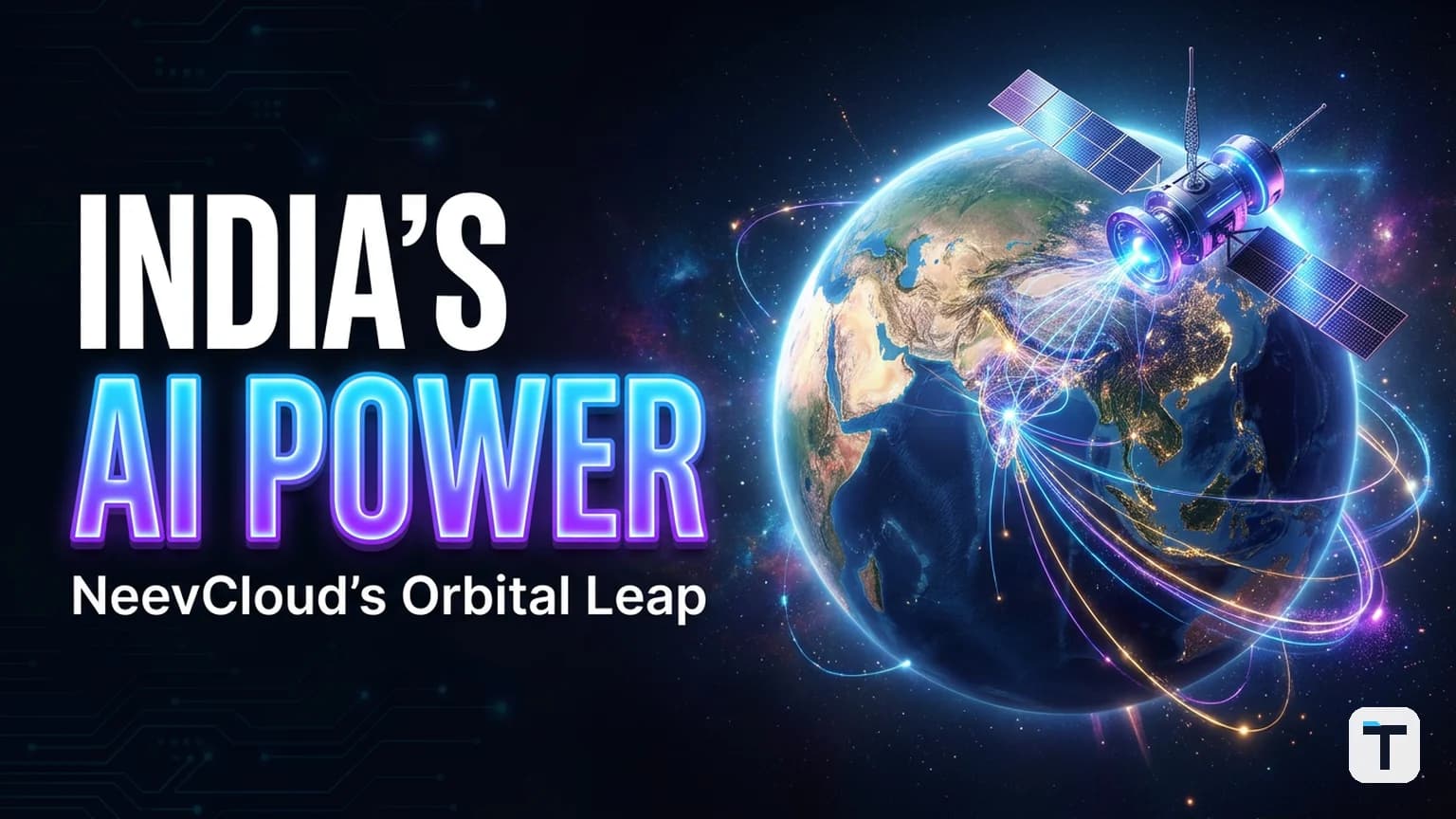

Verdict: India's push for AI sovereignty is gaining significant momentum through NeevCloud's full-stack AI SuperCloud and innovative orbital edge computing initiatives, positioning the nation as a global AI powerhouse. By focusing on indigenous infrastructure, optimized resource utilization, and even venturing into space, NeevCloud aims to democratize AI access and ensure national control over critical AI capabilities.
Pricing/limits change often — last checked June 2026.
What is Driving India's AI Sovereignty Push?
The global landscape of artificial intelligence is increasingly shaped by concerns over data residency, control over foundational models, and equitable access to high-performance computing. India, like many nations, recognizes the strategic imperative of AI sovereignty – ensuring its ability to develop, deploy, and govern AI technologies independently. This drive is fueled by the need to secure national data, prevent reliance on external entities for critical AI infrastructure, and foster local innovation.
A core aspect of this sovereignty involves controlling the entire AI stack, from hardware procurement to software orchestration. This approach allows for greater security, auditability, and the ability to tailor AI solutions to specific national needs and languages. The market for sovereign AI infrastructure is projected to reach $24.8 billion in 2026 and grow to $301.6 billion by 2040, highlighting the global recognition of this critical need [Roots Analysis].
How is NeevCloud Building India's AI SuperCloud?
NeevCloud has emerged as a key player in India's sovereign AI journey, launching the country's first AI SuperCloud. Their strategy revolves around building an indigenous, full-stack AI infrastructure designed to offer both affordability and high performance.
Central to NeevCloud's offering is its proprietary software and orchestration layer. Unlike many providers who license third-party solutions, NeevCloud develops its control plane in-house. This gives them greater agility to implement patches, customize features, and respond to customer demands faster than relying on external vendors like Nvidia for software updates. This commitment to open-source contributions also ensures a robust, community-driven development approach.
NeevCloud plans to deploy a massive AI cloud infrastructure, including 40,000 GPUs, worth $1.5 billion by 2026 [w.media]. This substantial investment aims to democratize access to AI and supercomputing for Indian enterprises and startups. They offer cloud GPUs at competitive rates, reportedly as low as $1.69 per hour, which can reduce costs by up to 50% for users [PRNewswire]. The company also aims to provide a "sandbox environment" through its AI Agentic Studio, allowing developers to test and run AI applications efficiently.
Furthermore, NeevCloud addresses the growing trend of Small Language Models (SLMs). Recognizing that not every application requires the immense power of a large language model, NeevCloud's intelligent orchestration routes requests to the most appropriate model, optimizing GPU utilization and ensuring cost-effective solutions for users. This focus shifts the paradigm from "token per cost" to "value-driven tokens," prioritizing intelligent resource allocation.
The Promise of Orbital Edge AI: Ultra-Low Latency from Space
Beyond ground-based infrastructure, NeevCloud is pushing the boundaries with Project Orion, an ambitious initiative to develop orbital edge data centers. This long-term vision seeks to overcome the terrestrial limitations of land, power, and cooling by leveraging the unique environment of space.
The concept of space-based data centers aims to place AI compute closer to data sources, particularly for applications requiring ultra-low latency, such as voice agents in remote Indian regions or real-time processing for government agriculture initiatives. While challenges remain, such as energy storage during orbital eclipses and efficient heat dissipation in a vacuum, the potential benefits are substantial: continuous access to solar energy, natural cooling, and enhanced security [RackSolutions].
Nvidia has already certified its servers for space climatic conditions, and companies like Starcloud have demonstrated deploying Nvidia H100s in orbit [PayloadSpace]. NeevCloud's partnership with space-tech firm Agnikul Cosmos further solidifies their commitment to launching space-based AI data centers by the end of 2026 [News18]. This move highlights India's aspiration to extend its AI capabilities beyond terrestrial boundaries, creating a truly sovereign and globally accessible AI infrastructure.
Maximizing Value: NeevCloud's Software-Defined GPU Optimization
A significant challenge in high-performance computing is the underutilization of expensive GPU resources. Many data centers report GPU utilization rates as low as 30-40%. NeevCloud makes maximizing this efficiency a top priority through intelligent orchestration and software-defined optimizations.
Their system employs advanced placement logic to ensure GPUs are continuously engaged. For instance, idle GPUs during off-peak hours can be allocated to offline batch jobs at a reduced cost, such as $2 per hour compared to $4 during peak times. This approach, which they term "intelligent orchestration," allows customers with less immediate needs to access compute at a lower price, while simultaneously ensuring NeevCloud's infrastructure operates at near 100% utilization. This focus on software-driven efficiency contributes directly to making affordable AI more affordable and accessible, reinforcing India's commitment to self-reliance in the AI domain.
What this means for you
NeevCloud's dual strategy of building a robust ground-based AI SuperCloud and exploring orbital edge computing is set to profoundly impact India's technological landscape. For startups and enterprises, it means access to affordable, high-performance, and sovereign AI infrastructure. For the nation, it signifies a major step towards self-reliance in critical AI capabilities, fostering local innovation and securing its digital future. This initiative positions India not just as a consumer but as a significant producer and innovator in the global AI ecosystem.
FAQ
Q: What is AI sovereignty? A: AI sovereignty refers to a nation's ability to independently develop, deploy, and govern AI technologies, ensuring control over data, algorithms, and infrastructure within its own borders.
Q: How is NeevCloud making AI more affordable? A: NeevCloud offers competitive GPU cloud pricing, reportedly as low as $1.69/hour, and uses intelligent orchestration to optimize GPU utilization, allowing for cost-effective access, especially for flexible workloads.
Q: What are orbital edge data centers? A: Orbital edge data centers are proposed computing facilities deployed in space (e.g., low Earth orbit) to provide ultra-low latency AI processing by locating compute resources closer to space-based data sources or remote terrestrial locations.
Q: What are Small Language Models (SLMs) and how does NeevCloud use them? A: SLMs are smaller, more specialized AI models compared to large language models. NeevCloud uses intelligent orchestration to route requests to appropriate SLMs, optimizing resource use and cost for specific vertical intelligence tasks.
Q: Is NeevCloud partnering with other companies for its orbital initiatives? A: Yes, NeevCloud has partnered with space-tech firm Agnikul Cosmos to advance its plans for launching space-based AI data centers.
Q: When was NeevCloud's AI SuperCloud launched? A: NeevCloud launched India's first AI SuperCloud in November 2023, with plans for significant expansion by 2026.
Every claim here is traced to a primary source, dated, and listed under Sources. Research and drafting are AI-assisted; editing, verification and publication are human decisions, and a person is accountable for what appears on this page. How we work →
Discussion
0 comments