
Last verified: June 26, 2026 · Alliance: 11 Nations (incl. US, Japan, UK) · Trade Impact: 18% Tariff floor · Sector: AI & Semiconductors
What is Pax Silica? (The Full-Stack Coalition)
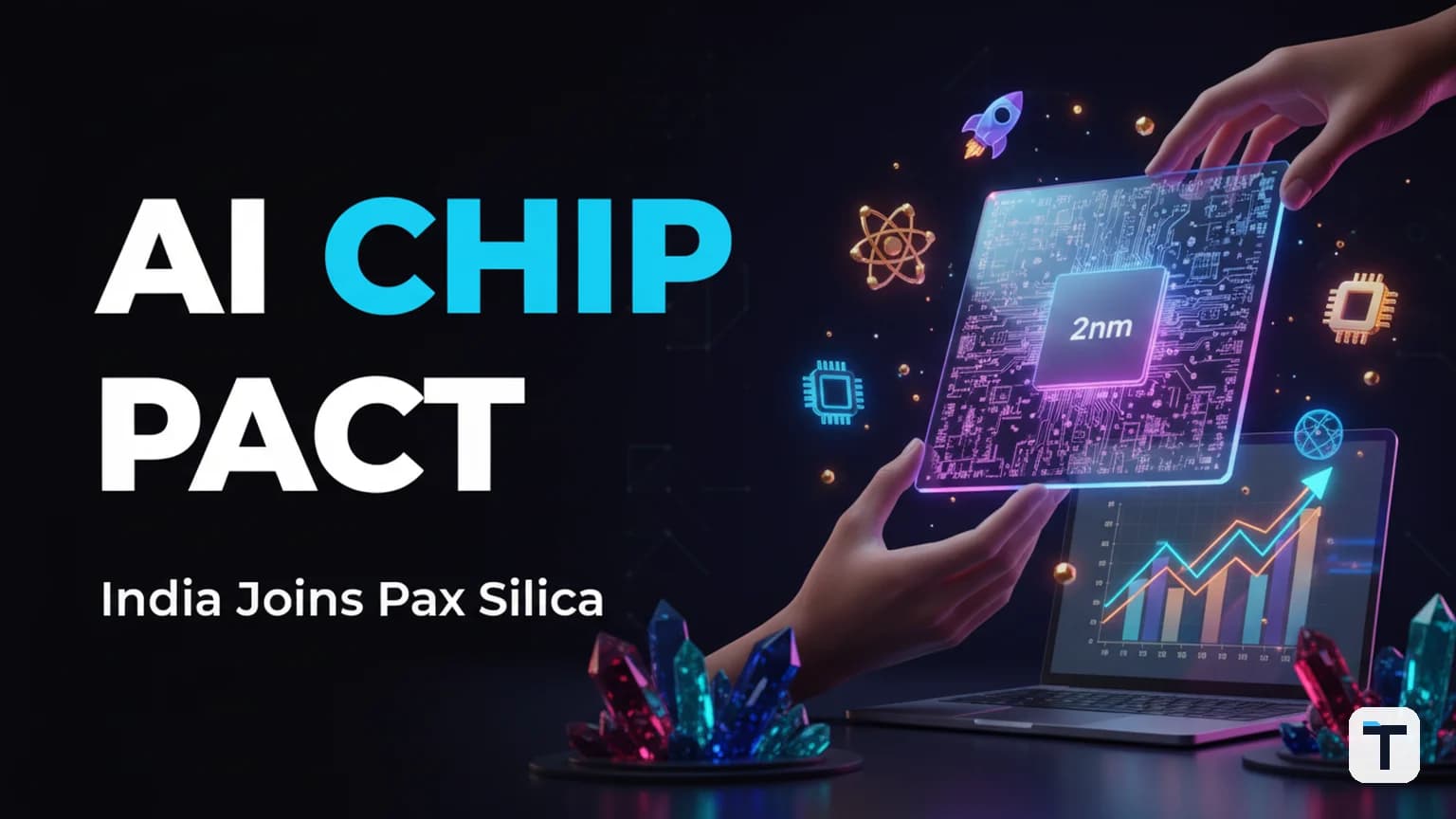
Pax Silica is a US-led strategic initiative focused on securing the global supply chain for silicon, critical minerals, and artificial intelligence. Launched in December 2025, the group includes the United States, Japan, South Korea, Singapore, the Netherlands, Israel, the UAE, the UK, Australia, and Qatar. India’s entry as a co-founding member of the 2026 expansion creates what US Under Secretary of State Jacob Helberg calls a "full-stack technology coalition."
Unlike traditional trade blocs, Pax Silica treats supply chains as national security assets. The goal is to distribute technological power across "trusted partners" to ensure that the materials required for AI—from lithium and cobalt to advanced logic chips—are not subject to economic coercion or "weaponized dependency."
Why India Joined Now: The US Trade Deal Connection
The signing of the Pax Silica Declaration was made possible by an interim trade agreement between New Delhi and Washington finalized in early 2026. This deal resolved long-standing friction points, most notably reducing the tariff on key Indian technology imports from 25% to 18%.
This fiscal easing, combined with the Great PCB Pivot, allows Indian manufacturers to import advanced semiconductor equipment and materials at lower costs. Union Minister Ashwini Vaishnaw noted that the alliance is essential for positioning India as a "trusted partner" in a world still reeling from the RAMageddon chip hunger that saw prices spike across the electronics sector earlier this year.
The End of "Weaponized Dependency": Reducing China Reliance
A primary driver of the Pax Silica alliance is the urgent need to diversify away from China-dominated mineral and chip processing. As of early 2026, India still faced a significant dependency gap in high-end electronics. By joining the US, Japan, and the Netherlands (owners of ASML’s lithography tech), India gains a seat at the table where global equipment and material allocations are decided.
This moves India beyond basic assembly and into the realm of Semiconductor Mission 2.0 (ISM 2.0), which received a ₹1,000 crore allocation in the 2026-27 Union Budget to focus on indigenous equipment manufacturing and IP development.
What This Means for You (Startups & Builders)
For Indian hardware startups and AI builders, this pact is a massive de-risking event:
- Lower Hardware Costs: Reduced tariffs and more reliable logistics for OSAT (Assembly and Testing) units.
- Access to 2nm Design: With India now designing 2nm chips, being in Pax Silica ensures that the fabrication of these designs in partner fabs (like those in the US or Japan) is prioritized.
- Mineral Security: Startups building AI-powered delivery drones or EV batteries now have a geopolitical backstop for the rare earth minerals they require.
FAQ
Q: Who are the current members of Pax Silica? A: The alliance currently includes the US, India, UK, Australia, Japan, South Korea, Singapore, Netherlands, Israel, UAE, Qatar, and Greece.
Q: Does this pact involve direct military cooperation? A: No. Pax Silica is a strategic technology and economic security framework focused on supply chain resilience, though it aligns with the national security interests of member states.
Q: How does this affect the price of electronics in India? A: In the short term, the interim trade deal's tariff reduction from 25% to 18% should help stabilize or lower the costs of high-end components. In the long term, domestic manufacturing via ISM 2.0 will further reduce costs.
Q: Is India manufacturing its own chips yet? A: India has 10 semiconductor plants in various stages of development. Commercial production is expected to begin in 2026, with a focus on ATMP and specialized logic chips.
Every claim here is traced to a primary source, dated, and listed under Sources. Research and drafting are AI-assisted; editing, verification and publication are human decisions, and a person is accountable for what appears on this page. How we work →



Discussion
0 comments