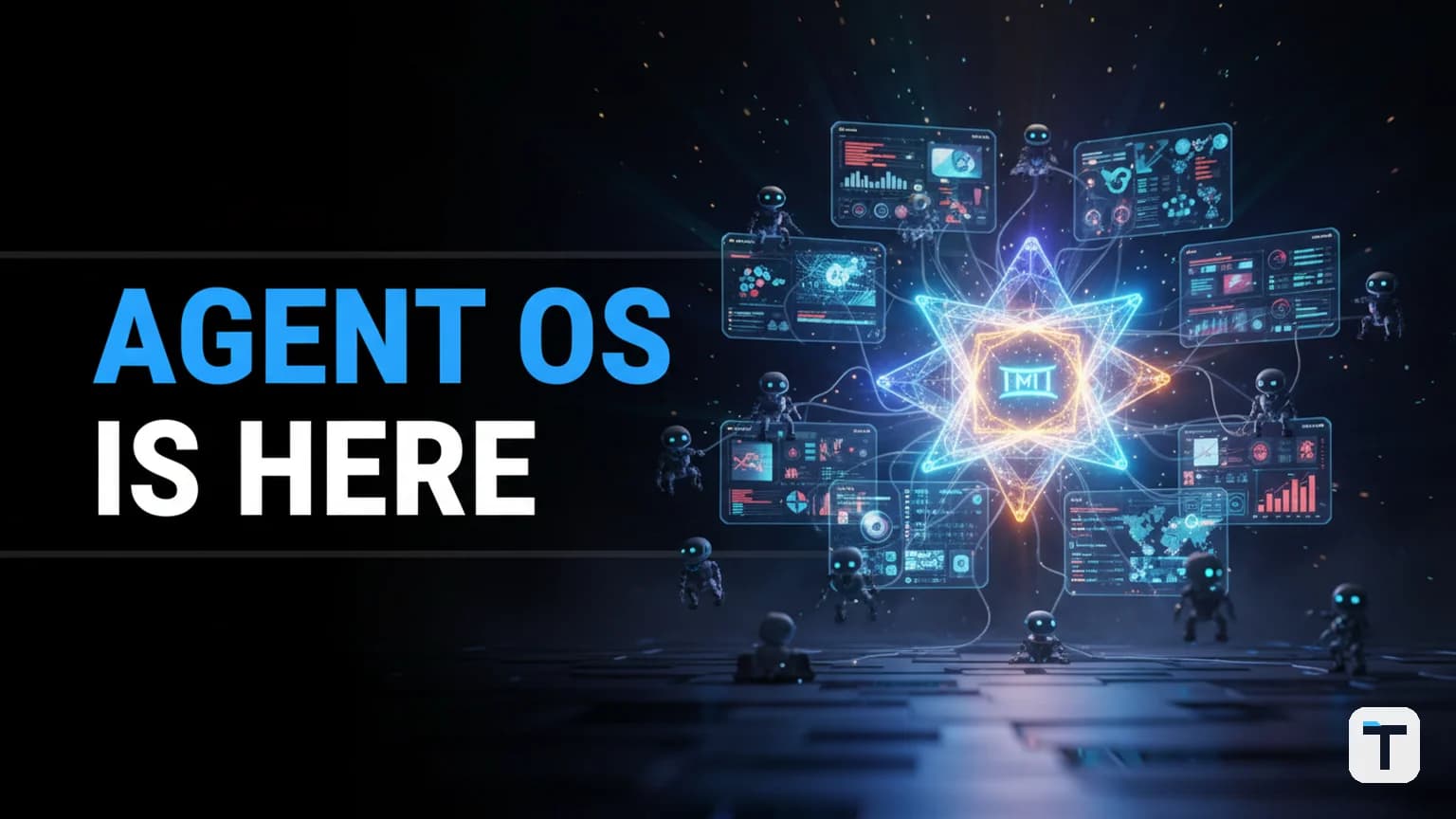

Antigravity 2.0: Google's AI Agent OS Unlocks Autonomous Workflows
Verdict: Google's Antigravity 2.0 marks a significant shift in AI agent capabilities, moving from a coding assistant to a full-fledged agent operating system. With new features like sub-agents and scheduled tasks, it empowers users to build highly autonomous and scalable AI-driven workflows. This update also transitions users away from the legacy Gemini CLI, establishing Antigravity as the future for Google's agentic development.
At-a-Glance
- Last verified: 2026-06-24
- Key Takeaways:
- Antigravity 2.0 is an agent-first platform for orchestrating AI tasks.
- It introduces five core "superpowers": sub-agents, background tasks, scheduled tasks, JSON hooks, and voice control.
- Replaces the deprecated Gemini CLI for both free and paid users.
- Enables scalable, parallel, and autonomous AI workflows.
- Note: The AI landscape is rapidly evolving; pricing and feature sets are subject to frequent updates.
What is Antigravity 2.0?
Antigravity 2.0 is Google's latest iteration of its AI agent platform, fundamentally changing how developers and businesses interact with AI. While its predecessor primarily served as an AI coding agent, Antigravity 2.0 is designed as a standalone "agent operating system" built on Google's advanced Gemini models. This platform allows for the orchestration of multiple AI agents, transforming complex tasks into efficient, automated workflows. The shift emphasizes autonomy, enabling agents to plan, execute, and verify tasks with minimal human intervention.
The 5 Superpowers of Antigravity 2.0
Antigravity 2.0 introduces five core capabilities that significantly enhance AI agent productivity and scalability:
1. Dynamic Sub-agents: Multiply Your Output
Sub-agents allow a single, large task to be broken down into smaller, parallelizable sub-tasks, each handled by its own specialized agent. This enables simultaneous execution, drastically reducing the time required to complete complex projects. For instance, a main agent could delegate content creation to multiple sub-agents, each focusing on a different keyword or article section concurrently.
Tips for effective sub-agent use:
- Small, Clear Jobs: Assign each sub-agent a tight, specific task with a defined completion criteria.
- Light Context: Sub-agents operate in isolated contexts, carrying only the information necessary for their task, which can optimize token usage.
- Clear Lead: Designate one main agent to manage the sub-agents, distributing work and consolidating results to maintain overall control.
2. Background Tasks: Uninterrupted Workflows
Long-running operations no longer monopolize your attention or computing resources. Background tasks allow agents to continue working on time-consuming processes (like data analysis or large code compilations) without interrupting your primary workflow. This frees up the main agent for immediate tasks, enhancing overall efficiency. Related to this is the concept of a "Hermes Computer Use Guide", which explores how agents can perform tasks in the background across various operating systems.
3. Scheduled Tasks: Automation on Autopilot
With scheduled tasks, you can set your AI agents to automatically execute jobs at predetermined times. This is ideal for routine operations such as daily report generation, content drafting, or system checks. Configure a task once, and it runs autonomously, ensuring consistency and freeing up human oversight for more strategic work. This feature aligns with the broader goal of "AI workflow automation" to reduce procedural debt.
4. JSON Hooks: Customizing Agent Behavior
JSON hooks provide a powerful mechanism for injecting custom scripts and rules into an agent's workflow at precise execution points. This allows for fine-grained control and customization, ensuring agents adhere to specific business logic or integrate with proprietary systems, enabling tailored solutions beyond out-of-the-box functionalities.
5. Voice Interaction: Natural and Intuitive Control
Antigravity 2.0 integrates voice capabilities, allowing users to communicate with their AI agents using natural language. This hands-free control streamlines command input, making interactions faster and more intuitive, especially for quick instructions or when hands are occupied with other tasks.
From Gemini CLI to Antigravity: What You Need to Know
As of June 18, 2026, Google has deprecated the standalone Gemini CLI for free and individual paid users, migrating all functionalities to the new Antigravity platform. This transition is critical for developers and businesses accustomed to the Gemini CLI, requiring them to adapt to Antigravity CLI, the new terminal interface for the agent-first platform. This move consolidates Google's AI agent tooling under the Antigravity brand, emphasizing a unified and more powerful agentic development experience. You can learn more about specific Google AI models and their capabilities in articles like "Gemini 3.5 Pro Leaks: Specs, Release Date, and What 'Cappuccino' Fixes".
Building an Agent OS: Wiring it All Together
The true power of Antigravity 2.0 is realized when its individual features are integrated into a cohesive "Agent OS" — an overarching system that orchestrates diverse AI capabilities. Frameworks like the "Gravity 5 Framework" mentioned by early adopters help users systematically adopt these features, starting with parallel sub-agent deployment before moving to scheduled tasks and other advanced automations. This approach is key to developing sophisticated "multi-agent systems" that can tackle complex enterprise challenges. For those looking to build robust agentic systems, understanding how to construct reliable "AI harnesses with guardrails and context management" is crucial.
What This Means for Your Workflow
Antigravity 2.0 fundamentally changes the paradigm of AI interaction from a "one task at a time" approach to a multi-threaded, autonomous workflow. This means less time babysitting AI agents and more time focusing on high-value strategic work. By leveraging sub-agents for parallel processing, background tasks for continuity, and scheduled tasks for automation, users can achieve unprecedented levels of productivity and scalability in their AI-driven initiatives. This shift transforms AI agents from mere tools into integral members of a highly efficient digital workforce, enabling businesses to scale their operations without proportional increases in human effort. The broader implications for "AI workforce scalability" are profound.
FAQ
Q: What is Antigravity 2.0? A: Antigravity 2.0 is Google's new agent-first platform for orchestrating AI agents, replacing the previous Gemini CLI. It enables autonomous, parallel, and scalable AI workflows through features like sub-agents, background tasks, and scheduled automation.
Q: What are the key new features in Antigravity 2.0? A: The five main features (or "superpowers") are: dynamic sub-agents for parallel task execution, background tasks for non-blocking operations, scheduled tasks for automated workflows, JSON hooks for custom script integration, and voice interaction for natural language control.
Q: Is Gemini CLI still supported? A: No, the Gemini CLI was deprecated on June 18, 2026, for free and individual paid users. All users are now encouraged to migrate to Antigravity CLI, which is part of the broader Antigravity 2.0 platform.
Q: How can I start using Antigravity 2.0? A: You can download the Antigravity 2.0 application or use the Antigravity CLI. Google provides documentation and resources for setup and migration, particularly for former Gemini CLI users.
Q: What is an Agent OS? A: An "Agent OS" (Agent Operating System) refers to a holistic framework or platform that integrates and orchestrates various AI agent functionalities into a coherent, autonomous system. It provides the infrastructure for agents to manage tasks, interact with tools, and coordinate with each other to achieve complex goals.
Q: How does Antigravity 2.0 improve AI agent productivity? A: By enabling parallel execution with sub-agents, continuous background processing, scheduled automation, and customized workflows via JSON hooks, Antigravity 2.0 allows AI agents to handle multiple, more complex tasks autonomously, significantly boosting overall productivity and scalability beyond traditional single-agent interactions.
Every claim here is traced to a primary source, dated, and listed under Sources. Research and drafting are AI-assisted; editing, verification and publication are human decisions, and a person is accountable for what appears on this page. How we work →
Discussion
0 comments