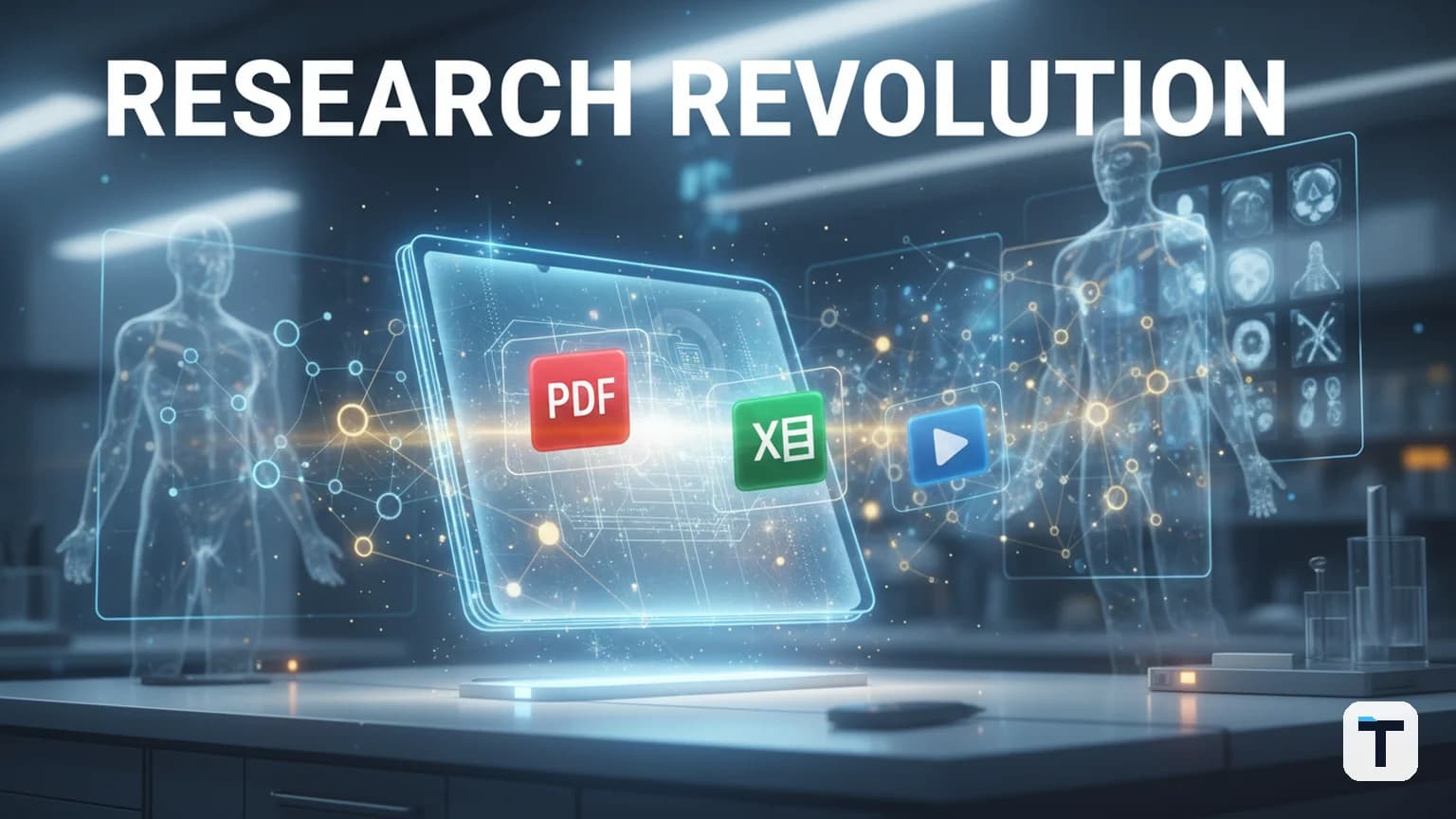

Verdict: The June 8, 2026 "Better Research" update transforms Google NotebookLM from a passive document-answering tool into a fully autonomous research agent. By integrating the Gemini 3.5 engine and the Antigravity coding framework, NotebookLM can now discover its own web sources, execute code in a secure cloud VM, and generate complex assets like interactive slide decks and datasets in parallel. For small businesses and researchers, it is no longer just a way to "chat with PDFs"—it is the foundation of a modern AI Research Operating System.
Last verified: 2026-06-20
Core Engine: Gemini 3.5 + Antigravity (Google’s coding agent framework)
Key Upgrade: Agentic Research — discovers and analyzes web sources autonomously (no pre-upload required).
New Formats: PPTX (Slides), XLSX (Sheets), DOCX, and Cinematic Video Overviews via Veo 3.
Best For: Small business research, technical documentation, and complex data visualization.
What is the NotebookLM "Better Research" Update?
On June 8, 2026, Google announced the most significant overhaul to NotebookLM since its 2024 launch. The update, dubbed "Better Research," signals a shift in strategy: NotebookLM is moving away from being a mere interface for RAG (Retrieval-Augmented Generation) and toward becoming an autonomous research agent.
The technical backbone of this shift is the integration of Antigravity, Google’s 2026 coding agent framework. Unlike previous iterations that struggled with structured data, every NotebookLM workspace now includes a secure cloud computer (VM). This allows the AI to write and execute Python code in the background to verify math, process massive Excel sheets, and render visualizations that are grounded in raw data rather than hallucinatory patterns.
How does the new Agentic Research work?
The biggest hurdle for AI researchers has always been the "blank notebook" problem—you had to find and upload the sources yourself. The June update introduces Agentic Research, which allows you to start a project with just a prompt or a loose idea.
- Autonomous Sourcing: NotebookLM now connects to a real-time web index. If you ask about "June 2026 AI breakthroughs," the agent will autonomously find primary sources like the GLM 5.2 release paper or Hermes Agent v0.17 documentation.
- Multimodal Synthesis: It doesn't just read text. The agent can "watch" recent product demos, analyze CSV datasets, and parse diagrams from PDFs to build a comprehensive context window.
- Active Verification: Using the Antigravity engine, it cross-references claims across multiple sources to flag discrepancies—a feature Google calls "Source Triangulation."
What can the new Research Studio generate?
The "Studio" panel has replaced the old summary list, offering a suite of parallel agents that can turn your research into actionable business assets in minutes.
| Feature | Description | Output Formats |
|---|---|---|
| Research Reports | 5-10 page deep-dives with automated TOC and citations. | PDF, DOCX |
| Slide Deck Engine | Converts research into a structured pitch or training deck. | PPTX (fully editable) |
| Data Visualization | Turns messy spreadsheets into interactive charts. | XLSX, PNG, HTML |
| Video Overviews | (Ultra Only) Uses Veo 3 to create 2-minute "cinematic" summaries. | MP4 |
| Flashcards & Quizzes | Automated learning tools based on your specific sources. | JSON, Markdown |
For those building their own AI Agent Operating Systems, these outputs are now accessible via Model Context Protocol (MCP), allowing you to pull generated infographics or reports directly into tools like Obsidian or custom Slack bots.
Is NotebookLM still free in 2026?
Yes, but with caveats. Google reshuffled its AI pricing at I/O 2026 to accommodate the high compute costs of agentic research and video generation.
- Free Tier: Includes basic chat, 1M token context, and standard Audio Overviews.
- Google AI Plus ($4.99/mo): Adds Agentic Research (web sourcing) and high-speed data visualization.
- Google AI Pro ($19.99/mo): Adds Antigravity code execution and 5TB of "Source Memory."
- Google AI Ultra ($99.99/mo): Includes Veo 3 Cinematic Video generation and dedicated VM priority.
What this means for you
If you are running a small business or managing a team, the "Better Research" update means you can stop spending afternoons manually compiling briefing documents. By pairing NotebookLM with a persistent context layer—like an Obsidian-based Company Brain—you can turn raw industry news into custom training materials for your staff overnight.
The era of "chatting with a PDF" is over; the era of the Autonomous Research OS has arrived.
FAQ
Q: Can NotebookLM now find its own sources without me uploading anything? A: Yes. The June 2026 update introduced Agentic Research, which allows the agent to autonomously search the web for primary sources to build your notebook context.
Q: What is the Antigravity framework in NotebookLM? A: Antigravity is Google's secure coding agent framework. In NotebookLM, it provides a secure VM where the AI can execute Python code to process data, verify math, and generate complex files like Excel charts.
Q: Can I export NotebookLM slides to PowerPoint? A: Yes. The new Research Studio supports native PPTX export for slide decks, allowing you to edit the AI-generated design in Microsoft PowerPoint or Google Slides.
Q: How do the new Video Overviews work? A: For Google AI Ultra subscribers, NotebookLM uses the Veo 3 video model to generate "Cinematic Video Overviews." These are 1–2 minute animated summaries of your research sources, complete with narration.
Q: Is my data used to train Google's models? A: Google maintains that data in personal notebooks is not used to train its foundational models, though Enterprise Workspace users should verify their specific admin settings for "AI Data Protections."
Discussion
0 comments