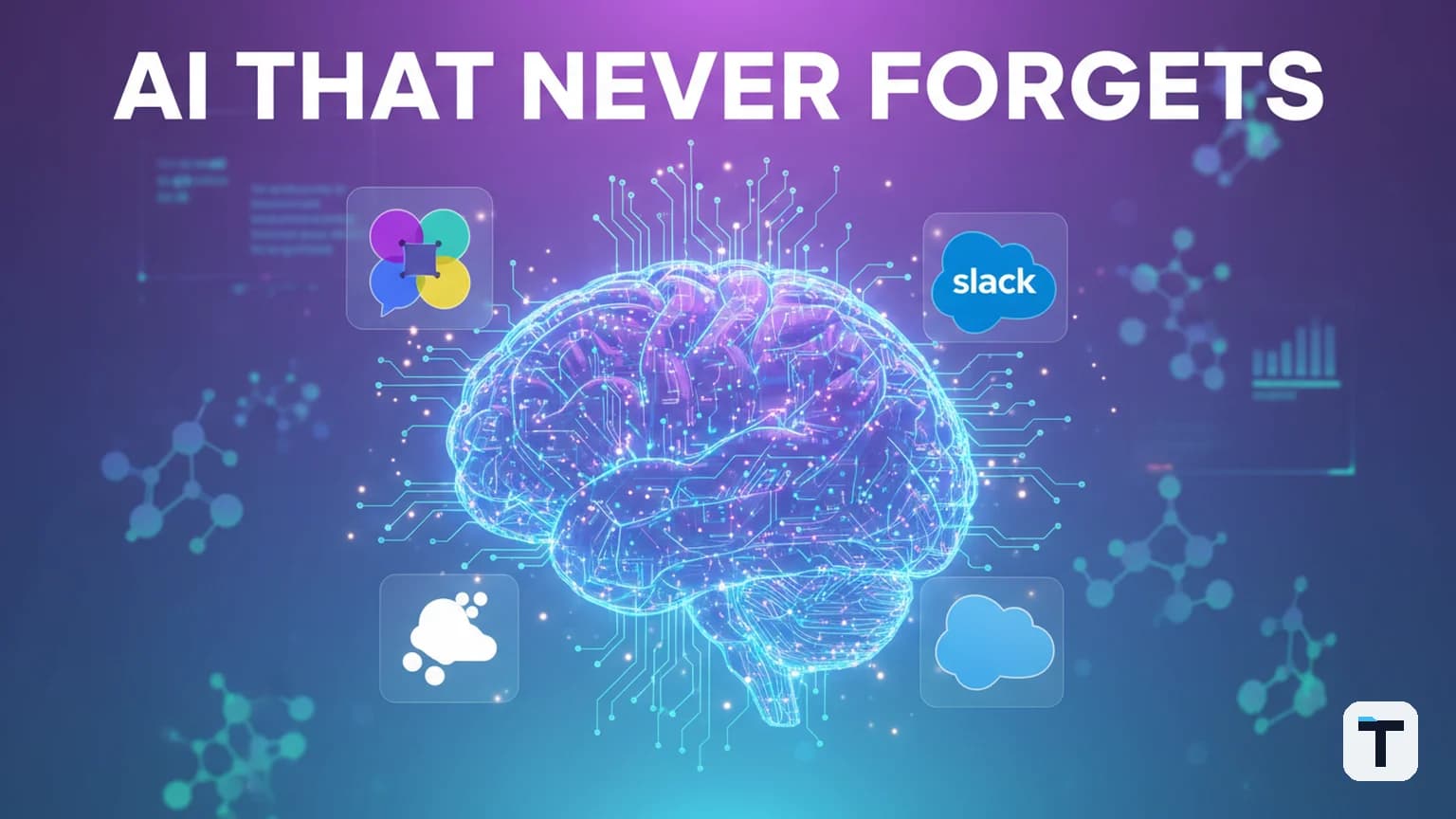

Verdict: Perplexity Brain transforms Perplexity Computer from a one-off task-runner into a stateful digital employee. By building a persistent "context graph" of every session, file, and connector result, it allows AI agents to learn from their own successes and failures. For small businesses, this means you can finally stop re-explaining your brand, strategy, and data structures every time you start a new task.
Last verified: 2026-06-20
Status: Research Preview (Max/Enterprise) · Accuracy Gain: +25% · Cost Reduction: -13%
Key Tech: Context Graph, Overnight Synthesis, MCP Connectors.
What is Perplexity Brain?
Perplexity Brain is the self-improving memory layer for Perplexity Computer that builds a structured "context graph" of your work sessions, files, and connected tools.
Launched as a research preview on June 18, 2026, Brain solves the "blank slate" problem inherent in most AI agents. While a standard chatbot forgets your project the moment you close the tab, Brain actively connects the dots between your past research, strategy documents, and final outputs. It doesn't just remember what you said; it remembers what the agent did—which Snowflake queries worked, which sources were reliable, and how you corrected its previous mistakes.
How the "Context Graph" beats standard AI memory
Unlike traditional "flat" memory systems that store simple user preferences, Brain uses a context graph to map the relationships between sessions, files, and third-party connectors.
Standard AI memory (like OpenAI’s "Memory" feature) typically acts as a simple key-value store for preferences (e.g., "I prefer concise answers" or "I live in London"). Brain operates on a deeper architectural level:
- Relational Mapping: If you research AI trends on Monday and build a content strategy on Tuesday, Brain understands that the strategy depends on the research.
- Overnight Synthesis: Perplexity reports that Brain reviews your context graph overnight, proactively synthesizing new patterns and updating its internal "wiki" without requiring human input.
- Traceability: Every "memory" in the graph is linked back to a primary source, whether it's a Slack message, a Snowflake table, or a specific web search result.
This relational approach is a major step toward building a Queryable Company Brain where organizational knowledge compounds over time.
Performance: Is the 25% accuracy claim real?
According to Perplexity’s internal metrics, Brain delivers a 25% increase in answer correctness on repeated tasks and a 16% improvement in information recall.
While these are vendor-reported numbers (not yet verified by independent benchmarks), they signal a shift in how AI efficiency is measured. By using historical context from Brain, the agent reportedly uses 13% fewer tokens and steps to complete complex projects.
This "agent experience" allows for more reliable automated AI workflows because the system stops making the same errors twice. If a specific Model Context Protocol (MCP) connector fails once, Brain records the failure and tries an alternative path in the next session.
What can you do with an agent that never forgets?
A stateful agent allows you to run multi-week projects where the AI manages the transition between research, planning, and execution phases.
| Use Case | How Brain Changes the Workflow |
|---|---|
| Content Strategy | Research trends once; Brain automatically applies them to all future scripts and social posts without re-prompting. |
| Startup Ops | Brain stores your product specs, customer feedback, and past designs, acting as a technical co-founder who "knows" the code. |
| Market Research | Connect Brain to your CRM or Snowflake via MCP; it learns the "language" of your data and builds a persistent knowledge base. |
For those looking to scale, connecting these agent capabilities to a persistent memory layer like Obsidian can create a dual-layered "second brain" for your entire team.
What this means for you
If you are a Pro or Max subscriber, you should enable Brain in your "Customize" settings immediately to start building your context graph.
The real power of Perplexity Brain isn't found in a single query; it's found in the tenth or twentieth session when the agent begins to anticipate your requirements based on a month of work history. For small businesses, this reduces the "management tax" of AI. Instead of baby-sitting an agent through every step, you can treat it as a seasoned team member who has seen your projects before and knows exactly where the relevant files are kept.
FAQ
Q: Who has access to Perplexity Brain? A: Brain is currently in research preview for Perplexity Pro ($20/mo), Max ($40/mo), and Enterprise subscribers. It is available on the Web and iOS versions of Perplexity Computer.
Q: How do I manage what Brain remembers? A: Users can view, edit, or delete specific entries in the context graph through the "Customize" tab in the Perplexity sidebar. You can also toggle Brain off for specific private sessions.
Q: Does Brain work with external data tools? A: Yes. Brain is designed to work with Model Context Protocol (MCP) connectors, allowing it to remember results and patterns from tools like Snowflake, Salesforce, HubSpot, and Slack.
Q: Is Brain different from OpenAI’s Memory? A: Yes. While OpenAI’s Memory focuses on user preferences, Brain focuses on "agent experience"—mapping the technical relationships between tasks, files, and outcomes in a persistent graph.
Discussion
0 comments