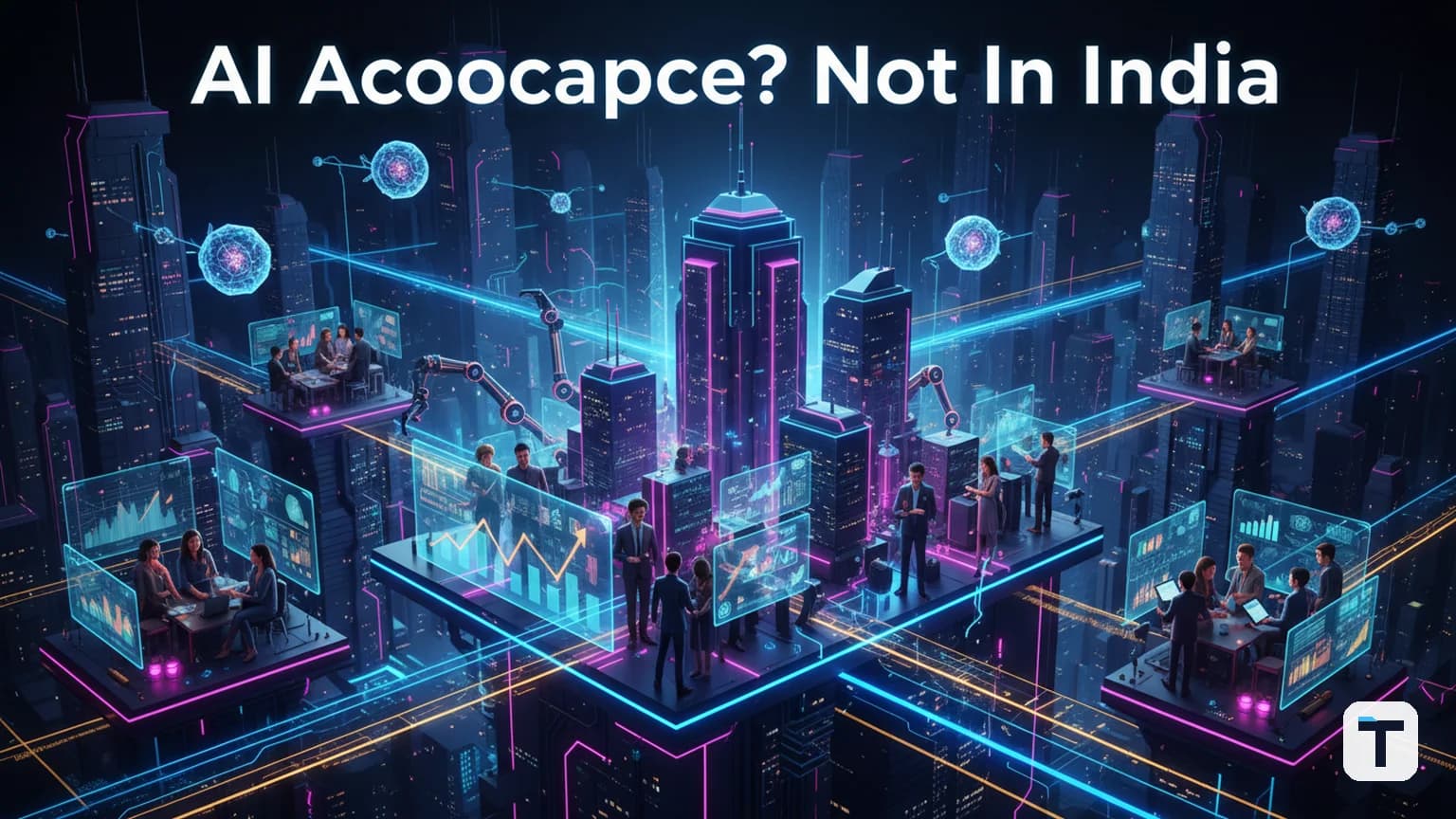

India's Job Market: Why AI Isn't the Apocalypse You Think It Is
Answer-first verdict: India's economy is uniquely positioned to leverage AI for growth, not job displacement, driven by a projected 6.5% GDP growth in 2026, proactive talent development initiatives like FutureSkills Prime, and a powerful "human + AI" synergy. This dynamic environment is creating new opportunities and demanding a skilled workforce, effectively countering the narrative of widespread AI-driven job loss.
At-a-glance
- Rapid Economic Growth: India's robust GDP expansion, reaching a projected $4.15 trillion by 2026, generates demand that absorbs increased productivity from AI.
- Talent Upskilling: Initiatives like nasscom’s FutureSkills Prime focus on training and re-skilling the workforce for AI-centric roles.
- AI as a Productivity Enhancer: AI is seen as a tool to augment human capabilities, not replace them entirely.
- "Human + AI" Synergy: The future of work in India emphasizes collaboration between humans and AI, creating more efficient and innovative outcomes.
Is the AI Apocalypse Narrative Misguided for India?
The widespread fear that artificial intelligence will lead to mass job displacement often overlooks critical nuances, particularly within dynamic economies like India. The narrative isn't simply "people will lose jobs to AI," but rather "people will lose jobs to people who are using AI." This subtle yet profound distinction underscores a fundamental shift: AI is a powerful tool, and those who master its application—through paradigms like Loop Engineering and AI Agent Orchestration—will gain a significant competitive edge, driving demand for new skills rather than eliminating existing roles wholesale. India's strategic approach focuses on integrating AI to enhance human potential and economic output, positioning its workforce not as victims of automation, but as beneficiaries and drivers of an AI-powered future.
How Does India's Economic Tailwind Support Job Growth Amidst AI?
India's consistently high growth provides a crucial buffer against AI-driven job displacement. According to IMF projections for 2026, India's GDP is expected to grow by 6.5%, reaching a nominal value of $4.15 trillion. This robust economic expansion fuels demand across various sectors, creating an environment where increased productivity from AI can be absorbed by overall market growth. As businesses expand and new industries emerge, the need for human capital often outpaces the efficiency gains from automation. This strong economic tailwind means that while certain tasks may be automated, the broader economy generates enough new opportunities to not only compensate for these shifts but also to foster overall job creation. Corporate growth, in particular, continues to require significant manpower, directing AI's impact towards augmentation rather than widespread replacement.
What is India's Multi-layered Growth Engine for the Future of Work?
India's resilience in the face of AI disruption is powered by a multi-layered growth engine. This engine comprises its core economy, burgeoning digital infrastructure, and a strategic embrace of artificial intelligence. The foundational economic growth ensures a continuous need for labor. Simultaneously, India's rapidly expanding digital infrastructure—from widespread internet access to digital payment systems—creates an ecosystem ripe for AI integration. This digital backbone facilitates the adoption of AI technologies across industries, from healthcare to finance, driving innovation and efficiency. A study published in The Voice of Creative Research (April 2026) emphasizes that AI, when strategically implemented, acts as a catalyst for sustainable growth in the Indian service sector. When combined, these layers not only create a fertile ground for new AI-powered businesses and services but also necessitate a workforce capable of developing, deploying, and managing these advanced systems, further expanding job opportunities.
How is Talent Development and Engagement Crucial in the AI Era?
For India, navigating the AI revolution successfully hinges on aggressive talent development and meaningful engagement. The rapid evolution of AI demands a continuous cycle of upskilling and reskilling to equip the workforce with the necessary competencies. This is where mastering the missing 2026 skill of AI agent ownership becomes critical. India is investing heavily in this through initiatives like FutureSkills Prime, a digital skilling hub by nasscom & MeitY, aimed at making India a "Digital Talent Nation." This focus includes not only technical skills related to AI development but also soft skills like critical thinking, creativity, and problem-solving. Engaging talent in meaningful roles that leverage AI for higher-value tasks is paramount. By investing in comprehensive training programs and fostering a culture of continuous learning, India ensures its workforce can adapt to new demands, making humans indispensable partners in the AI-driven economy.
How Can India Ride the Disruption Wave of AI?
AI is fundamentally a disruptive force, reshaping industries and job functions globally. India's strategy is to ride this wave of disruption by proactively adapting and transforming its workforce. This involves recognizing AI not as a threat but as an accelerator for innovation and efficiency. Continuous upskilling initiatives are central to this approach, ensuring that professionals can transition into new roles that emerge from AI integration. By focusing on areas where human capabilities complement AI—such as complex problem-solving, ethical decision-making, and creative endeavors—India aims to harness AI's power to boost productivity and economic competitiveness. This proactive stance ensures the nation capitalizes on AI's potential, turning disruption into an opportunity for growth and development.
What this means for you
- For Individuals: Embrace continuous learning. Focus on developing skills that complement AI, such as critical thinking, creativity, and complex problem-solving. Leverage platforms like FutureSkills Prime to build your AI literacy. The future belongs to those who learn to work with AI.
- For Businesses: Invest in AI orchestration and human-in-the-loop strategies that augment your workforce, rather than aim for pure replacement. Prioritize upskilling programs for your employees to leverage AI tools effectively. Foster a culture of innovation where human ingenuity is enhanced by artificial intelligence.
FAQ
Q: Will AI take away jobs in India? A: While AI will automate certain repetitive tasks, India's projected 6.5% GDP growth (IMF, 2026) and focus on talent development suggest that new jobs requiring human-AI collaboration will emerge, outweighing direct job displacement.
Q: What skills are most important for the future of work in India with AI? A: Critical thinking, creativity, problem-solving, ethical reasoning, and AI literacy (the ability to own and manage AI agents) are becoming increasingly important.
Q: How is India promoting AI-related talent development? A: India is investing in initiatives like FutureSkills Prime, a partnership between nasscom and the Ministry of Electronics and Information Technology (MeitY), to provide digital skilling and certifications.
Q: Is India's economic growth truly a defense against AI job loss? A: Yes, a rapidly growing economy generates significant demand across sectors, creating a market large enough to absorb productivity gains from AI and foster new job creation.
Q: What is the "human + AI" synergy? A: It refers to the collaborative model where humans work alongside AI, leveraging AI for efficiency and data analysis, while humans focus on creativity, strategy, and complex decision-making.
Q: Where can I find reliable data on India's job market and AI impact? A: Reliable sources include the IMF (World Economic Outlook), nasscom reports, NITI Aayog's National Strategy for AI, and academic studies like those in The Voice of Creative Research.
Every claim here is traced to a primary source, dated, and listed under Sources. Research and drafting are AI-assisted; editing, verification and publication are human decisions, and a person is accountable for what appears on this page. How we work →
Discussion
0 comments