
Verdict: Qwen Image 3.0 is the most ambitious text-to-image release of mid-2026 for anyone who needs information-dense graphics — multi-panel infographics, posters, storyboards, and exam papers with readable text in one pass — but it is currently a promising demo, not a deployable product. The headline jump to 4,500-token prompts genuinely changes what you can ask of an image model, and 12-language native text rendering is a real differentiator. The catch: Alibaba shipped it with no benchmark scores, no model weights, no technical report, and only a hosted chat interface — so every capability claim is vendor-reported, and early hands-on tests already show cracks in non-English text. Test it in Qwen Chat for your own use cases; do not make it a production dependency yet.
Last verified: 2026-07-30
- Released: July 21, 2026 by Alibaba's Qwen team
- Headline capability: Up to 4,500-token prompts (roughly 4.5× the prior generation's ~1K limit)
- Best for: Dense layouts — infographics, posters, storyboards, exam papers, multilingual one-pagers
- Access: Hosted only via Qwen Chat (chat.qwen.ai); no public API, weights, or model card at launch
- Biggest caveat: Zero benchmark scores, zero downloadable weights, zero technical report
- Where the previous gen stood: Qwen Image 2.0 Pro ranked 5th on Alibaba's own Qwen-Image-Bench (57.84 overall), behind GPT Image 2 (64.69, 1st)
- Pricing/limits: Volatile — no 3.0-specific pricing page existed at launch; verify before any commercial use
What is Qwen Image 3.0 and what changed?
Qwen Image 3.0 is the third-generation text-to-image foundation model from Alibaba's Qwen team, released on July 21, 2026. The defining shift is that the model treats a prompt not as a caption but as a specification document — you can describe every panel, heading, caption, footnote, and label in a complex layout, and the model renders the whole thing in a single pass. Where Qwen Image 1.0's keyword was "Precision" and 2.0 added "Variety, Completeness, Beauty," Alibaba frames 3.0 around one word: "Real" (实) — meaning dense enough and accurate enough to function as a working artifact, not just a pretty picture. Source: Qwen-Image-3.0 launch post, qwen.ai · [Confirmed]
The practical consequence: you can now write a prompt that names every section heading and footnote on a poster, instead of accepting whatever text the model hallucinates. This is a real workflow change for anyone who has tried to get an image model to print a specific headline, date, or bullet list and watched it garble the words.
How much prompt length does Qwen Image 3.0 accept?
Qwen Image 3.0 accepts up to 4,500 tokens of instruction in a single prompt, roughly 4.5× the approximately 1,000-token limit of Qwen Image 2.0. A token is a chunk of text the model processes (about 0.75 words in English, but varies by language). This means you can write roughly 3,000–3,500 words of explicit layout instruction — panel by panel, heading by heading, caption by caption — and the model holds all of it in one generation pass. Source: Qwen-Image-3.0 launch post; confirmed by independent coverage at NYU Shanghai RITS and Unite.AI · [Confirmed]
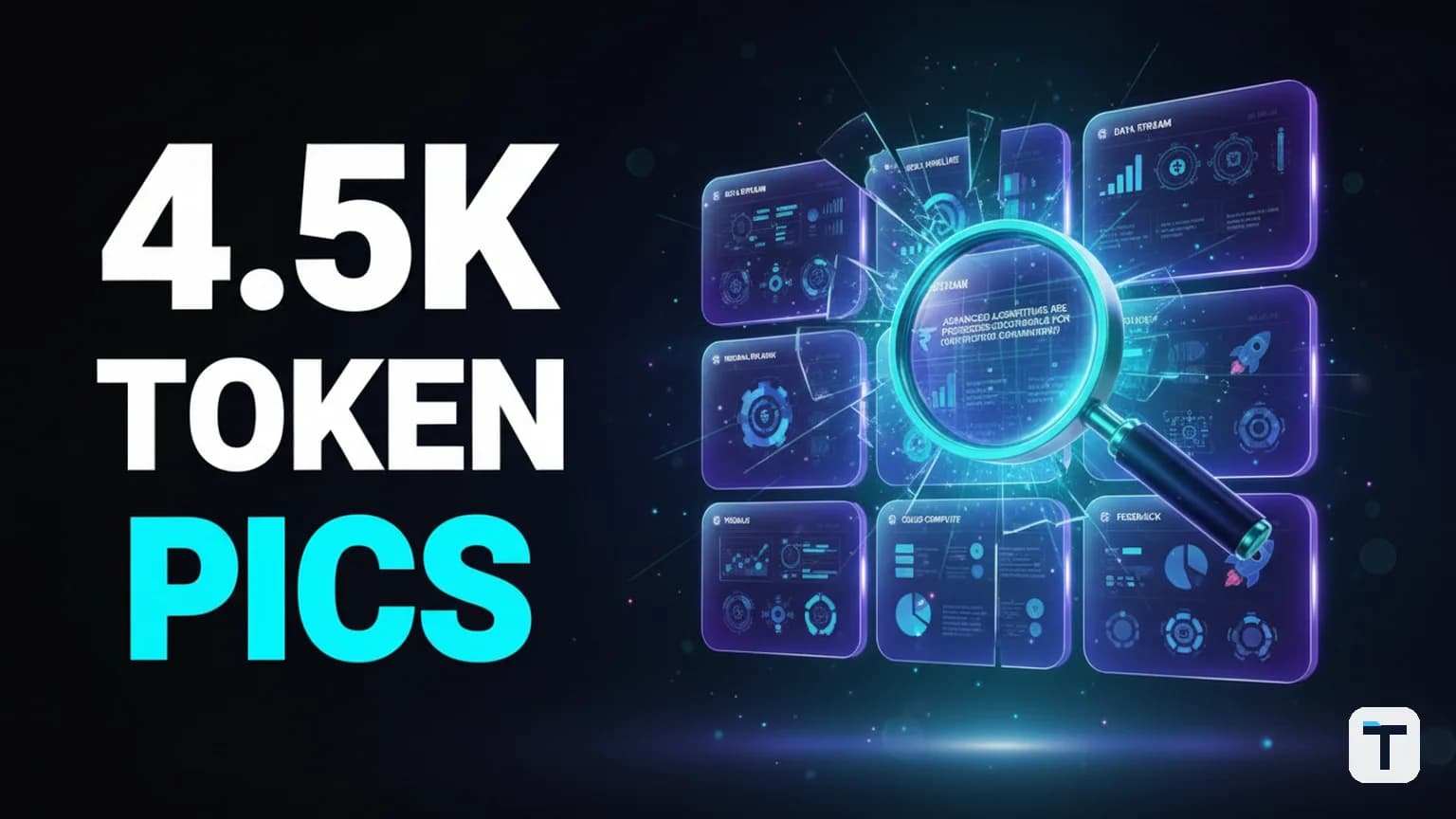
The flagship demonstration: a 3×3 grid of nine distinct, dense infographics covering physics, geometry, biology, group theory (the Sylow theorems), banking, and more — produced in a single forward pass from a ~3,700-token prompt, not stitched together from nine separate generations. Being able to keep nine panels coherent in one image — without semantic bleed between cells — is the headline layout claim. Source: Qwen-Image-3.0 launch post · [Vendor claim; not independently benchmarked]
How well does Qwen Image 3.0 render small text?
Alibaba claims Qwen Image 3.0 renders text legibly down to approximately 10 pixels — smaller than a footnote in a printed book — and shows micro-textures like skin pores and individual strands of hair in photorealistic outputs. The model also handles 12 languages natively (including Chinese, English, Japanese, Korean, and Arabic), with more than 20 built-in fonts and over 100 art styles. Source: Qwen-Image-3.0 launch post · [Vendor claim]
The honest picture from early use: the model is strong on text rendering but not flawless. Independent hands-on testers have reported anatomical errors, mangled Japanese and Korean characters inside otherwise well-formed layouts, and Arabic rendering that looked broken even in promotional material. The distinction that matters: "12 languages supported" and "12 languages rendered correctly every time" are different claims. Text rendering has been this model family's best trait, but the 10-pixel legibility claim comes from images Alibaba chose and published — not from a reproducible benchmark. Source: NYU Shanghai RITS coverage citing Hacker News early-reaction thread, July 22–23, 2026 · [Reported]
How does Qwen Image 3.0 compare to GPT Image 2 and Nano Banana?
The honest answer: nobody outside Alibaba can rank Qwen Image 3.0 against its competitors yet, because 3.0 shipped with no benchmark scores. But we know exactly where the previous generation placed on Alibaba's own benchmark — and it was not the leader.
Alibaba publishes its own text-to-image benchmark called Qwen-Image-Bench, which evaluates 18 frontier models across five pillars (Quality, Aesthetics, Alignment, Real-world Fidelity, and Creative Generation). The results are peer-reviewed and independently reproducible (the Judge Model and full prompt set are open). As of the latest published run, here is how the top five ranked overall: Source: Qwen-Image-Bench paper (arXiv) and GitHub README, QwenLM/Qwen-Image-Bench · [Confirmed]
| Rank | Model | Overall Score | Text Accuracy Strength | Best Pillar |
|---|---|---|---|---|
| 1 | GPT Image 2 (OpenAI) | 64.69 | Strong all-around | #1 on all five pillars simultaneously |
| 2 | Nano Banana 2.0 (Google) | 59.82 | High | Aesthetics, Creative Generation |
| 3 | GPT Image 1.5 (OpenAI) | 59.65 | Very high (English) | Text rendering, Alignment |
| 4 | Nano Banana Pro (Google) | 59.45 | High | Quality, Real-world Fidelity |
| 5 | Qwen Image 2.0 Pro (Alibaba) | 57.84 | Highest text accuracy among the tier above | Language-intensive facets (Storyboards, Comics, Cross-lingual) |
What this tells us about Qwen Image 3.0's prospects: the Qwen Image family's genuine superpower is language-understanding-intensive tasks — text accuracy (where 2.0 Pro beat the entire second tier by +11.4 points), storyboard creation, comic creation, and cross-lingual generation. Its weaknesses are visual-execution-intensive facets: anatomical fidelity, game design, and object matching. If 3.0 improves on those visual gaps while keeping its text lead, it could close the distance to GPT Image 2. Until a 3.0 benchmark run is published, that is speculation — which is exactly why the missing benchmarks matter. Source: Qwen-Image-Bench paper analysis, arXiv:2605.28091 · [Confirmed]
A practical comparison for buyers right now:
| Dimension | Qwen Image 3.0 | GPT Image 2 | Nano Banana Pro |
|---|---|---|---|
| Prompt length | Up to 4,500 tokens | Standard | Standard |
| Dense single-pass layouts | Headline feature | Good | Good |
| Multilingual text (12 languages) | Headline feature | English-strong | Good |
| Open weights | No | No | No |
| Public API at launch | No | Yes | Yes |
| Benchmark scores published | No | Yes (Qwen-Image-Bench) | Yes |
| Access | Qwen Chat only | OpenAI API + ChatGPT | Google API + Gemini |
Why did Qwen Image 3.0 launch with no benchmarks or weights?
This is the question almost no coverage is asking clearly, and it is the single most important fact for anyone deciding whether to trust the model. Qwen Image 3.0 shipped with no benchmark score, no model card, no parameter count, no technical report, and no downloadable weights — a sharp departure from the series' history. Qwen Image 1.0 arrived in August 2025 with Apache 2.0 open weights and a same-day technical report. Qwen Image 2.0 published a technical report (though its weights never shipped). Qwen Image 3.0 points you at the chat app and says, "have a go." Source: Unite.AI coverage, July 21, 2026; NYU Shanghai RITS · [Confirmed]
This fits a broader pattern at Alibaba: the shift away from open releases began in September 2025 when Qwen3-Max became the first major Qwen model to launch without open weights, and frontier releases have largely stayed behind the API since. That is an awkward turn for the family that became the most-downloaded on Hugging Face by January 2026. The practical consequence: every claim about 10-pixel text, nine-panel grids, and pore-level skin comes from images Alibaba selected and published. There is no independent score behind any of it. "Scary good" is Alibaba's marketing word, not a measured fact — and until an API or evaluation numbers arrive, Qwen Image 3.0 is a set of impressive demos that outside researchers cannot reproduce or measure. Source: NYU Shanghai RITS, July 22, 2026 · [Confirmed]
Where can you access Qwen Image 3.0?
Qwen Image 3.0 is available only through the hosted Qwen Chat interface at chat.qwen.ai (the launch post links to chat.qwen.ai/?inputFeature=t2i). A basic account works on web, phone, and desktop. There is no public 3.0 API model ID, no documented pricing page for 3.0 specifically, and no published rate limits or usage terms as of July 30, 2026. The existing Alibaba Cloud Model Studio API pages document older Qwen-Image models — do not guess a 3.0 model string from older names. Source: Qwen-Image-3.0 launch post; agentpedia developer guide, July 22 research cutoff · [Confirmed]
What is Qwen Image 3.0 best used for right now?
If your work involves information-dense graphics — the kind where small text has to survive — Qwen Image 3.0 is aimed straight at you. The high-value use cases to test first, in order of expected payoff:
- Multi-panel infographics. Describe a 3×3 or 3×4 grid, name each panel, write every heading and caption, and let the model produce the whole thing as one image. The long prompt window lets you specify the small print too: footnotes, source lines, step numbers.
- Event flyers and posters. A flyer needs a title, date, time, three bullet points, and a call-to-action line — a text-heavy job where most image models fall over. This model family is built for exactly that.
- Storyboards and slide graphics. Walk through a process panel by panel, with labels and arrows, in a single pass. Useful for product explainers and training materials.
- Multilingual one-pagers. If you work in more than one language, 12 languages in their real scripts (not pseudo-Korean that sort of resembles the alphabet) is a real differentiator for localized materials.
- Interface mockups. The "depth" feature nests interfaces inside interfaces — a code editor with a chat window inside it, with a messaging app inside that — which is useful for product and design mock-ups.
If you make simpler illustrations — single hero images, portraits, product shots — the long-prompt advantage matters less, and benchmarked alternatives like GPT Image 2 or Nano Banana Pro are the safer, reproducible choice. For generating photorealistic named public figures, steer clear regardless of model: likeness rules and platform policies make that a liability regardless of technical quality.
Who should hold off on Qwen Image 3.0?
You should wait if any of these apply:
- You need to self-host or run locally. There are no weights, and Qwen has not said whether there ever will be.
- You are building a production pipeline. No published rate limits, no usage terms, no API contract, and coverage does not even agree on how far API access has rolled out. Do not make it a dependency until that settles.
- You need to edit after generation. What comes out is flat pixels — you cannot nudge a heading 2mm to the left. You regenerate, or you move the result into a real layout tool (Figma, Canva, InDesign).
- You need reproducible, benchmarked output for a regulated or audit-sensitive context. No benchmarks means no third-party assurance.
What this means for you
For small businesses and builders: Qwen Image 3.0 is worth a focused testing session in Qwen Chat this week, but not a pipeline migration. Pick one real artifact you need — a flyer for an upcoming event, a one-page explainer for a product, a localized social-post grid — and write a long, structured prompt (3,000+ words specifying every panel and caption). If the output is usable, you just replaced a designer's afternoon. If text comes back garbled in one panel, you have hit the same wall early testers report — and you will know not to trust it unattended yet. Either way, keep a benchmarked alternative (GPT Image 2 or Nano Banana Pro via API) as your production path until Qwen publishes numbers. See our guide to testing frontier AI models side by side for a structured comparison method.
For developers: treat 3.0 as a hosted-evaluation surface only. Keep any production code behind a disabled provider flag until an official API page publishes a callable 3.0 model ID and a price. Our guide to running open-source AI models as an autonomous agent brain covers the self-hostable alternatives.
FAQ
Q: Is Qwen Image 3.0 free to use? A: Qwen Chat (chat.qwen.ai) offers a basic account tier that works for trying the model on web, phone, and desktop. However, no 3.0-specific pricing page, rate-limit schedule, or commercial usage terms were published as of July 30, 2026. The existing Alibaba Cloud Model Studio pricing pages cover older Qwen-Image models and should not be assumed to apply to 3.0. Verify current terms before any commercial use. Source: Qwen-Image-3.0 launch post
Q: Can I download Qwen Image 3.0 weights or run it locally? A: No. No official checkpoint, license, model card, or inference repository was located on the public Qwen GitHub or Hugging Face surfaces as of July 30, 2026. This is an availability gap, not proof weights will never be released — but until they appear, 3.0 is hosted-only. Source: GitHub QwenLM/Qwen-Image and HuggingFace Qwen/Qwen-Image, checked July 30, 2026
Q: How does Qwen Image 3.0 compare to GPT Image 2? A: Nobody outside Alibaba can rank 3.0 against GPT Image 2 yet because 3.0 shipped with no benchmark scores. On Alibaba's own Qwen-Image-Bench, OpenAI's GPT Image 2 leads all 18 evaluated models with a 64.69 overall score and ranks #1 on all five pillars simultaneously; the previous Qwen Image 2.0 Pro ranked 5th (57.84). The Qwen family's measured edge is in text accuracy, storyboards, and multilingual generation — its gap to the leader is in visual-execution facets like anatomy and game design. Source: Qwen-Image-Bench, arXiv:2605.28091
Q: What is the maximum prompt length for Qwen Image 3.0? A: Up to 4,500 tokens, roughly 4.5× the approximately 1,000-token limit of Qwen Image 2.0. In practice, this is close to drafting a detailed brief for a graphic designer rather than typing a one-line caption. The flagship nine-panel infographic grid demo used approximately 3,700 tokens. Source: Qwen-Image-3.0 launch post
Q: Does Qwen Image 3.0 support image editing? A: The official launch gallery shows editing examples, including annotations, restoration, and an image-to-infographic transformation. However, the launch does not document whether the same capability is exposed through a public API, which input formats are accepted, or which limits apply. Test editing through Qwen Chat; do not assume API-level editing access exists. Source: Qwen-Image-3.0 launch post
Q: Is Qwen Image 3.0 good at rendering text in languages other than English? A: It is the model family's strongest measured trait. On Qwen-Image-Bench, Qwen Image 2.0 Pro beat the entire second tier (GPT Image 1.5, Nano Banana Pro) by +11.4 points on Text Accuracy and led on cross-lingual generation. 3.0 claims native support for 12 languages. Early hands-on tests, however, report mangled Japanese and Korean characters and broken Arabic even in promotional material — so "12 languages supported" and "12 languages always rendered correctly" are different claims. Always verify the rendered text at final bitmap size before shipping. Source: Qwen-Image-Bench paper; NYU Shanghai RITS early-test coverage
Discussion
0 comments