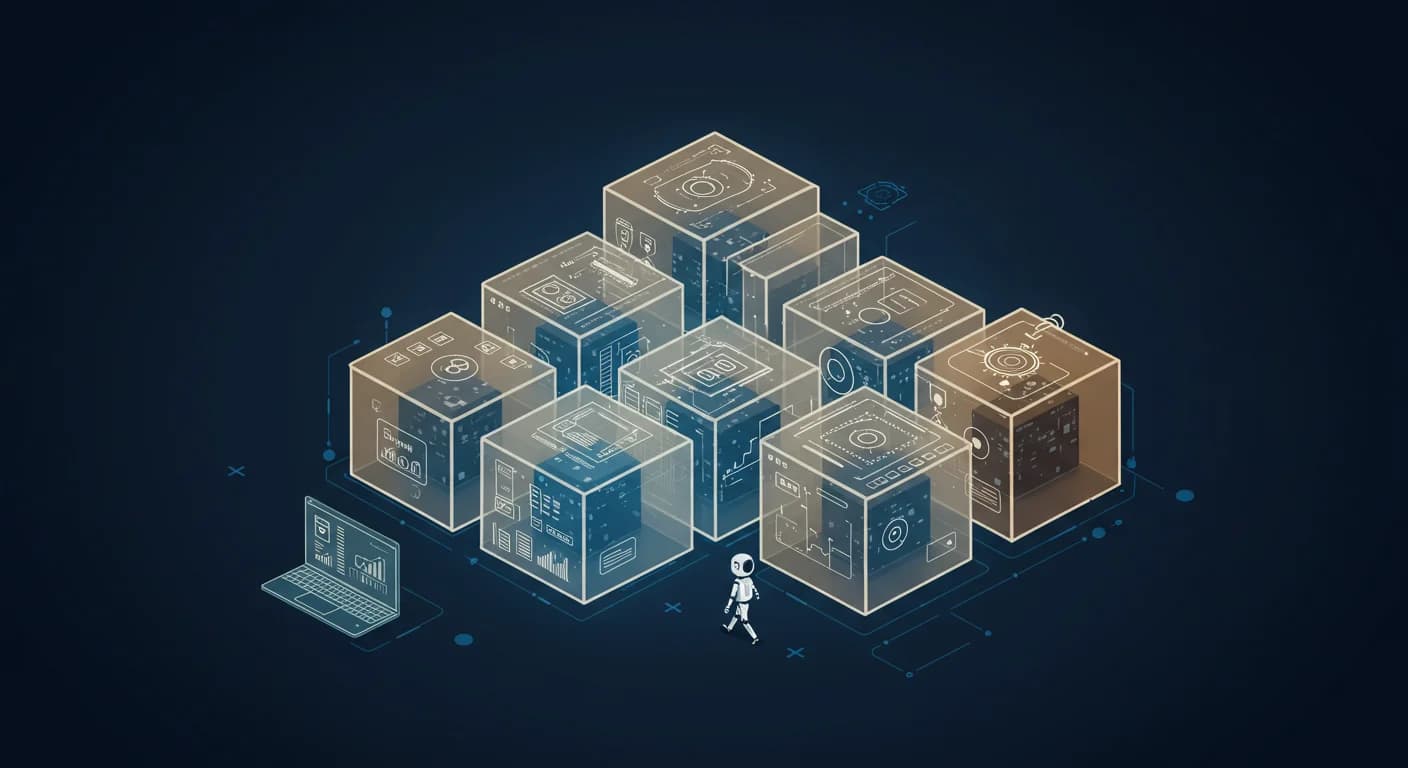

Verdict: OpenAI's acquisition of Ona (formerly Gitpod) transforms Codex from a code-writing assistant into a production-ready enterprise agent platform. By integrating secure, persistent cloud workspaces, OpenAI is prioritizing the infrastructure of autonomous execution over pure model intelligence, addressing the primary security and persistence hurdles for large-scale enterprise deployments.
TL;DR / Key Takeaways
- Infrastructure Pivot: OpenAI is moving from model-only competition to full-stack execution environments.
- Persistence & Security: Ona's technology allows Codex to run multi-day tasks safely within customer-controlled clouds.
- Enterprise Standards: Features include hash-based program blocking and automatic environment teardown.
- Strategic Timing: The deal follows closely on the heels of the Claude Fable 5 launch and Oracle partnership.
- Last verified: June 15, 2026 UTC.
The deal, announced June 11, 2026, is the clearest signal yet that the coding-agent race is shifting from "which model writes better code" to "which platform can safely run autonomous work inside an enterprise." [Confidence: High]
What happened
On June 11, OpenAI said it had agreed to acquire Ona and fold the team into Codex.
The acquisition is subject to regulatory approvals and customary closing conditions. Until it closes, OpenAI and Ona remain independent.
Why OpenAI wanted Ona
Codex has grown fast — more than five million weekly users, up 400% since the start of 2026, according to OpenAI's announcement. But fast growth exposed a structural limit: most Codex work still happened inside a local session or a short-lived OpenAI-hosted sandbox. That is fine for quick completions or one-shot explanations. It is not fine for the tasks enterprises actually want agents to handle: multi-day code migrations, overnight security sweeps, long-running test suites, or large refactoring projects that span many files and many hours.
Ona solves the persistence problem. Its sandboxes can keep running while the user is offline, resume on a different device, and operate inside the customer's own cloud so security and compliance teams retain control. Hash-based program blocking and automatic teardown of unused environments add further enterprise guardrails. That combination is the difference between a coding assistant and a production agent.
OpenAI's framing was explicit. "Agents need more than intelligence; they need a trusted workspace," Ona CEO Johannes Landgraf said in the announcement. OpenAI Core Products Lead Thibault Sottiaux added that the goal is to help organizations deploy agents "with confidence" at "the highest standards of trust and scale."
Why it matters for the market
This acquisition reframes how buyers should evaluate coding-agent vendors. Model benchmarks still matter, but they are no longer sufficient. Procurement teams will increasingly ask about runtime isolation, permission scoping, audit trails, review workflows, and where data actually lives. The competitive battlefield is moving from the prompt layer to the infrastructure layer.
It also tightens the race with Anthropic. Claude Code has become a leader for long-running terminal-based tasks, and Anthropic has built out its own enterprise hooks. Anthropic had just launched Claude Fable 5 on June 9, only to see it suspended globally on June 12 after a US government export-control directive. OpenAI's timing with Ona — two days after Fable 5's launch — looks deliberate. While Anthropic is fighting a regulatory fire, OpenAI is strengthening the enterprise execution layer underneath Codex. Compare this with the latest GPT 5.6 rumors which suggest even deeper agentic capabilities.
The parallel to watch is distribution. Anthropic's June 15 billing change splits interactive and programmatic Claude usage into separate credit pools, a move aimed at reining in third-party agent harnesses. OpenAI, by contrast, is expanding Codex through Oracle's enterprise channel and now Ona's infrastructure. One lab is tightening the leash on how its model is consumed; the other is building more on-ramps. For teams building their own infrastructure, see our persistent AI cloud workspace guide.
The broader context: OpenAI's busy June
The Ona deal is part of a concentrated run of corporate moves from OpenAI:
- June 8: OpenAI announced a confidential draft S-1 filing with the SEC, a move now shadowed by a 42-state subpoena into the company's safety practices. [Confidence: High]
- June 10: OpenAI and Oracle announced a partnership that will let Oracle Cloud Infrastructure customers apply eligible Universal Credits toward OpenAI models and Codex, removing a separate procurement path. [Confidence: High]
- June 11: The Ona acquisition.
Taken together, the three moves point in the same direction: OpenAI is building the enterprise distribution, governance, and infrastructure layers it needs before a public-market debut. A trillion-dollar valuation story requires more than consumer ChatGPT growth. It requires convincing CFOs, CIOs, and CISOs that OpenAI agents can run safely inside their environments. This marks the transition of OpenAI Codex from a coding tool to an autonomous business worker.
FAQ
Q: What is Ona and why did OpenAI acquire it? A: Ona, formerly Gitpod, is a secure cloud execution and orchestration company. OpenAI acquired it to provide its Codex coding agent with persistent, customer-controlled cloud workspaces, shifting the focus to robust infrastructure for autonomous agents.
Q: How does Ona's technology benefit Codex? A: Ona's technology provisions isolated, persistent cloud sandboxes that remain alive across sessions, even when the user is offline. This allows Codex to handle complex, multi-day enterprise tasks securely within customer clouds with customer-controlled security boundaries and activity logging.
Q: What does this acquisition mean for the AI coding agent market? A: The acquisition signals a shift from focusing solely on model quality to prioritizing secure, persistent, and auditable execution environments. Procurement teams will increasingly prioritize runtime isolation and permission scoping over simple model benchmarks.
Q: What other significant moves has OpenAI made in June 2026? A: In June 2026, OpenAI also confidentially filed a draft S-1 with the SEC for a potential IPO and announced a partnership with Oracle to make OpenAI models and Codex accessible through Oracle Cloud Infrastructure.
Q: How does this acquisition compare to competitors like Anthropic? A: While Anthropic's Claude Code focuses on terminal-based efficiency, OpenAI's acquisition of Ona gives Codex a managed, persistent infrastructure layer that integrates directly with enterprise cloud environments like Oracle.
Sources
- OpenAI, "OpenAI to acquire Ona," June 11, 2026: https://openai.com/index/openai-to-acquire-ona/
- OpenAI, "Access OpenAI models and Codex through your Oracle cloud commitment," June 10, 2026: https://openai.com/index/openai-on-oracle-cloud/
- OpenAI, "Confidential submission of draft S-1 to the SEC," June 8, 2026: https://openai.com/index/openai-submits-confidential-s-1/
This article was produced with AI assistance and follows the Shaam Blog how-we-work disclosure and correction standards.
Discussion
0 comments