
Last verified: 2026-06-27
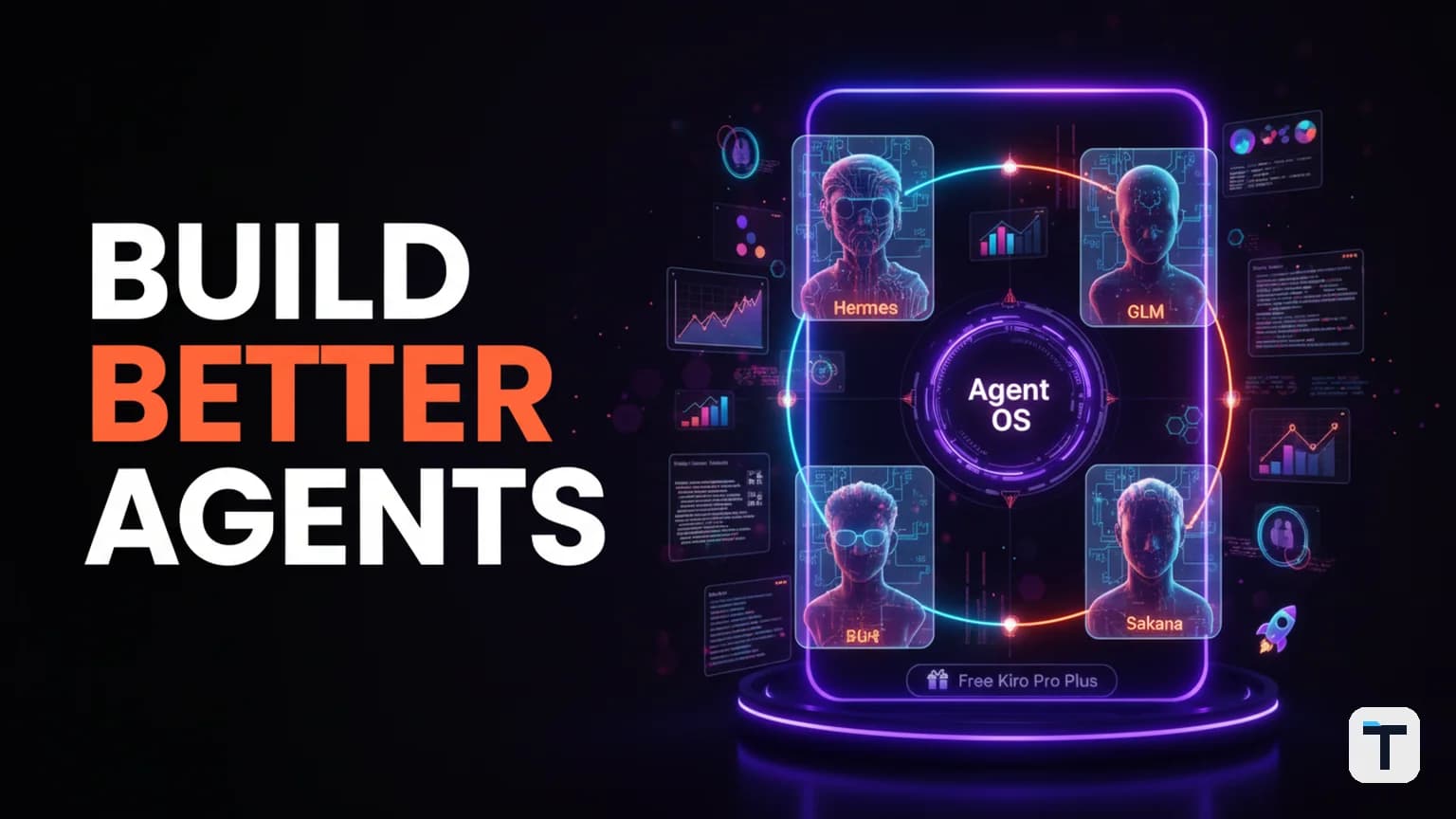
Core Framework: Builder-Judge Loops · Primary Stack: Hermes 0.17, GLM 5.2, Sakana Fugu Ultra
Status: Production-ready for small businesses and independent builders.
What is the biggest mistake in AI agent building?
The common mistake is collecting tools instead of building a system. Most builders chase the newest "shiny" model, run a flashy demo, and stop there. They end up prompting everything themselves, fixing every error manually, and becoming the bottleneck in their own automation.
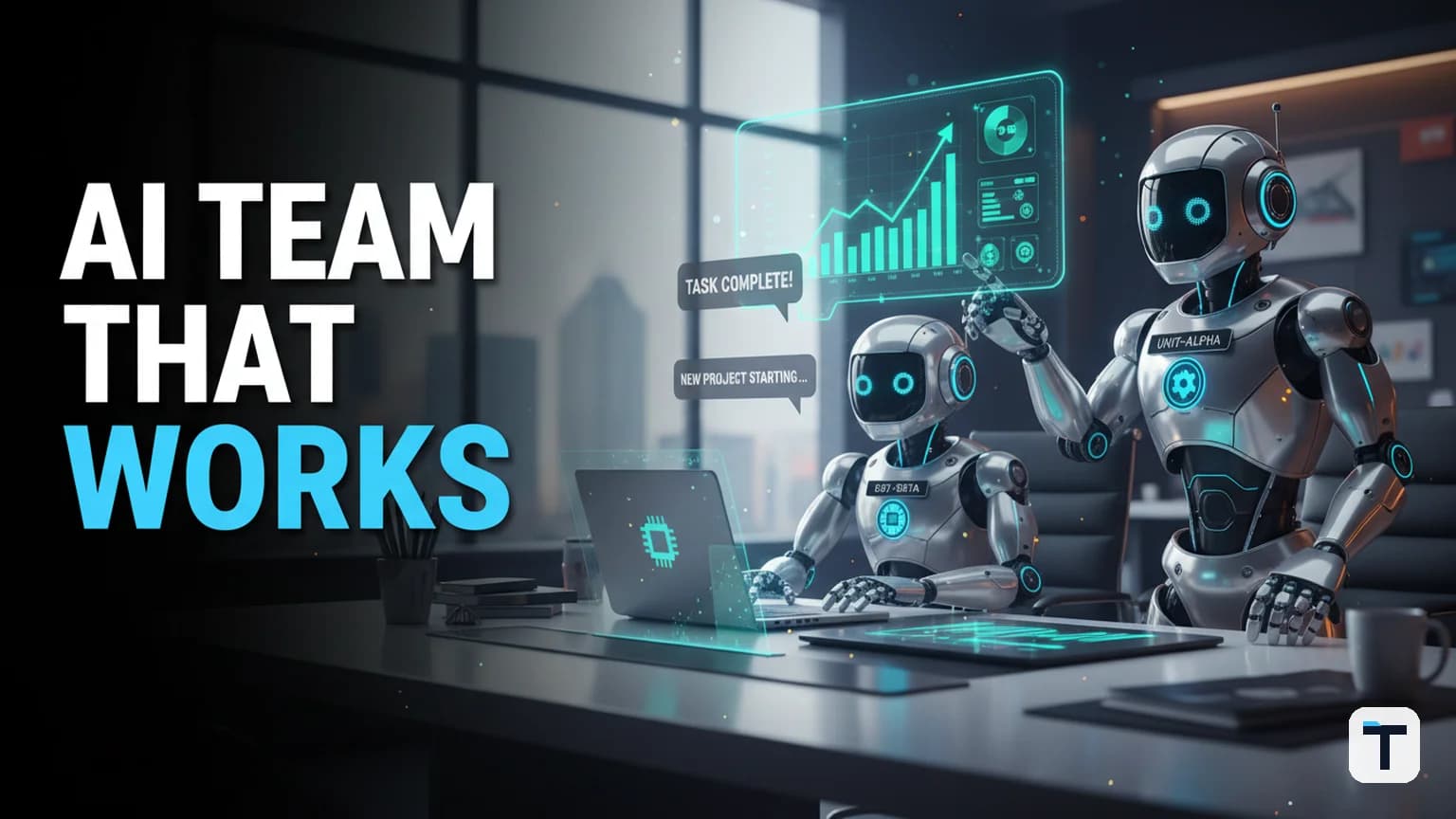
In 2026, the era of the isolated chatbot is over. To achieve 24/7 autonomous operations, you must shift your identity from a "prompter" to a "system architect." Instead of asking a model to "write an article," you should be architecting a pipeline where one agent writes, another verifies, and a third publishes—all without your intervention.
The Agent OS Framework: System over Tools
The most successful AI deployments in 2026 use a centralized "Agent OS" framework. This is not a single software package but an architectural pattern that integrates disparate models into a cohesive team.
An effective Agent OS relies on four pillars:
- Shared Memory: A unified state where every agent can read and write, ensuring a researcher's findings are immediately available to the writer.
- Persistent Profiles: Specialized agent personas (e.g., SEO Specialist, Security Auditor) with their own dedicated toolsets and instructions.
- Kanban Management: A task-based coordination layer where work is decomposed into discrete cards and assigned to the right specialist.
- Autonomous Loops: Self-correcting workflows where agents interact to improve quality before a human ever sees the output.
For a deeper look at integrating specific models into this architecture, see our guide on The Open AI-OS: Integrating Codex, Claude Code, and GLM 5.2.
How to Build the "Builder-Judge" Loop
The "Builder-Judge" loop is the core reliability pattern of 2026. It prevents "AI slop" by ensuring no output is final until it passes a specialized quality gate.
Step 1: Assign the Builder
The Builder is the agent responsible for production. It takes the goal, selects the tools, and produces a first draft.
Step 2: Set the Quality Gate (The Judge)
The Judge is a separate agent (often using a higher-reasoning model like Claude Opus 4.8 or Fugu Ultra) tasked with scoring the Builder's work against a strict rubric.
Step 3: Automate the Loop
If the Judge's score falls below your threshold (e.g., 90/100), the loop automatically triggers. The Judge provides specific notes, and the Builder is tasked with a revision. This process repeats until the threshold is met.
This pattern is a key part of the 10 engineering principles for reliable AI agents that we follow at Shaam Blog.
Choosing Your Engine: Specialist Models in 2026
Matching the right model to the right task is critical for cost and performance. In the June 2026 landscape, three tools have emerged as the "Big Three" for agentic workflows:
| Role | Recommended Model | Why it wins |
|---|---|---|
| Orchestration | Hermes 0.17 | The "Reach" release added asynchronous background sub-agents, allowing you to fan out one goal to a whole team. |
| Design & Code | GLM 5.2 | With 753B parameters and a 1M token context window, GLM 5.2 is currently the leading open-weight model for front-end and complex coding tasks. |
| Deep Reasoning | Sakana Fugu Ultra | A multi-model panel API that coordinates specialists to solve hard, multi-step research problems at a fraction of the cost of proprietary models. |
What this means for your business
For small business owners and independent creators, building with an Agent OS means moving from a "one-person operation" to a "one-human-led company." By setting up these loops for content production, SEO, and customer support, you can scale your output without scaling your hours.
The "human-in-the-loop" role shifts from doing the work to supervising the system. You become the CEO of an autonomous workforce.
Related reading
FAQ
Q: Do I need to be a developer to build an Agent OS?
A: While technical skills help, 2026 frameworks like Hermes and various low-code orchestration layers have made it possible to build loops using natural language and structured task cards.
Q: How many agents should I have in a loop?
A: Start with two: one Builder and one Judge. Adding more agents increases complexity and token cost. Only expand when a single agent can no longer handle the specialization required.
Q: Is open-source or proprietary better for agents?
A: Use both. Use open-source models like GLM 5.2 for high-volume tasks (coding, drafting) to save costs, and proprietary models or orchestration panels like Fugu Ultra for final reasoning and quality checks.
Q: How do I prevent agents from "looping" forever?
A: Always set a "Max Turns" limit (e.g., 3-5 revisions) and a "Minimum Score" threshold. If the agent fails to hit the score within the limit, it should block the task for human review.
Every claim here is traced to a primary source, dated, and listed under Sources. Research and drafting are AI-assisted; editing, verification and publication are human decisions, and a person is accountable for what appears on this page. How we work →


Discussion
0 comments