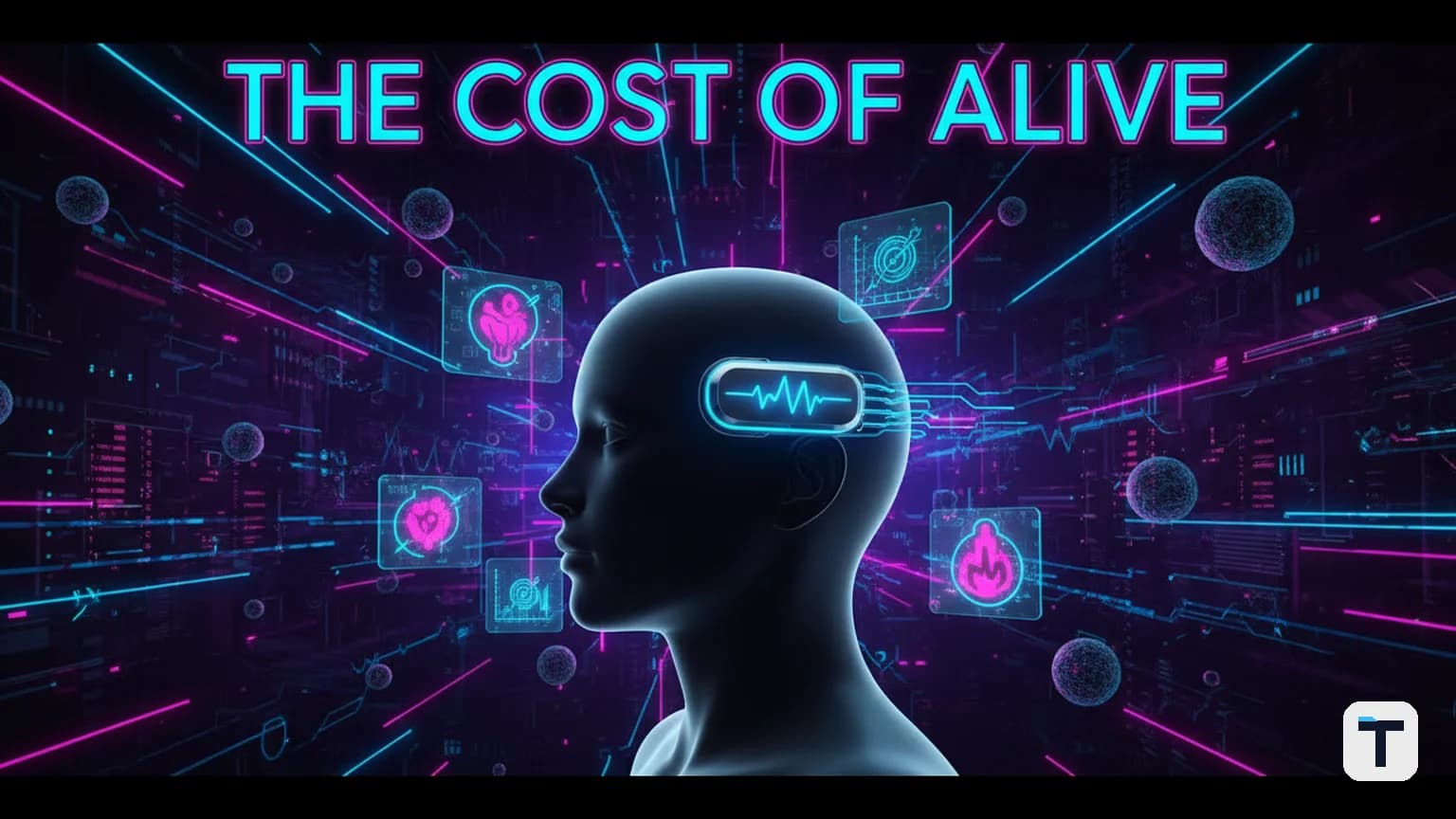

Verdict: "Entropy" is a proprietary biomarker (ranging from 1 to 250) that measures the real-time metabolic and sympathetic demand on the human body. Unlike wrist-worn trackers that rely on peripheral heart rate, the new Temple wearable tracks cerebral blood flow to calculate the "cost of being alive," offering a deeper window into cognitive load and aging.
Last verified: 2026-06-19 · Metric: Entropy (1-250) · Device: Temple (Eternal) · Status: Early Access Pricing and availability change often — last checked June 2026.
What is the 'Entropy' Biomarker?
Entropy is a quantitative measure of the physiological complexity and metabolic cost your body incurs at any given moment. In the context of the Temple wearable, it is expressed as a number between 1 and 250.
According to the developers at Eternal, a healthy body should exhibit low entropy at rest (near 1) and high entropy during peak activity (reaching 250). This spread indicates a high "physiological range" or adaptability—the body's ability to switch from a state of deep recovery to high-performance output. High entropy at rest is often a signal of chronic stress, poor recovery, or underlying metabolic strain.
How the Temple Wearable Tracks Brain Blood Flow
The most significant departure from mainstream wearables like the Apple Watch or Oura Ring is the location. The Temple device is a small, amoeboid-shaped instrument worn on the side of the head (the temple).
This placement is strategic:
- Thin Tissue: The temple area has minimal fat/muscle between the skin and the vascular structure.
- Vascular Richness: It provides direct access to the superficial temporal artery.
- Cerebral Connection: By monitoring blood flow at the temple, the device aims to track Cerebral Blood Flow (CBF) more accurately than wrist-based PPG sensors, which must filter out "noise" from movement and peripheral circulation.
Testing by the Temple team claims the device's heart rate accuracy matches medical-grade chest straps (like the Polar H10), but its true value lies in the "Entropy" score derived from autonomic regulation signals.
The Science: Why 'Entropy' Matters for Aging
The development of Temple is rooted in the Gravity Aging Hypothesis, a theory explored by Eternal founder Deepinder Goyal. The hypothesis suggests that Earth's gravity affects blood flow to the brain over decades, contributing to cellular degeneration and cognitive decline.
While the medical community remains skeptical—noting that aging itself typically causes arterial stiffening and reduced blood flow, rather than gravity being the primary driver—the Entropy metric stands on firmer ground. "Multiscale Entropy" is a recognized concept in physiological research (see Frontiers in Physiology, 2026). It measures the "complexity" of biological signals; a loss of this complexity is a hallmark of aging and disease.
Why This Matters for Your Longevity Strategy
For builders and professionals using AI for Small Business, cognitive performance is the primary asset. Traditional wearables tell you how many steps you took; Entropy tells you how much "fuel" your brain is burning to stay focused.
If you are already optimizing your workflow with Best AI Automation Platforms, adding a "metabolic cost" layer to your schedule can help you identify high-stress "leaks" where your resting entropy remains high despite being at your desk.
FAQ
Q: Is the Temple wearable available for purchase?
A: No. As of June 2026, Temple is in an Early Access phase. Selected founding users (athletes, scientists, and founders) are the first to receive the initial 100 units. You can apply at temple.com.
Q: Can I track Entropy on my Apple Watch or Garmin? A: Not directly. While these devices track HRV (Heart Rate Variability), which is related, "Entropy" as defined here is a proprietary metric involving cerebral blood flow signals not captured by wrist-sensors.
Q: Is the Gravity Aging Hypothesis proven? A: It is currently a research hypothesis. Mainstream gerontology attributes brain aging primarily to DNA damage and vascular stiffening. Temple is positioned as a tool to research these links further.
Q: Does caffeine or sleep affect my Entropy score? A: Yes. Preliminary data suggests that sleep, stress, stimulants (coffee), and even cold plunges move your metabolic demand, which is reflected in the real-time Entropy counter.
Discussion
0 comments