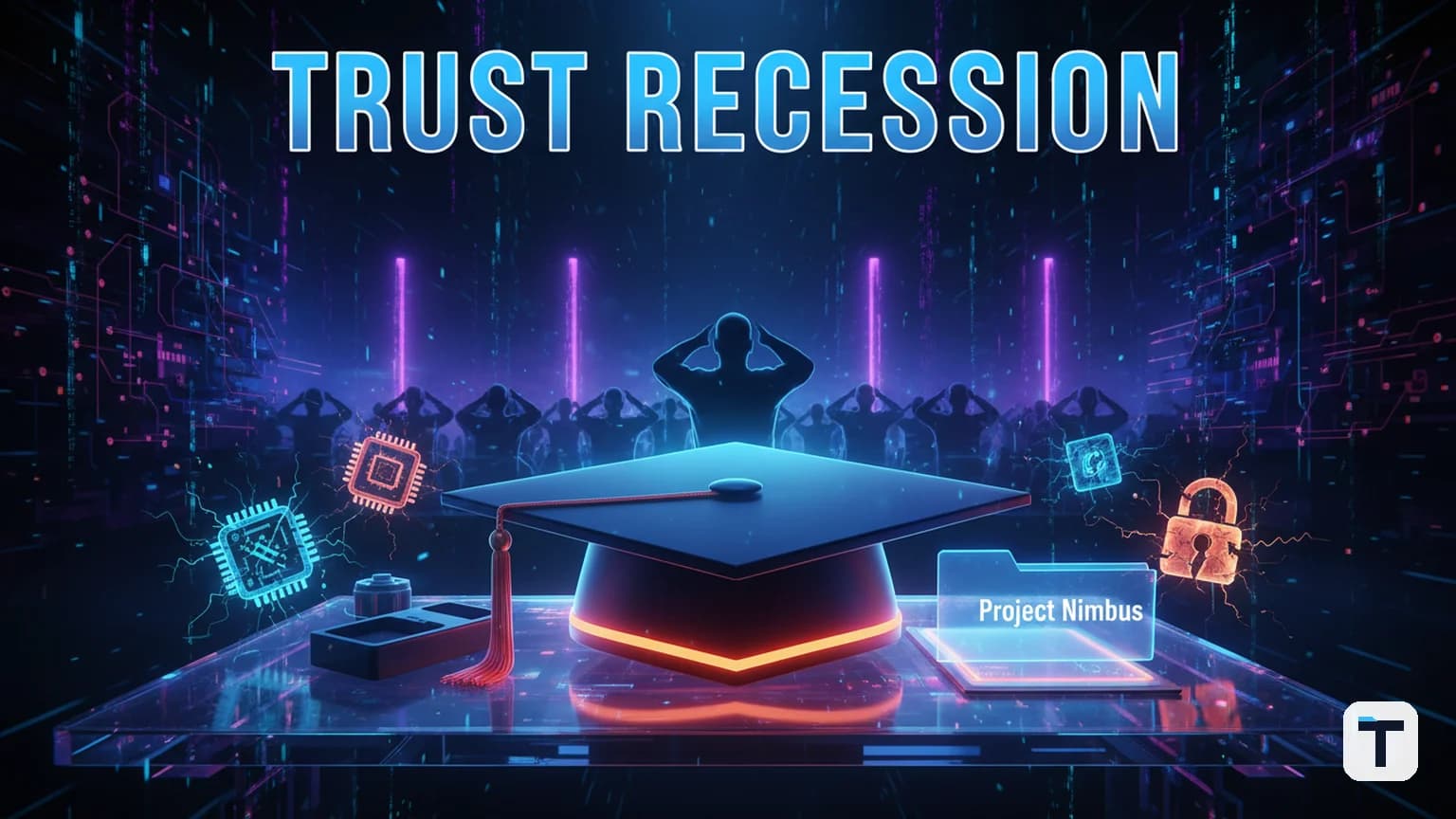

Verdict: The 2026 commencement season has exposed a profound "trust recession" between Silicon Valley leadership and the next generation of talent. As graduates from Stanford to the University of Arizona boo and walk out on tech luminaries, it is clear that traditional corporate optimism is failing to address deep-seated ethical anxieties and economic fears about the AI-driven future.
Last verified: 2026-06-19 · Key Event: Sundar Pichai Stanford Walkout (June 14) · Trend: Record boos at UCF, UA, and MTSU.
The Stanford Walkout: A Corporate-Ethics Flashpoint
On June 14, 2026, Google CEO Sundar Pichai took the stage at Stanford’s 135th Commencement Ceremony. For a Stanford alumnus, it should have been a triumphant return. Instead, it became a focal point for student dissent. As Pichai began his address, between 100 and 200 graduates—nearly 3% of the class—rose from their seats and exited Stanford Stadium in a coordinated protest.
The protesters, led by groups like Stanford Students for Justice in Palestine and No Tech for Apartheid, held their own "People's Commencement" in the nearby Arboretum. This marked the third consecutive year that Stanford graduation has seen significant walkouts, signaling that student activism against tech-industry practices has moved from the fringe to a ritualized part of the academic calendar.
The 'Boo Strategy': Why AI Optimism is Failing
While the Stanford walkout was primarily targeted at specific corporate contracts, a broader "boo strategy" has emerged across U.S. campuses this spring. At multiple universities, speakers who leaned into the "next industrial revolution" narrative of AI were met with immediate, vocal rejection.
| University | Speaker | The Flashpoint Quote | Audience Reaction |
|---|---|---|---|
| Stanford | Sundar Pichai | (Avoided AI entirely) | ~200 student walkout |
| Middle Tennessee State (MTSU) | Scott Borchetta | "AI is rewriting production as we sit here. Deal with it." | Sustained boos |
| Univ. of Arizona (UA) | Eric Schmidt | "The question is whether you will help shape AI." | Repeated boos |
| Univ. of Central Florida (UCF) | Gloria Caulfield | "AI is the next industrial revolution." | Immediate boos |
These incidents suggest that the Class of 2026 is no longer satisfied with being told to "embrace the tool." There is a growing disconnect between the executive view of AI as a productivity multiplier and the graduate view of AI as a career disruptor and ethical liability.
Project Nimbus: The $1.2 Billion Ethical Dilemma
The primary driver for the Stanford protest was Project Nimbus, a $1.2 billion cloud and AI services contract between Google, Amazon, and the Israeli government. Signed in 2021, the contract has become a symbol of "war profiteering" for critics.
The tension within Google itself is well-documented; in 2024, the company fired 28 employees who conducted sit-ins to protest the same contract. For the Class of 2026, the project represents a fundamental question about the kind of work they are willing to do. When Pichai told the Stanford Daily that Google provides "standard tools which are available to everyone to use," he was articulating a neutral-platform defense that many graduates now find insufficient.
The Communication Gap: "Optimism" vs. Reality
Pichai’s speech at Stanford was notably "technology agnostic." He focused on personal life lessons, such as the importance of "signal vs. noise" and choosing optimism over setbacks. By avoiding the topic of AI entirely, Pichai likely hoped to sidestep the boos that plagued Eric Schmidt and others.
However, this silence highlights the communication gap. In 2026, ignoring AI in a commencement speech given by the head of Google feels as dissonant as praising it. Graduates are entering a market where AI brand messaging is already turning off 60% of consumers, and they are looking for leaders to address the ethical moats of the 'Agency Era' rather than offer generic platitudes.
What this means for you
Whether you are a small business owner, a hiring manager, or a builder, the "Commencement Gap" is a signal of the changing workforce landscape:
- E-E-A-T is Internal Too: Authenticity and ethical clarity are now critical for talent acquisition. The best graduates in 2026 are vetting employers as much for their "Project Nimbus" equivalents as for their salary.
- Move Beyond 'Optimism': If your business is adopting AI, don't just sell the benefits. Address the displacement and ethical concerns head-on.
- The Human Premium: As AI becomes commodity rehash, human agency and ethical decision-making are the new high-value skills.
Q: Why was Sundar Pichai booed at Stanford? A: Approximately 200 students walked out to protest Google's Project Nimbus contract with the Israeli government and its contracts with U.S. Immigration and Customs Enforcement (ICE).
Q: What is Project Nimbus? A: A $1.2 billion cloud-computing and AI services agreement between Google, Amazon, and the Israeli government and military, initially signed in 2021.
Q: Why are graduates booing AI in commencement speeches? A: Many students view the focus on AI as a threat to their job security and take issue with the "inevitability" narrative often pushed by tech executives without addressing ethical concerns.
Q: Did Sundar Pichai talk about AI at Stanford? A: No. Pichai intentionally delivered a "technology agnostic" speech, focusing on life lessons and optimism, likely to avoid the backlash faced by other tech leaders who praised AI.
Discussion
0 comments